Against the industry backdrop of the continuous iteration of digital business formats, enterprises generally seek to secure stable revenue streams and build long-term customer relationships. As a result, subscription-based e-commerce has risen rapidly, covering scenarios such as streaming media and custom subscription boxes, and has become a core component of modern online retail.
What are the drivers behind the expansion of this business model? More importantly, how can enterprises make effective use of it?
This paper conducts relevant research focusing on subscription-based eCommerce models, unfolding its analysis along four major dimensions: model advantages, potential barriers, real-world cases, and implementable success strategies.
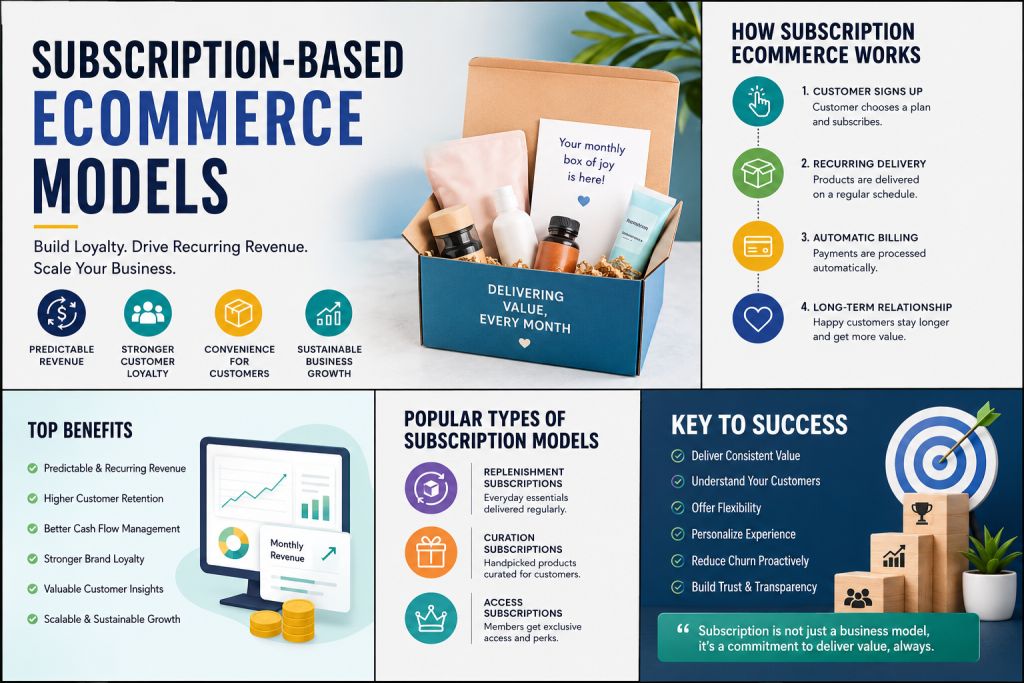
Understanding Subscription-Based eCommerce
A subscription-based eCommerce model operates by charging customers a recurring fee—typically on a weekly, monthly, or annual basis—in exchange for the regular delivery of goods or services. Instead of engaging in single, isolated transactions, consumers develop an ongoing, long-term connection with the company.
Primary Types of Subscription Models
1. Replenishment Subscriptions
The automated, scheduled delivery of essential, everyday consumables (such as groceries, shaving supplies, or skincare).
Example: Monthly shipments of vitamins.
2. Curation Subscriptions
Collections of customized or mystery items packaged as a specialized box.
Example: Curated fashion boxes or monthly beauty kits.
3. Access Subscriptions
Programs that grant members exclusive perks, specialized content, or lower prices.
Example: Premium VIP memberships.
The Rapid Growth of Subscription E-commerce
The boom in subscription-oriented retail fundamentally stems from constantly evolving consumer habits and corporate needs.
1. Reliable Income Generation
A primary benefit is consistent revenue. Companies are able to project their earnings with greater precision, which assists in organizing stock, promotional efforts, and business growth.
2. Enhanced Client Loyalty
Subscription models foster ongoing relationships. Rather than continuously seeking out new buyers, companies can concentrate on keeping their current clientele.
3. Consumer Convenience
Today’s shoppers appreciate simplicity and automated processes. Subscriptions remove the hassle of having to manually repurchase items on a regular basis.
4. Chances for Customization
Continuous engagement allows companies to collect insightful data, enabling them to customize their merchandise and promotions to individual preferences.
A Real-World Observation
The small D2C skincare brand I have long monitored has shifted from a traditional sales model to a subscription model.
In the early stage following its founding, the company encountered sales fluctuations, and the disparities in its monthly operating revenue were highly significant.
We have launched the monthly skincare subscription box: the subsequent changes are outlined as follows.
- Core customer retention rate has continued to improve.
- Repeat purchase frequency has increased steadily.
- Overall marketing expenses have been effectively reduced.
Interestingly, the transformation of the subscription model has pushed up user expectations.
- Stable quality
- Punctual delivery
- Excellent service
I will summarize the core experiences.
The Value of the Subscription Model Extends Beyond Sustained Revenue: It Fundamentally Relies on Building Trust and Maintaining Consistency
Major Challenges in Subscription-Based eCommerce
While this business model is attractive, it has a high threshold for practical implementation.
1. Customer Churn
If consumers perceive that the cost of a subscription exceeds the value they obtain from it, they are highly likely to cancel that subscription.
Solution:
Concentrate on consistently providing value and enhancing the overall customer experience.
2. Subscription Fatigue
Contemporary consumers have long been overwhelmed by the heavy burden of the endless stream of diverse subscription services that emerge continuously in the marketplace.
Solution:
Distinguish your service by offering unique benefits, personalized options, or competitive pricing.
3. Logistics and Fulfillment Complexity
All types of operating entities must develop differentiated services: roll out exclusive benefits, personalized options, and preferential pricing plans
Solution:
Commit to upgrading your supply chain infrastructure and utilizing automation software.
4. Pricing Strategy Complications
Enterprises are advised to upgrade their own supply chain infrastructure and deploy automated operation software.
Solution:
Experiment with different pricing tiers and provide flexible account options, allowing users to easily pause, skip, or cancel their plans.
How to Create a Thriving Subscription eCommerce Business
If you plan to launch a new subscription service or optimize an existing one, the following sections will share practical operational strategies.
1. Prioritize the Customer Experience
Product side: The customer journey has a far higher priority than the product itself.
- Streamline the registration process
- Implement flexible subscription plans
- Maintain transparent user communication.
2. Provide Genuine Value Beyond the Product
We must first sort out the true core drivers behind users’ choice of regular subscriptions over one-off purchases, before implementing reasonable user experience optimizations.
Paid platform members enjoy three benefits:
- Price discounts
- Exclusive purchasing
- Customized recommendations.
3. Leverage Data Intelligently
Subscription-based business models can achieve Intelligent data utilization:
- Leveraging their own extensive pool of customer data
- Forecast the consumption behavior of potential users
- Customize various types of products and services
- Effectively lift customer retention.
4. Cultivate a Deep Brand Relationship
We propose three retention initiatives: issuing timely notifications, allowing subscription cancellation, and launching a loyalty rewards program.
- Communicate your brand’s narrative
- Maintain authenticity
- Interact with your audience consistently
- Maintain authenticity
Interact with your audience consistently
5. Take Proactive Steps to Minimize Churn
Address potential cancellations before they occur by:
- Issuing timely notifications Allowing customers to pause their subscriptions Implementing a loyalty rewards program
- Allowing customers to pause their subscriptions
- Implementing a loyalty rewards program
Upcoming Trends in Subscription E-commerce
The subscription market is advancing at a fast pace. Below is a look at future developments:
1. Advanced Personalization
Artificial intelligence will power recommendations, creating highly customized subscription experiences.
2. Adaptable Subscriptions
Consumers desire greater control, including the ability to easily pause, skip, or modify their plans whenever they choose.
3. Emphasis on Sustainability
Environmentally friendly packaging and responsible sourcing will emerge as key competitive advantages.
4. Subscription Bundling
Companies will partner up to provide merged product and service offerings.
Final Thoughts
Subscription-based eCommerce is far more than a passing trend. It is a robust business model capable of transforming how companies expand and engage with their audience.
However, achieving success requires more than merely implementing a “subscribe” feature.
It relies on:
- Comprehending customer requirements
- Consistently providing value
- Establishing enduring trust
When executed effectively, subscriptions can transform single-purchase customers into dedicated brand promoters, ultimately fostering a reliable and scalable enterprise.
Key Takeaway
If you are planning to enter the subscription market, it is best to begin on a small scale. Validate your concept, actively listen to consumer feedback, and make continuous improvements. Success in subscription e-commerce relies heavily on customer retention rather than merely driving initial sales volume.
Consider your own recent experiences with subscription services. Evaluating what was effective and what fell short is frequently the best way to discover valuable business opportunities.
About the Author