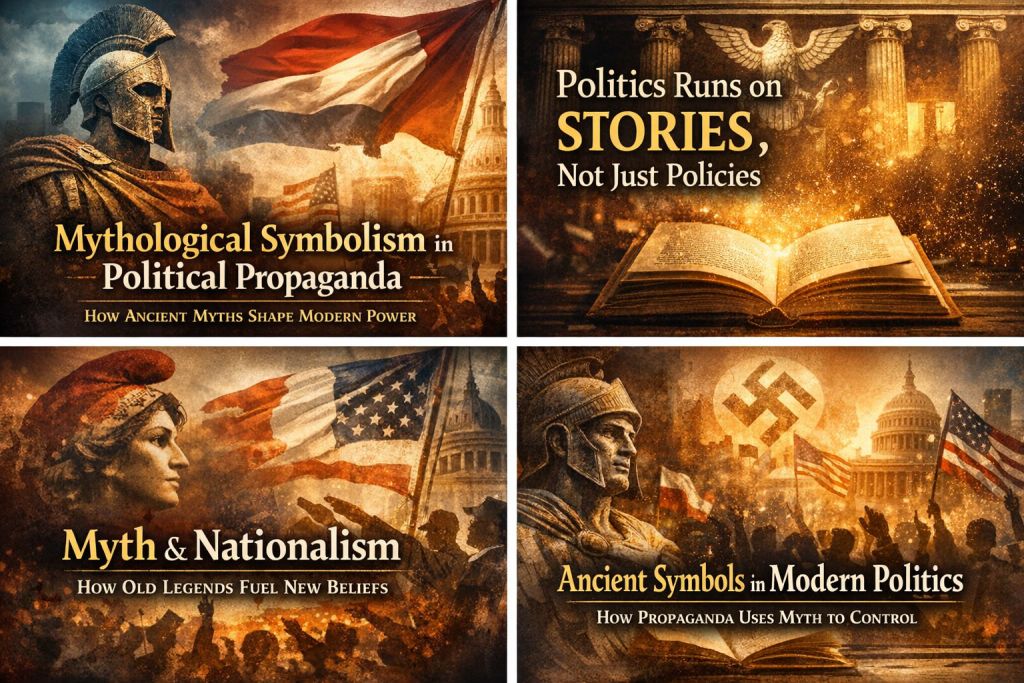
For a long time, I believed politics was mostly about arguments.
Who had better policies? Who spoke more clearly? Who made stronger promises?
But over time, I noticed something deeper at work.
Politics isn’t really driven by logic.
It’s driven by stories.
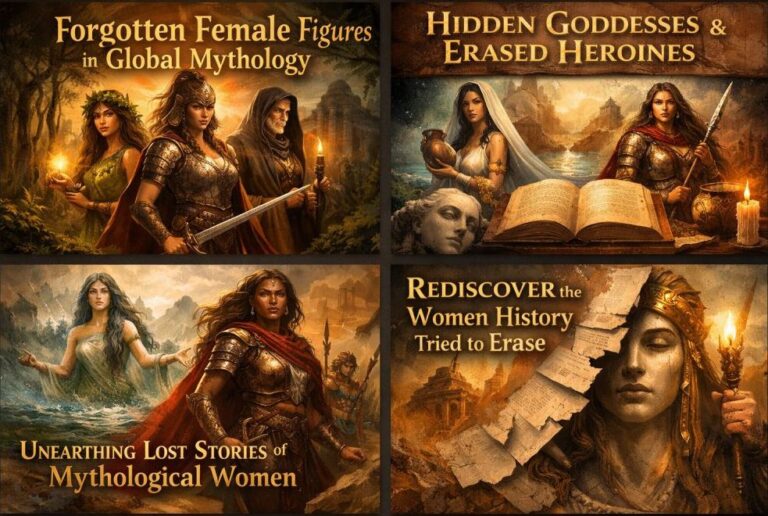
Every society carries stories about its origins, heroes, and the future it deserves. Some stories come from history. Others come from mythology. Over time, they blend.
As they blend, their influence grows stronger.
Why Stories Matter More Than Facts
Humans don’t connect with spreadsheets.
We connect with narratives.
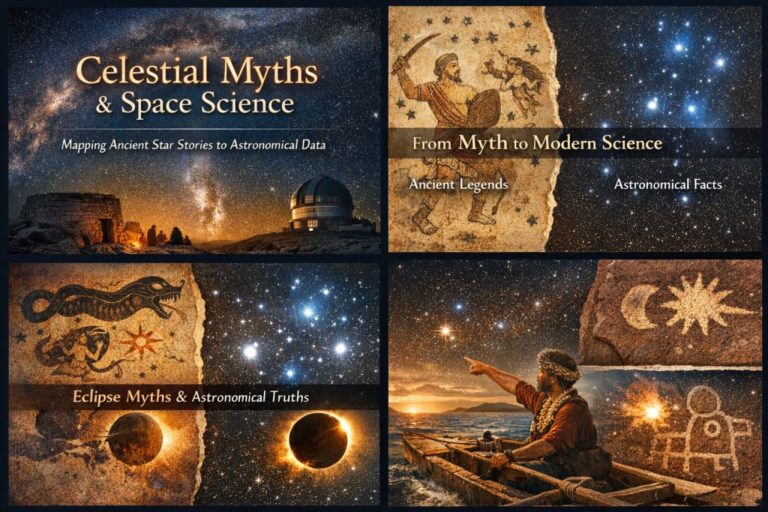
Long before governments existed, people used myths to explain life. Gods controlled nature. Heroes fought chaos. Kings ruled because destiny said so.
Those patterns still live inside us.
Today, phrases like “saving the nation” or “restoring greatness” echo the structure of ancient storytelling. We live in a modern world, but our emotional wiring is ancient.
We don’t just want leaders.
We want meaning.
Ancient Leaders Understood This Very Well
In Egypt, pharaohs were shown as divine beings, carved larger than ordinary people. In Rome, emperors claimed heroic ancestors. In Greece, cities filled spaces with images of mythic warriors.
None of this was accidental; each choice reinforced authority.
Symbols made power feel natural. Sacred. Unquestionable.
Modern politicians don’t call themselves gods, but they still surround themselves with flags, monuments, and historical backdrops. The method hasn’t changed; only the presentation has.
How Nations Build Identity Through Myth
Every country carefully selects what it remembers.
Founders become legends. Wars become heroic tales. Cultural symbols repeat until they feel timeless. Eagles, lions, and other powerful animals appear everywhere because they communicate strength without explanation.
France has Marianne. Many nations celebrate freedom fighters or warrior kings as almost sacred figures.
These images help people feel connected to something bigger than themselves.
That emotional connection quietly becomes nationalism.
Often quietly, not always loudly.
Often quietly.
The Hero Pattern in Modern Politics
Once you recognise this pattern, you see it everywhere.
There is always a crisis.
There is always an enemy.
There is always a leader promising renewal.
Political campaigns follow the same arc as ancient myths. A broken world waits for rescue. A strong figure rises. Citizens are invited to take part in history.
People don’t simply vote.
They join stories.
When Symbols Are Used for Harm
Not all symbolism is harmless.
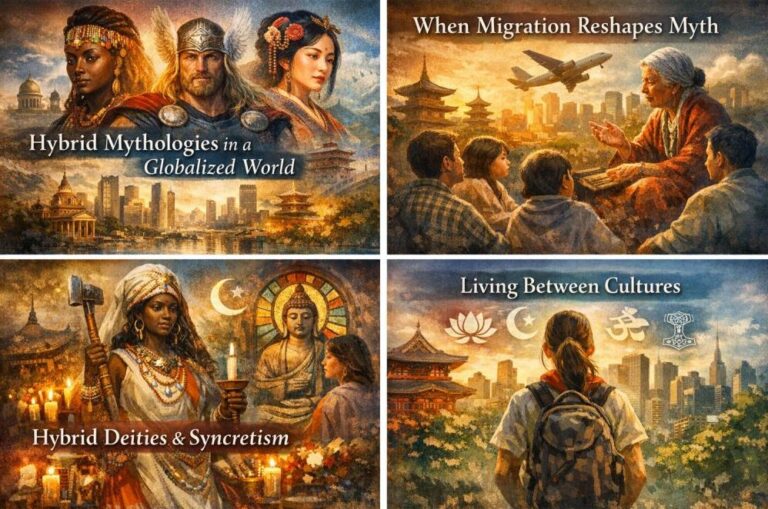
Some extremist groups have taken ancient pagan and Nordic imagery and twisted it to support hateful ideas. Symbols that once had spiritual meaning now divide people.
This reveals an important truth.
Symbols themselves aren’t dangerous.
But they become dangerous when stripped of context and filled with new meaning.
A Moment That Changed My View
During one election season, I noticed how little practical discussion there was.
Instead, speeches focused on ancestors, destiny, pride, and national revival. Campaign videos felt like movie trailers, with dramatic music, slow-motion crowds, and heroic lighting.
It didn’t feel like a civic debate.
It felt like a performance.
That’s when I realised:
- Modern propaganda doesn’t persuade.
It stages emotion.
Myth in the Age of Social Media
Today, symbolism spreads instantly.
A single image can shape opinions. Algorithms reward emotional content. Complex problems reduce to simple visuals. Leaders become characters. Nations become narratives.
While technology has changed, our psychology remains the same.
Human psychology hasn’t.
Why Understanding This Matters
There’s nothing wrong with loving your culture or honouring history.
But when mythology replaces critical thinking, democracy weakens.
Recognising symbolic manipulation helps us pause. It helps us ask:
- Why this image?
- Why now?
- Who benefits?
Those questions matter.
Final Thoughts
Mythological symbolism in political propaganda isn’t something from the distant past.
It’s not just history; it’s happening right now.
It shapes identity. It builds loyalty. It influences belief.
From stone statues to smartphone screens, power has always relied on stories bigger than reality.
The more we understand those stories, the harder it becomes to be guided by them without realising it.
And in a world full of narratives, that awareness may be our strongest defence.
About the Author