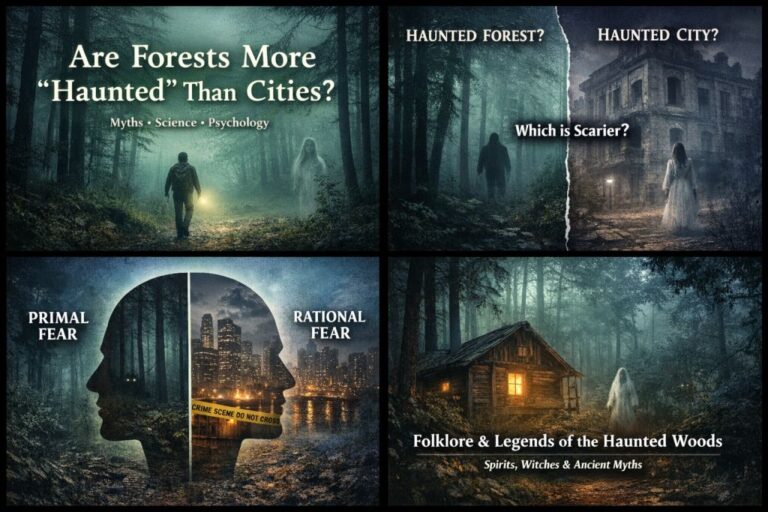
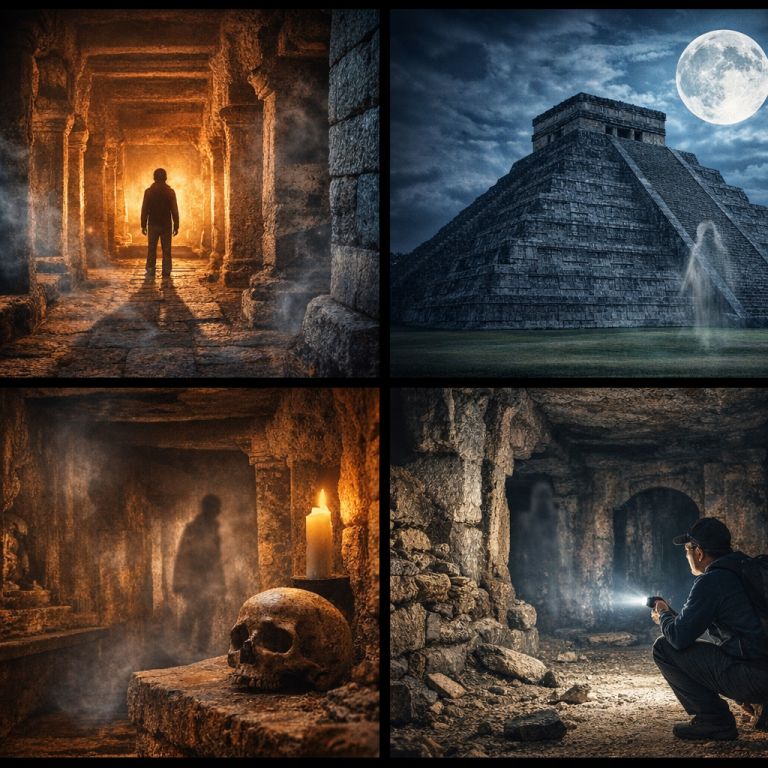
Walk into an old prison after sunset, and everything feels louder. Your footsteps echo. A door creaks somewhere down the hall. Even if you don’t believe in ghosts, your heart starts beating faster.
Now here’s the real question: Why would anyone pay to feel that way? Let’s explore how these feelings turn into attractions.
Haunted tourism is a global trend. From abandoned forts to night cemetery walks, people seek places that promise chills. But the story isn’t about ghosts. It’s about the mind.
Let’s break down why fear, in the right setting, becomes something we actually enjoy—and why it lies at the heart of haunted tourism. The key takeaway is that fear can offer excitement and entertainment when we know we’re ultimately safe, especially in experiences like haunted tourism.
What Haunted Tourism Really Is
Haunted tourism is part of a bigger travel trend called dark tourism. It centres on places known for legends, sad events, or ghost stories.
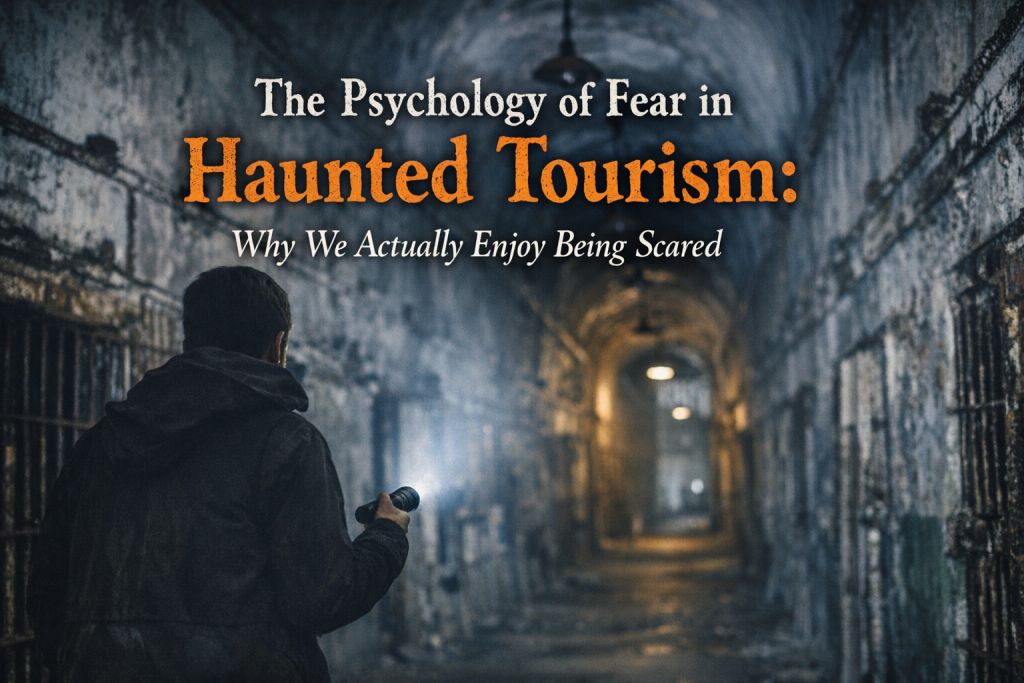
For instance, Eastern State Penitentiary attracts visitors who explore its old cell blocks under dim lights. In India, Bhangarh Fort draws curious travellers because of long-standing ghost stories tied to the site.
Some visitors believe the stories. Others don’t. But belief isn’t the main attraction.
The attraction is the feeling.
What Happens in Your Brain When You’re Scared
Fear is not weakness. It’s biology.
When surprised by a noise, shadow, or whisper, a small part of your brain—the amygdala—activates, serving as an alarm.
Within seconds: Your heart rate climbs, breathing quickens, adrenaline surges, and senses sharpen.
This reaction once helped humans survive real threats.
But in haunted tourism, there is usually no real danger. At first, the brain reacts; then your thinking catches up. Once you realise you’re safe, that strong fear turns into excitement.
Ultimately, what we crave is that transition from fear to excitement, which keeps us coming back for more.
Why Fear Feels Good (When It’s Controlled)
1. Safe Scares Create Thrills
Think about watching a horror movie like The Conjuring. You jump. You tense up. But you stay seated because you know it’s just a film.
Haunted tours work the same way.
You’re inside a structured environment. There are guides. There are rules. There are exits. Your brain experiences the adrenaline rush without actual risk.
That combination produces a strange mix of fear and fun.
2. Expectation Makes Everything Stronger
I joined a late-night heritage walk in an old colonial building. Before we entered, the guide explained reports of a woman in white near the staircase.
Inside, every flicker of light felt dramatic.
At one point, a loose window banged due to the wind. Several people gasped.
It wasn’t supernatural. But our expectations amplified the moment.
When we are told a place is haunted, our minds look for confirmation. We notice small details we would normally ignore. A simple sound becomes meaningful.
Storytelling primes the brain, which then fills in missing details.
3. Fear Brings People Closer
Have you noticed how people laugh right after screaming?
Shared fear creates shared relief. That release strengthens the connection.
This is why haunted tourism is popular among:
- Friend groups
- Couples
- Corporate teams
Experiencing intense emotions together bonds people. The memory strengthens because of adrenaline.
4. Curiosity About the Unknown
Humans are wired to wonder about death and the mysteries of the world. Haunted tourism provides a safe way to explore those themes.
Instead of avoiding thoughts about mortality, visitors step directly into spaces linked with history and legend. It’s not just about ghosts. It’s about confronting the unknown in a controlled way.
Places like the Tower of London already have a lot of history. Add dim lighting and stories, and the mood becomes very strong.
Atmosphere creates half the thrill; environment shapes the experience.
The Role of Environment
Fear is heavily influenced by surroundings.
Low light reduces certainty. Echoes distort sound. Cold air increases discomfort. Long pauses build tension.
Our brains dislike uncertainty. When we can’t predict what’s next, stress rises. That mild stress feels intense, but it isn’t harmful.
Haunted attractions are carefully planned with this idea in mind. Timing, silence, and how quickly things happen are all intentional.
Good haunted tourism is not chaotic. It is structured suspense.
Who Enjoys Haunted Tourism Most? This question helps us understand who benefits most from these unique experiences.
Not everyone reacts the same way to fear.
Some people naturally look for strong feelings. They enjoy roller coasters, extreme sports, and scary movies. Haunted tourism is a good match for them.
Others may avoid it entirely.
Some use haunted experiences to boost confidence. Facing fear in safety feels empowering.
A friend told me she was terrified of dark spaces. She joined a ghost tour as a challenge, holding someone’s arm the entire time.
At the end, she smiled and said, “I didn’t think I could do it.”
Managed fear can increase confidence and self-belief, leaving visitors feeling accomplished.
The Business Psychology Behind Haunted Attractions
Successful haunted tourism is carefully balanced.
Too much fear overwhelms guests. Too little fear bores them.
The most effective experiences follow a rhythm:
- Build anticipation
- Introduce the story
- Increase tension gradually
- Provide a safe emotional release
Ethical operators make safety visible. Visitors should always feel able to leave.
For example, Eastern State Penitentiary blends education with immersive events while maintaining respect for history.
Responsible haunted tourism means balancing thrill, safety, and respect for history and visitors.
Why Haunted Tourism Is Growing Worldwide
Several reasons explain its popularity: People crave experiences over possessions. Social media drives dramatic stories. Modern life is controlled and predictable, so fear adds intensity. Urban legends spread online.
In a world full of screens and routines, stepping into a mysterious space feels refreshing.
Mysterious spaces awaken us, providing excitement and novelty beyond routines.
A Final Thought
The truth is simple.
Haunted tourism works because it activates something ancient inside us. Long before cities and electricity, humans gathered in the dark and told stories. Those stories created fear — and connection.
Today, we recreate that feeling in old prisons, forts, and castles.
- The ghosts may or may not exist.
- But the adrenaline does.
- The racing heartbeat does.
- The laughter after relief definitely does.
In the end, haunted tourism isn’t about spirits.
Haunted tourism reveals how we seek fear to test ourselves and strengthen our sense of capability.
About the Author