These days, being physically strong alone doesn’t guarantee a win in sports. Two athletes can train equally hard, eat the same foods, and follow similar routines, but one still outperforms the other when it matters most. The difference often comes down to psychological resilience.
Psychological resilience in sports means staying calm, focused, and confident when facing challenges. It’s how athletes handle pressure, setbacks, pain, criticism, and uncertainty. Coaches, sports scientists, and top athletes all agree that the mind is a powerful tool for performance.
This blog explores how mental conditioning can improve competitive performance. It shares real stories, research-backed insights, and simple tips for both beginners and experienced athletes. The goal is to provide helpful, easy-to-understand information for everyone.
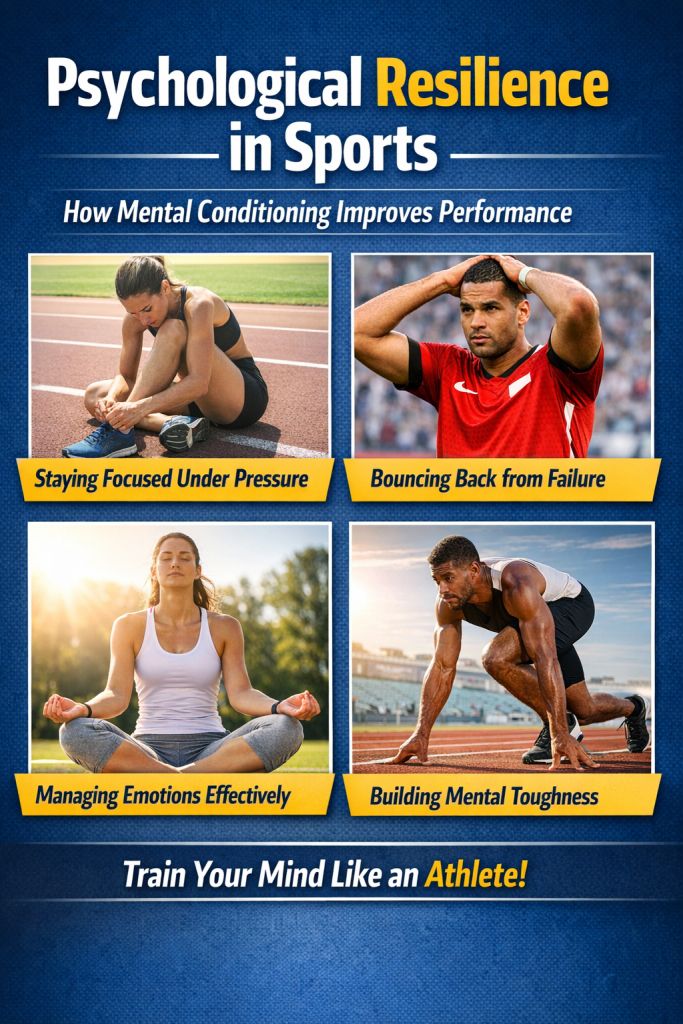
Why Psychological Resilience Matters More Than Ever in Sports
Sports today are faster, more competitive, and more public than ever before. Athletes face:
- Constant performance pressure
- Social media criticism
- Fear of injury or failure
- Career uncertainty
- Comparison with others
Even young athletes now face stress that earlier generations rarely did.
I once spoke to a state-level runner who trained perfectly but froze before every major race. His body was ready, but his mind was not. After he practiced mental conditioning using simple breathing, visualization, and self-talk, his race times improved even though his physical training stayed the same. That experience showed me how mental strength can unlock physical ability.
What Is Psychological Resilience in Sports?
Psychological resilience is the ability to:
- Bounce back after failure
- Stay focused under pressure
- Control emotions during competition
- Adapt to setbacks like injuries or losses
- Maintain confidence even during poor form
Resilient athletes do not avoid stress. They know how to handle it better.
According to research published by the American Psychological Association, resilience is not a personality trait you are born with. It is a skill that can be trained.
This is great news for athletes at every level.
The Science Behind Mental Conditioning and Performance
Mental conditioning is based on sports psychology, neuroscience, and behavioral science. Studies from organizations like the International Society of Sport Psychology show that mental training improves:
- Reaction time
- Decision-making
- Emotional control
- Focus and attention
- Confidence and motivation
When athletes train their minds, their brains learn to stay calm under stress. This helps the brain and muscles communicate better during competition.
Simply put:
- A calm mind sends clearer signals to the body.
Key Mental Conditioning Skills That Improve Competitive Performance
1. Focus and Attention Control
Distractions are everywhere—crowds, opponents, noise, and worries about failing. Mentally strong athletes learn to control their attention.
Elite athletes use techniques like:
- Focusing on breathing
- Anchoring attention to one task
- Blocking negative thoughts
I once watched a local tennis player who had a simple habit. Before every serve, he bounced the ball three times and took a deep breath. This routine helped him block out noise and stay focused, even during match points.
2. Emotional Regulation Under Pressure
Pressure brings out emotions like fear, anger, and excitement. Resilient athletes don’t try to hide these feelings; they learn to manage them.
Mental conditioning teaches athletes to:
- Recognize emotions
- Accept them without panic
- Redirect energy into performance
Research from Harvard Health Publishing shows that controlled breathing lowers stress hormones and improves decision-making during high-pressure moments.
3. Confidence Built on Preparation, Not Ego
True confidence is not about being loud. It comes from trusting your preparation.
Mental training helps athletes:
- Replace self-doubt with positive self-talk
- Focus on effort instead of outcome
- Build belief through mental rehearsal
Many Olympic athletes use visualization, which means mentally practicing a successful performance. The brain reacts almost the same way as it does during physical practice.
I have seen athletes imagine their races hundreds of times before stepping onto the track. When the real moment came, their minds told them, “I’ve been here before.”
4. Handling Failure and Setbacks
Failure is part of sports. Injuries can happen. Matches can be lost. Performance can drop.
Resilient athletes ask:
- “What can I learn?”
- “How can I improve?”
Instead of:
- “Why am I not good enough?”
Sports psychologists call this a growth mindset, a term popularized by Dr. Carol Dweck. Athletes with a growth mindset recover faster and improve consistently.
Mental Conditioning Across Different Sports
Psychological resilience is not only for elite professionals.
Team Sports
- Communication under pressure
- Trust in teammates
- Staying composed after mistakes
Individual Sports
- Self-motivation
- Managing loneliness
- Handling full responsibility for results
Youth Sports
- Building confidence early
- Reducing fear of failure
- Creating healthy sports habits
Mental conditioning helps athletes enjoy sports more, not just focus on winning.
Real-Life Experience: A Moment That Changed My View
A young footballer once told me something that stayed with me.
He said, “I don’t fear losing the match. I fear disappointing people.”
That pressure was not physical; it was mental. After he worked on resilience and learned to separate his self-worth from his performance, he played freely again. His performance improved, but even more importantly, his joy returned.
That is the real power of psychological resilience.
Simple Mental Conditioning Practices Anyone Can Use
You do not need expensive coaches to get started.
Here are simple methods:
Daily Mental Training (10–15 minutes)
- 5 minutes of deep breathing
- 5 minutes of visualization
- 5 minutes of positive self-talk
Pre-Competition Routine
- Same warm-up
- Same mental cues
- Same breathing pattern
Post-Performance Reflection
- What went well
- What can improve
- One positive takeaway
Being consistent is more important than making things complicated.
How Coaches and Parents Can Support Mental Resilience
For young athletes, especially, support systems matter.
Coaches should:
- Praise effort, not just results
- Encourage learning from mistakes
- Create safe spaces for failure
Parents should:
- Avoid pressure language
- Focus on enjoyment and growth
- Support emotional well-being
According to Sport England studies, athletes who feel emotionally supported stay in sports longer and perform better over time.
The Future of Sports Performance Is Mental
Today, top teams invest a lot in sports psychologists, mindfulness coaches, and mental performance trainers. Mental conditioning is no longer optional; it is essential.
As competition increases, the mental edge becomes the deciding factor.
Physical limits are similar. Mental limits are not.
Final Thoughts: Strengthening the Mind Strengthens the Athlete
Psychological resilience in sports is not about being emotionless or free of fear. It is about responding better, not perfectly.
Mental conditioning:
- Improves performance
- Protects mental health
- Builds long-term success
- Makes sports more meaningful
Whether you’re a professional athlete, a weekend runner, a coach, or a parent, mental resilience can change how you experience sports and the results you achieve.
In the end, the strongest athletes are not just physically fit.
They are mentally prepared for whatever comes next.
About the Author