Sports nutrition traditionally advises more protein for muscle growth, carbs for energy, and adequate hydration.
Recently, gut health has become central in sports nutrition.
Researchers now study the gut–muscle connection: digestive bacteria may affect strength, recovery, and endurance.
This development represents a substantive shift in sports health, influencing dietary planning for both professional athletes and recreational runners.
Let’s break down how these new insights connect to practical nutrition.
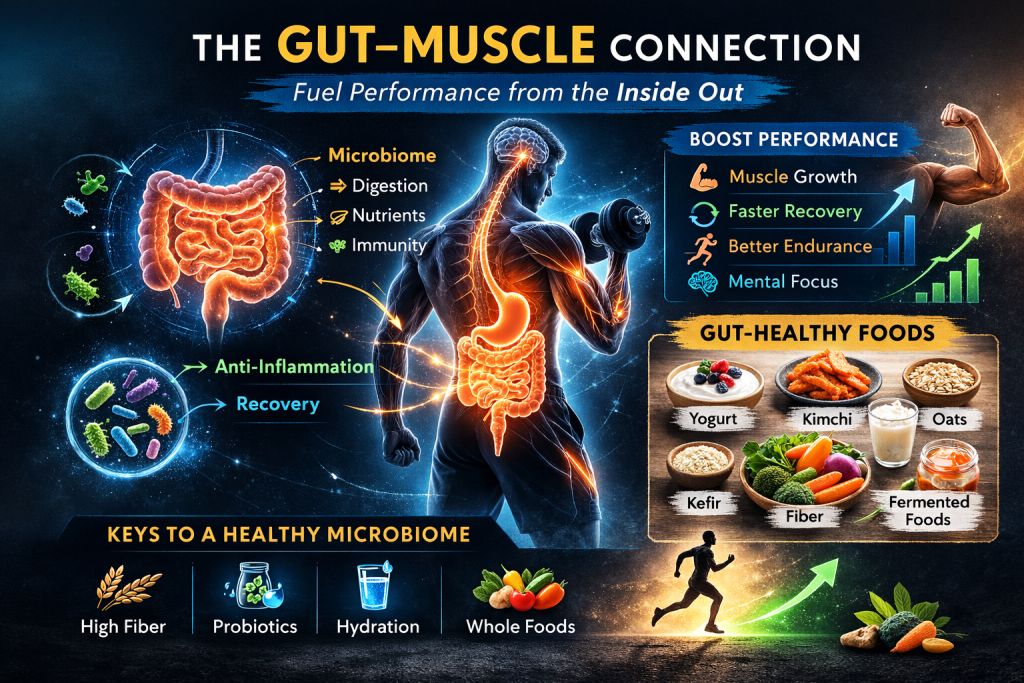
What Is the Gut–Muscle Connection?
The gut microbiome is a large community of bacteria in your digestive system. These microbes help digest food, absorb nutrients, support immunity, and manage inflammation.
This was once a medical topic. Now, sports scientists pay close attention.
Research from Harvard Medical School and Stanford University shows that gut bacteria do more than aid digestion. They produce compounds that impact muscle repair, energy, and hormone balance.
In simple words: if your gut is healthy, your body performs better.
Why Athletes Are Paying Attention
Elite athletes seek small advantages—a 2% recovery boost or a 1% endurance increase matters.
Now they are realising that gut health may influence:
- Muscle soreness
- Energy levels
- Immune strength
- Mental focus
- Inflammation
Studies from the University of California, San Diego, show that athletes often have a more diverse gut microbiome than non-athletes. Diversity in the microbiome is usually a sign of resilience and better overall health.
Another study from Harvard T.H. Chan School of Public Health observed specific bacteria in endurance runners that may help process lactic acid more efficiently.
That matters because lactic acid buildup causes fatigue.
A Personal Experience That Changed My View
I worked with a competitive athlete who trained hard and ate well. His protein and calories were on point, but he still had soreness and fatigue.
When we looked deeper, digestion was the missing piece. He often felt bloated and uncomfortable after meals. Instead of adding more supplements, we focused on gut health:
- Increased fibre from vegetables and legumes
- Added plain yoghurt and kefir
- Reduced ultra-processed snacks
- Encouraged more food variety
Within two months, the difference was obvious. Recovery improved. Energy stabilised. Even his mood during training changed.
This experience showed that muscle performance depends on both physical training and digestive capacity.
How Microbiome Research Is Reshaping Athlete Diet Plans
Modern athlete nutrition plans are evolving in key ways.
1. Fibre Is Back in Focus
Old-school bodybuilding diets often kept fibre low. Today, sports nutrition experts encourage variety:
- Oats
- Beans
- Lentils
- Leafy greens
- Fruits
Dietary fibre serves as a substrate for beneficial gut bacteria. Insufficient fibre intake may compromise microbiome diversity and resilience.
2. Fermented Foods Are Becoming Common
Many athletes are adding small portions of:
- Yogurt
- Kefir
- Kimchi
- Sauerkraut
These foods provide live microbial cultures that can help maintain gut microbial balance.
3. Personalisation Is Growing
Some professionals use microbiome tests from companies like Viome and Thorne.
The goal is simple: identify bacteria and adjust diet.
This shift in sports health is moving nutrition from standardised to individualised strategies.
The Gut–Brain–Muscle Link
The gut is called the “second brain” because it communicates with the brain through nerves and chemicals.
Research from Johns Hopkins University highlights how gut bacteria influence serotonin production. Serotonin affects mood, motivation, and focus.
For athletes, mental clarity rivals physical strength. Gut health may affect anxiety, confidence, and focus.
Common Athlete Problems — and Gut-Based Solutions
Frequent Illness
Heavy training can weaken immunity. A balanced microbiome supports immune defence.
Slow Recovery
Chronic inflammation slows muscle repair. Certain gut bacteria make anti-inflammatory compounds.
Energy Crashes
Gut imbalance can affect blood sugar and energy.
Digestive Discomfort During Training
Gradually increasing fibre and reducing artificial additives often helps.
A Simple Gut-Friendly Framework
Small diet changes deliver big improvements.
Daily habits to support the gut–muscle connection:
- Eat 25–35 grams of fibre from whole foods
- Include fermented foods a few times per week
- Stay hydrated
- Avoid excessive ultra-processed snacks
- Rotate food choices to encourage diversity
A sample day includes oats and fruit for breakfast, legumes or lean protein with vegetables for lunch, and whole grains with greens for dinner.
Consistency in dietary habits is more beneficial than striving for perfection.
Important Cautions
Not all probiotic supplements work. NIH advises choosing products backed by research.
Additionally, rapidly increasing fibre intake may cause discomfort. Gradual dietary changes are safer and more effective.
The Future of Sports Nutrition
Microbiome science is still developing, but momentum is strong. Researchers are studying:
- Bacteria linked to endurance
- Microbes connected to strength adaptation
- Gut markers that predict recovery speed
Soon, athlete diet plans may include microbiome reports with blood tests and body scans.
Sports health now takes a holistic view, integrating muscular, cognitive, immune, and microbial factors in performance.
Why This Matters Beyond Professional Sports
You do not need to compete at a high level to benefit from this knowledge.
If you train, play sports, or want better daily energy, gut health matters.
With a balanced microbiome, nutrients are better used, recovery improves, fatigue drops, and focus sharpens.
The gut–muscle connection underscores the principle that the human body functions as an interconnected system.
Final Thoughts
Sports nutrition is evolving. Protein shakes and calorie tracking still matter, but they are no longer the full picture.
The new conversation covers fibre, ferments, diversity, and personalisation.
The gut–muscle connection isn’t just marketing. It’s grounded in science. As research advances, athlete diets will likely become more precise, personalised, and focused on internal health.
To enhance performance, it is important to prioritise gut health alongside physical training.
Significant gains in strength and performance may arise from optimising tiny body components, such as gut microbes.
About the Author





Hi
I have tried DMing you on https://www.instagram.com/infoaedia but haven’t received a response.
I would be grateful if you could put me in touch with the right person who handles marketing/influencers at infoaedia.com
I have some influencers interested in promoting infoaedia.com on a gifted basis.
Please could you also copy in our influencer relationship manager, Steven at info@mayfairpug.online
Many thanks
Alissa Wade
mayfairpug.online
Hi Alissa,
Will get in touch with you.
Thanks for pinging !!