Not long ago, recovery was discussed only after injury. If you felt sore, stiff, or drained, the advice was simple: take a day off, stretch, then get back to work. Pain was normal. Fatigue was expected.
But that logic has started to break down, prompting a new approach to recovery.
Across gyms, sports teams, and wellness spaces, people are realising that pushing harder doesn’t always lead to better results. Often, it does the opposite. Progress stalls. Small aches become chronic problems. Motivation dips even when discipline stays strong.
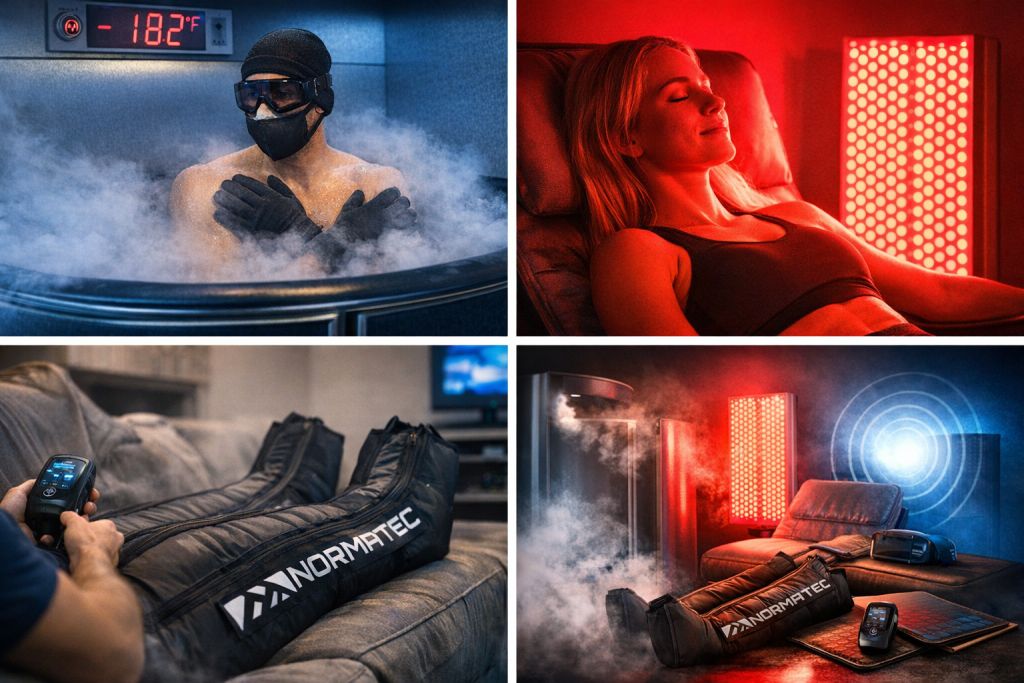
That shift in thinking opened the door to recovery science, a growing field focused on how the body repairs itself and how we can support that process using modern tools like cryotherapy, red light therapy, and new regeneration technologies.
This isn’t about shortcuts. The key takeaway: work with your body, not against it, for optimal recovery and performance.
Why So Many People Struggle to Recover
One thing I’ve seen again and again is this: people assume recovery issues come from training too much. Often, they come from never fully switching off stress.
Even people who train just a few times a week deal with:
- Long hours sitting or staring at screens
- Constant mental pressure
- Broken sleep patterns
- Repetitive movement
- Low-level inflammation that never quite goes away
The body doesn’t distinguish between physical and mental stress. To the body, stress is stress. When stress is constant, repair gets postponed.
In essence, recovery science’s key takeaway is guiding the body to remember and enhance its natural ability to recover.
Cryotherapy: Cold as a Biological Wake-Up Call
Cryotherapy gets attention because it looks extreme. Stepping into freezing temperatures, even briefly, feels counterintuitive. Why would cold help a tired or sore body?
The answer lies in how the body responds to sudden environmental stress.
What Cold Exposure Triggers
During a short cryotherapy session, the body reacts immediately:
- Blood vessels tighten
- Inflammatory activity slows
- Stress hormones shift
- Endorphins release
Once the exposure ends and the body warms up, blood flow rebounds strongly. That surge delivers oxygen and nutrients to muscles and joints that need repair.
Scientific studies, including work published in Frontiers in Physiology, have linked cryotherapy to reduced muscle soreness and improved recovery after intense exercise.
What People Often Miss
What stands out most, in my experience, isn’t just reduced soreness. It’s the nervous system effect. People often leave cryotherapy sessions feeling mentally clear and calm, nearly reset.
For people balancing training with demanding work or high stress, that nervous system reset can be just as valuable as physical recovery.
This is why cryotherapy fits so well into the wellness + sports crossover. It addresses both physical strain and mental overload simultaneously.
Red Light Therapy: Subtle, Slow, and Powerful
Red light therapy doesn’t grab attention the way cryotherapy does. There’s no shock, no intense sensation. Sometimes people assume it’s doing nothing at all.
That’s exactly why it works the way it does.
How Red Light Therapy Supports Healing
Red and near-infrared light penetrate the skin and reach the mitochondria inside cells. Mitochondria produce ATP, the energy your body uses to repair tissue.
When exposed to specific light wavelengths:
- Cells produce more energy
- Inflammation reduces
- Circulation improves
- Healing processes speed up
This is supported by research published in journals such as Lasers in Medical Science and The Journal of Athletic Training, particularly regarding muscle recovery and joint pain.
Where Red Light Therapy Excels
Red light therapy shines when dealing with:
- Ongoing muscle tightness
- Tendon stress
- Joint discomfort
- Slow recovery between workouts
It’s especially helpful for people who are active but no longer recover as they did in their early years. Over time, many notice they feel less stiff and recover faster.
Because red light therapy also supports skin health, sleep regulation, and cellular ageing, it naturally bridges performance recovery and general wellness.
Emerging Regeneration Technologies Worth Attention
Recovery science isn’t limited to cold and light. Several newer tools are becoming part of serious recovery routines.
Compression Therapy
Compression systems use air pressure to move fluid through the limbs. This supports circulation and reduces swelling. After long workouts or travel, compression therapy leaves legs feeling lighter.
Many athletes now treat compression like brushing their teeth—it’s routine maintenance.
PEMF Therapy
PEMF (Pulsed Electromagnetic Field) therapy uses low-frequency electromagnetic waves to support cellular repair. It was first studied for bone health and healing, including research linked to space medicine.
Today, PEMF is commonly used in rehab and recovery settings to support joints, manage inflammation, and assist recovery from overuse injuries.
Integrated Recovery Systems
Some modern systems combine cold exposure, light therapy, and compression. The logic is straightforward: calm inflammation first, then stimulate repair.
This layered approach reflects where recovery science is headed—toward personalisation rather than one-size-fits-all solutions.
The Biggest Mistake People Make
Recovery tools are powerful, but they aren’t magic.
I’ve seen people invest heavily in recovery technology while sleeping poorly, eating inconsistently, or training without structure. The results are disappointing.
The key takeaway: recovery science only works well when it builds on strong lifestyle basics.
That means:
- Regular, quality sleep
- Adequate nutrition and hydration
- Balanced training volume
- Stress management
Think of recovery tools as amplifiers. If the foundation is weak, the results will be limited.
What a Realistic Recovery Routine Looks Like
You don’t need everything. You need consistency.
For many active people, a practical setup might include:
- Daily mobility work and consistent sleep
- Red light therapy a few times per week
- Cryotherapy once or twice weekly after heavy training
- Compression therapy after long or demanding sessions
This approach’s main takeaway: keep recovery simple, active, and consistent to support continuing progress.
Why Recovery Science Is Becoming Essential
Fitness culture is slowly moving away from punishment-based thinking. People want results, but they also want sustainability.
The clear takeaways:
- Recovery science enhances longevity,
- keeps injuries low,
- improves movement,
- and prevents burnout.
That’s why recovery spaces are appearing in gyms and wellness centres. That’s why athletes now talk about sleep and inflammation as much as training volume.
And that’s why recovery fits so naturally into the wellness + sports crossover—it improves performance while also improving quality of life.
Final Reflection
Recovery isn’t passive anymore. It’s intentional.
Cold exposure teaches the body to adapt to stress.
Light therapy supports healing at the cellular level.
New regeneration technologies help extend how long the body can perform well.
The key takeaway: recovery science helps maintain long-term activity, resilience, and ongoing capability.
In a world where burnout is common, the ability to recover intentionally may be the edge that keeps you performing, progressing, and enjoying an active, fulfilling life.
About the Author