Exploring mythic interpretations of disease, anatomy, and healing practices
In every civilisation, healing was both a physical and spiritual act tied to myths. Ancient cultures explained health and disease through stories of gods, demons, rituals, and cosmic forces. Studying mythology in medicine reveals how people across eras have understood the body, pain, life, death, and recovery.
To understand these ancient perspectives, it is valuable to examine how ritual, divine anatomy, and myth not only explained disease but continue to impact our cultural and psychological approaches to healing.
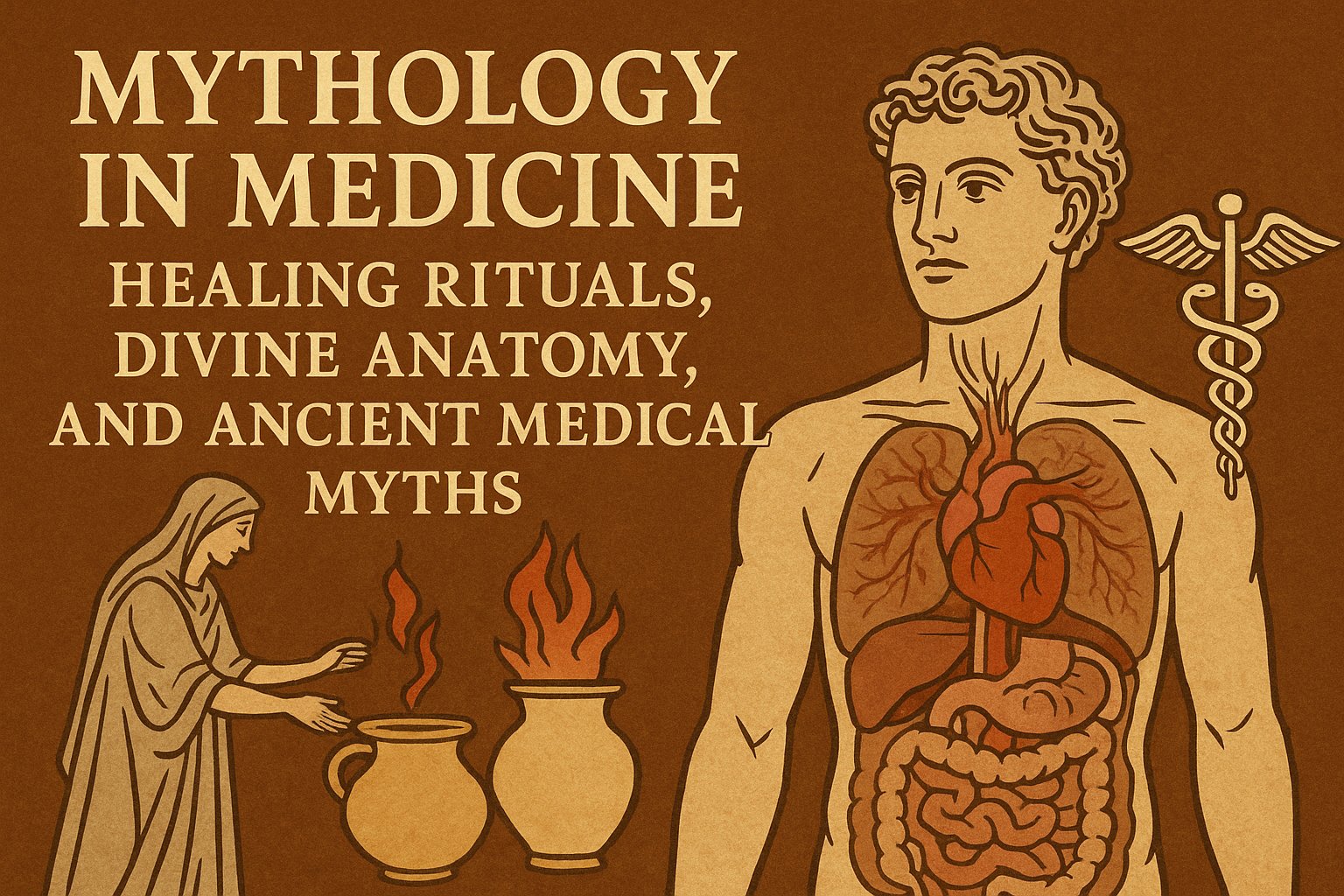
The Origins of Medical Mythology: Why Humans Merged Medicine With the Divine
Medicine began with observation, while mythology provided meaning. Ancient healers served as doctors, priests, astrologers, shamans, and storytellers. They viewed illness as a message, pain as punishment, and healing as divine intervention. In this worldview:
- Disease had a personality
- Cures were rituals
- Anatomy was sacred
- Recovery required cosmic balance
These beliefs helped people cope with suffering long before scientific explanations were available.
Mythic Interpretations of Disease: When Illness Had a Story
Across cultures, diseases were rarely seen as anonymous; instead, they were depicted as characters in a cosmic drama.
1. Greece: Apollo the Bringer of Plague
In the Iliad, Apollo spreads disease with fiery arrows, serving as a mythic metaphor for epidemics that strike quickly and mysteriously. Healing priests interpreted fevers as “arrows of the gods,” and treatments included offerings, music, and purification rituals.
2. India: Diseases as Divine Energies
In Ayurveda and Hindu mythology:
- Fevers were linked to Shringi Rishi, the sage who controlled heat.
- Skin diseases were believed to arise from the wrath of Shitala Mata, who later became a goddess of smallpox healing.
- Negative emotions like fear, lust, and anger were said to disturb the tridosha, causing imbalance in the body.
In this context, disease was not only biological but also moral, emotional, and cosmic.
3. Mesopotamia: Demons as Carriers of Illness
The ancient Sumerians believed demons such as Lamashtu and Asakku caused neurological and respiratory disorders. Exorcisms functioned as early psychosomatic therapy, addressing mental distress through ritual.
4. Chinese Mythology: Illness From Energy Disruptions
Traditional Chinese Medicine (TCM), influenced by Taoist mythology, described:
- Qi blockages causing pain
- Spirits of wind, cold, and damp affect organs
- Meridians are invisible divine pathways throughout the body
Although expressed through myth, these ideas continue to influence acupuncture and energy healing today.
Divine Anatomy: How the Human Body Was Explained Through Myth
Before the advent of scientific anatomy, many cultures described the body using gods, celestial symbols, and spiritual metaphors.
The Greek Body: A Divine Blueprint
Greek mythology said:
- The heart was the “seat of the soul.”
- The liver was the organ of emotion and divine anger (inspired by Prometheus’s unending torture).
- The brain was considered a cooling fluid, a concept misunderstood but of symbolic significance.
This symbolic view of anatomy shaped medical practice for centuries.
Indian Mythology: Chakras and Sacred Physiology
Ancient yogic texts described:
- 7 chakras aligned with elements, emotions, and cosmic energies
- Nadis (energy channels) are similar to modern neural pathways
- Kundalini, a coiled serpent representing dormant life-force
Although metaphorical, these systems have shaped yoga, meditation, and holistic healing practices worldwide.
Egyptian Mythology: Organs of Power
Egyptians believed:
- The heart records all moral actions
- The liver filters spiritual impurity
- The brain was unimportant (which is why it was removed during mummification)
These anatomical myths guided early surgical practices and spiritual medicine.
Healing Rituals: Where Faith and Medicine Became One
Healing rituals were not only cultural but also served as psychological interventions, providing comfort, community, and a sense of control.
1. Incubation Rituals in Greece
Patients slept in the temples of Asclepius. Healing dreams guided priests to perform:
- Herbal treatments
- Surgeries
- Water and sound therapy
This practice represents one of the earliest forms of dream therapy and sleep-based healing psychology.
2. Shamanic Healing
In Siberian, Native American, and African traditions:
- Drumming altered consciousness
- Trance rituals diagnosed spiritual imbalances
- Healers extracted “spiritual intrusions” symbolising disease
These rituals symbolically addressed trauma, anxiety, and emotional wounds.
3. Ayurveda’s Sacred Rituals
Ayurvedic healing combined:
- Chanting mantras
- Oil massages
- Fire rituals
- Herbal medicines
The ritualistic elements enhanced emotional healing and contributed to placebo effects.
4. Egyptian Healing Magic
Egyptian doctors were also priests. They used:
- Amulets
- Protective spells
- Plants like garlic and honey (which science later validated)
Their blend of magic and medicine anticipated holistic care principles.
When Ancient Myths Inspire Modern Medicine: A Personal Experience
Several years ago, while visiting a tribal hamlet in Odisha, India, I witnessed a healing ritual that left a lasting impression. When a young boy developed a high fever, the elders responded with a calm, rhythmic healing ceremony involving:
- Soft chanting
- Application of herbal paste
- A symbolic “banishing of heat” ritual
Afterwards, the child was taken to a clinic and recovered with medical treatment.
What stood out to me was not the ritual’s supernatural claim but its ability to emotionally stabilise the family, reduce fear, and foster communal support.
This experience showed how mythology, even without medical accuracy, provides psychological support and encourages community unity in illness.
Stepping back from specific anecdotes, key ancient medical myths have left a lasting imprint on how human societies view illness, the body, and healing.
Myth 1: Illness Comes From the Evil Eye
Found in Mediterranean, Middle Eastern, and Indian cultures. While not biologically real, it symbolised:
- Jealousy
- Social tension
- Emotional negativity
Protective charms offered comfort and helped reduce stress.
Myth 2: The Body Is Ruled by Four Divine Humours
In Greek mythology-based medicine:
- Black bile
- Yellow bile
- Phlegm
- Blood
These concepts formed the foundation of global medical practice for 2,000 years.
Myth 3: Sacred Plants Were Gifts From Gods
Nearly every culture has myths claiming:
- Cannabis
- Soma
- Neem
- Mandrake
- Lotus
were considered divine gifts with healing properties.
Some of these plants later became essential to modern pharmacology.
Why Mythology Still Matters in Modern Medicine
Even today, mythology continues to influence wellness, psychology, and patient care.
1. Holistic Healing
Yoga, meditation, chakra therapy, and Reiki all derive from ancient mythic models of the body.
2. Medical Narratives
Patients still seek meaning in illness. Doctors now use narrative therapy and psychological storytelling as part of healing.
3. Placebo Effect
Belief itself can reduce symptoms. Mythology served as an early form of belief-based intervention.
4. Cultural Competence in Medicine
Understanding mythic beliefs helps doctors treat patients with cultural sensitivity.
Mythology as a Lens Into the Human Body and Mind
Myths may not provide accurate anatomical descriptions, but they reflect how humans emotionally experience the body:
- Pain as punishment
- Fever as the heat of anger
- Breathing as divine life-force
- Sleep as a connection to the spirit world
These metaphors continue to shape culture, spirituality, and modern mental health concepts.
Conclusion: Mythology and Medicine Are More Connected Than We Realise
“Mythology in Medicine” is not just about old stories; it is about how humans have always sought to understand suffering, resilience, and healing.
Ancient myths:
- Provided meaning during illness
- Encouraged rituals that eased anxiety
- Described the body through symbolism
- Created psychological comfort
- Guided the earliest healers
Today, this influence can be seen in wellness trends, spiritual healing, therapy, and cultural medical practices.
Understanding ancient medical mythology does not replace science; rather, it enriches it by revealing the timeless human search for meaning, resilience, and comfort in healing. The main takeaway is that mythological thinking continues to shape our approach to medicine and patient care, broadening the perspective beyond purely biological explanations.
About the Author