Previously, dressing for the season was enough. Now, unpredictable weather makes that difficult.
A day can start cool, turn hot, and end chilly. Commuters, travellers, and outdoor workers deal with these abrupt changes.
These changing conditions have quietly created a new problem: most clothing isn’t designed to adjust as quickly as the weather itself. As temperatures and environments fluctuate rapidly, our apparel often leaves us uncomfortable or unprotected.
Thermo-regulating clothing addresses this gap by providing apparel that actively responds to temperature changes, aiming to keep us comfortable and prepared no matter how the day shifts.
Rather than forcing people to constantly add or remove layers, these garments are designed to help the body maintain a stable temperature. It sounds technical, but the idea is surprisingly simple: clothing that works with your body instead of against it.
The Problem With Traditional Clothing
Most fabrics fall into one of two categories: they either retain heat or let it out. Wool insulates. Cotton breathes. Synthetic jackets trap warmth.
But extreme weather exposes a flaw in this system.
The human body doesn’t stay at one activity level. We walk, sit, sweat, cool down, and move again. Clothing that feels perfect at one moment can become uncomfortable minutes later.
During a long bus ride, the air conditioning made it cold inside, while stops were humid and warm. By evening, damp clothes from earlier sweat made the cool air sharper. Discomfort came from clothing that couldn’t adapt.
Many people experience this without realising the real cause.
What Is Thermo-Regulating Clothing?
Thermo-regulating clothing is clothing made from special fabrics that help keep your body temperature steady on its own.
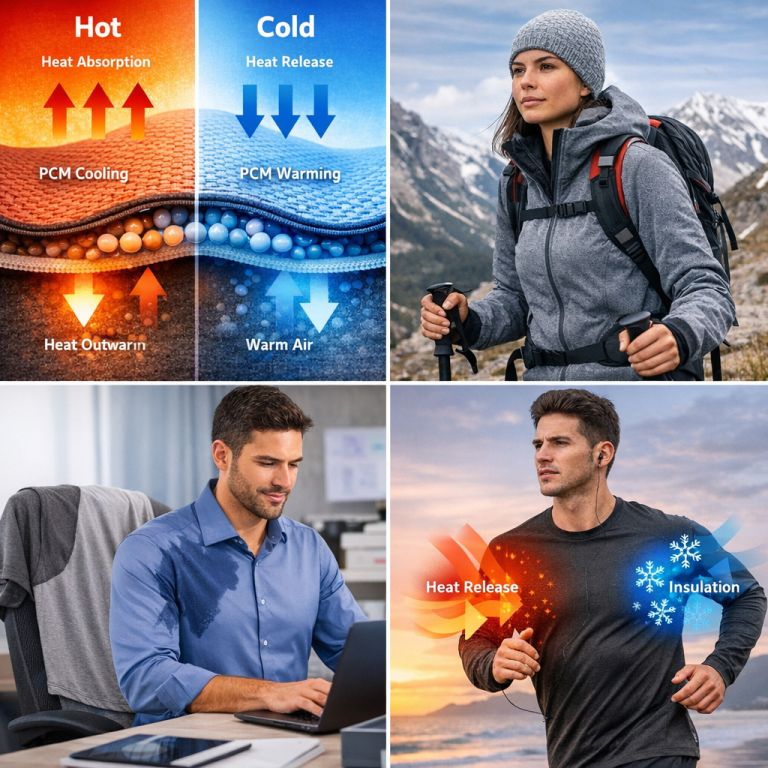
Instead of just warming or cooling, these materials try to keep things balanced. When your body gets hot, the fabric lets extra heat escape. When it gets colder, it keeps the warmth in.
The goal is consistency — avoiding extreme swings between overheating and chilling.
Think of it as a thermostat, but built into fabric.
How Temperature-Adaptive Fabrics Work
These clothes use advanced technology but feel natural to wear.
Heat Storage and Release
Some fabrics contain tiny materials that absorb body heat when it gets warm. Later, when it cools down, that stored heat slowly goes back to you.
You don’t notice the process happening, but you notice the comfort.
Moisture Control
Sweating cools you, but wet clothes quickly become uncomfortable. New fabrics move sweat away and dry faster.
This reduces both stickiness in heat and sudden cold sensations afterwards.
Responsive Fabric Structure
Some fibres change when the temperature changes. When it is warm, they open up a bit to let air in. When it is cold, they close up to keep warmth close to your body.
It’s a subtle adjustment, yet it changes how clothing feels throughout the day.
Reflecting Body Heat
Some clothes reflect your body heat back to you while letting sweat out, keeping warmth without overheating.
Where Thermo-Regulating Clothing Makes a Real Difference
Everyday Commuting
Modern life involves moving through multiple temperatures every day. Outdoor heat, indoor cooling, and crowded transit require constant adjustment.
Clothing that adjusts to temperature means you do not have to carry extra layers or feel uncomfortable when the weather changes.
Outdoor Work Environments
Outdoor workers face uncontrollable elements: sun, humidity, wind, or cold. Staying comfortable helps productivity and safety.
Clothes that handle heat and sweat can help you feel less tired on long workdays.
Travel and Adventure
Walking uphill in cold weather quickly leads to sweating. Once you stop, damp clothes draw heat away.
Thermo-regulating fabrics help prevent that cycle, keeping warmth more stable.
Sports and Physical Activity
Athletes focus on hydration and training, often overlooking clothing. Body temperature impacts endurance and recovery.
Benefits That Go Beyond Comfort
These garments seem like luxuries, but their benefits are practical.
- Steadier comfort throughout the day
- Less need for heavy layering
- Reduced irritation from sweat buildup
- Improved focus and productivity
- Lower risk of temperature-related stress
Comfort affects mood more than we admit. When clothes stop distracting you, daily tasks feel easier.
Who Should Consider Thermo-Regulating Clothing?
This technology isn’t limited to athletes or explorers.
It can help:
- Office workers moving between indoor and outdoor spaces
- Travellers facing changing climates
- Cyclists and runners
- Outdoor professionals
- Older adults are sensitive to temperature changes
- Students commuting long distances
Anyone living in regions with unpredictable weather can benefit.
Choosing the Right Garments
Because “thermal” is widely used in marketing, choosing it carefully matters.
Pay attention to:
- Fabric explanations rather than slogans
- Breathability and moisture management features
- Comfort during movement
- Climate suitability
A well-designed lightweight garment often performs better than thick clothing.
Sustainability: An Unexpected Advantage
Thermo-regulating clothing can help the environment. If it keeps people comfortable, heater and AC use might decline.
Researchers are also testing recycled fibres and plant-based materials to ensure clothes work well and are better for the planet.
Challenges Still Remaining
Even with new ideas, people are slow to start using these clothes because:
- Advanced fabrics can be expensive
- Many consumers are unaware of the technology
- Quality varies between manufacturers
As production increases, these garments become more accessible.
A Personal Observation
Clothing strongly influences energy levels. When the temperature feels balanced, tasks feel smoother, and movement is easier. When discomfort from poor temperature regulation sets in, even simple tasks can feel draining.
The difference often comes from an overlooked factor: fabric choice.
Clothing may seem ordinary, yet it plays a constant role in how we experience our environment.
Looking Ahead: The Future of Smart Clothing
Textile innovation is moving quickly. Future garments may include:
- Fabrics that cool automatically during heatwaves
- Materials warmed by body movement
- Clothing adjusted through wearable sensors
- Personalised temperature control based on individual metabolism
The boundary between clothing and technology is slowly disappearing.
Final Thoughts
Thermo-regulating clothing offers a new approach to addressing extreme weather shifts. Instead of dressing reactively, we can choose apparel designed to adapt with us, addressing challenges that ordinary clothing no longer solves in an unpredictable climate.
As climates become less predictable, now is the time to actively seek out clothing that keeps you comfortable and balanced throughout your day. Consider making your next clothing purchase one that supports your health and focus—your daily comfort matters.
Make your comfort a priority: choose garments designed to adapt to your needs. Try thermo-regulating clothing and experience the difference for yourself—let it help you focus on living your day to the fullest, no matter the weather.
About the Author