Amid popular fitness trends such as zone 2 training, HIIT, biohacking, and recovery technology, cross-training remains a consistently relevant principle. Once viewed as supplemental, cross-training is now recognized as a high-impact approach that improves performance, reduces injury risk, and supports lifelong health. What drives its lasting appeal across all ages and fitness levels? The following sections explore this question.
Understanding Cross-Training: Beyond Gym Jargon
Cross-training involves participating in multiple athletic activities or training methods instead of focusing on a single sport or movement pattern. This can include combining running with swimming, cycling, strength training, yoga, martial arts, or dance. Leading fitness professionals and medical institutions now recognize cross-training as an essential strategy for injury prevention, longevity, and balanced physical development.
Why Cross-Training Is Trending — And Will Stay That Way
Cross-training remains consistently popular because it:
- Solves the Plateau Problem
If you have experienced stagnation from repeating the same workouts, cross-training helps overcome plateaus by challenging the body in new ways. It stimulates different muscles, cardiovascular systems, and movement patterns, supporting steady and sustainable progress.
- Combat Injury & Repetitive Strain
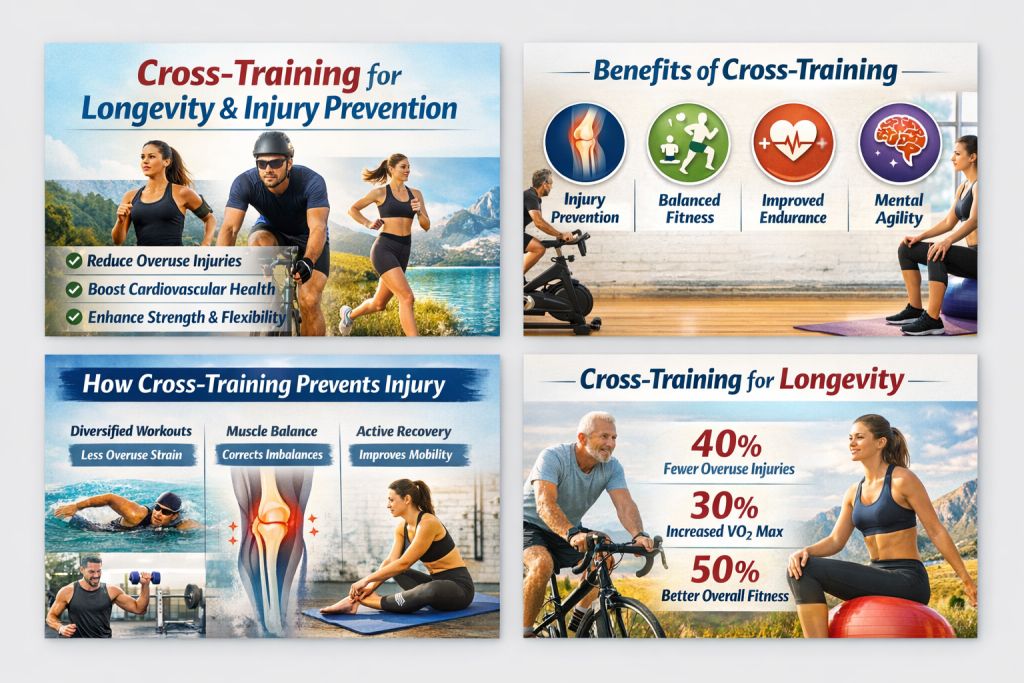
Repeating a single activity, such as long-distance running, can overload specific joints and tissues. Cross-training distributes physical stress throughout the body, significantly reducing the risk of overuse injuries. Research indicates that varying workouts can lower the risk of such injuries by up to 40% in some studies.
- Boosts Lifelong Fitness
Instead of focusing on short-term goals, multi-sport training develops versatile physical abilities such as strength, endurance, balance, mobility, and mental agility. This approach promotes longevity and enhances quality of life beyond competitive seasons.
Expert Insight: How Multi-Sport Training Strengthens the Body
Effective cross-training is intentional and provides science-backed benefits:
- Balanced Muscle Development
Single-sport training often overemphasizes certain muscle groups while neglecting others, which can lead to imbalances and injury. Cross-training addresses underused muscles, improving symmetry and joint stability, particularly when strength and flexibility exercises are included.
- Enhanced Cardiovascular Endurance
Activities such as swimming, cycling, and rowing engage the cardiovascular system differently than running or weightlifting alone. Alternating these activities improves overall cardiorespiratory fitness, which is directly linked to longevity and positive health outcomes.
- Flexibility, Mobility, and Active Recovery
Including low-impact or flexibility-focused workouts such as yoga or Pilates improves range of motion and supports recovery from high-intensity sessions, helping maintain consistent progress.
Real-World Example: How Cross-Training Changed My Perspective
Previously, I focused primarily on distance running, increasing mileage and intensity to pursue personal records. This approach was effective until recurring knee and IT band discomfort limited my progress. I then incorporated swimming twice a week, a weekly Pilates class, and low-impact cycling sessions. Within months, I observed the following improvements:
- Knee discomfort decreased significantly.
- Weekly training consistency improved.
- Overall performance and pace stabilized, despite fewer miles.
These results align with clinical observations that cross-training helps injured athletes maintain cardiovascular conditioning while reducing tissue strain.
Cross-Training and Longevity: What Does the Research Say?
Longevity involves not only avoiding injury but also maintaining physical and mental well-being throughout life.
Diverse Activities Enhance Lifespan Potential
Scientific literature indicates that combining endurance, strength, flexibility, and balance training is associated with improved metabolic health, cardiovascular fitness, and brain function, all of which are predictors of a longer, healthier life.
Reduced Chronic Stress on the Body
By avoiding repetitive overload and including rest-oriented movements, individuals who cross-train report fewer chronic pains, less burnout, and fewer training interruptions. These factors contribute to sustained fitness engagement, which is important for healthy aging.
Common Cross-Training Myths — Busted!
- Myth: Cross-Training Reduces Performance in Your Main Sport
Reality: When implemented strategically, cross-training enhances foundational strength and endurance that benefit your primary activity. Many elite athletes use multi-sport training to improve performance.
- Myth: Cross-Training Is Only for Injured Athletes
Reality: While cross-training is valuable during recovery, it also improves baseline fitness and resilience before injuries occur.
- Myth: More Is Always Better
Reality: Balance is essential. Excessive unrelated training without adequate recovery can be counterproductive. Effective programs combine complementary activities rather than simply increasing activity volume.
Top Cross-Training Trends for 2025
Current cross-training trends include the following:
- Hybrid Training Protocols
Combining strength and endurance sports, such as rowing and weightlifting, promotes both cardiovascular and muscular development. This approach is increasingly popular among performance coaches.
- Longevity-Oriented Workouts
Methods such as the Norwegian 4×4 interval system are gaining popularity due to their adaptability, efficiency, and association with improved VO₂ max, a key indicator of both performance and lifespan.
- Mind-Body Balanced Training
Yoga, Pilates, mobility circuits, and meditative movement are now considered essential components of injury prevention and longevity programs.
How to Build a Cross-Training Plan That Works
Below is a simple weekly template designed for balanced development and injury prevention:
| Day | Focus |
|---|---|
| Mon | Running or Cycling (Cardio Endurance) |
| Tue | Strength Training (Full Body) |
| Wed | Swimming or Low-Impact Cardio |
| Thu | Mobility + Active Recovery (Yoga/Pilates) |
| Fri | Interval Training (HIIT or 4×4 Style) |
| Sat | Sport Play (Tennis, Basketball, Hiking) |
| Sun | Rest or Gentle Stretching |
The goal is not perfection, but intentional variety.
Final Takeaways: Why Cross-Training Matters Now More Than Ever
- Improves longevity through balanced physical capacity.
- Reduces injury risk by dispersing strain and addressing muscular imbalances.
- Enhances mental engagement, preventing boredom and burnout.
- Delivers high-interest value to anyone, from weekend warriors to elite athletes.
Whether you are pursuing personal records, managing recovery, or seeking lifelong fitness, cross-training is more than a trend; it is a cornerstone of effective, sustainable training.