Fashion doesn’t begin in stores anymore.
Today, fashion begins on screens.
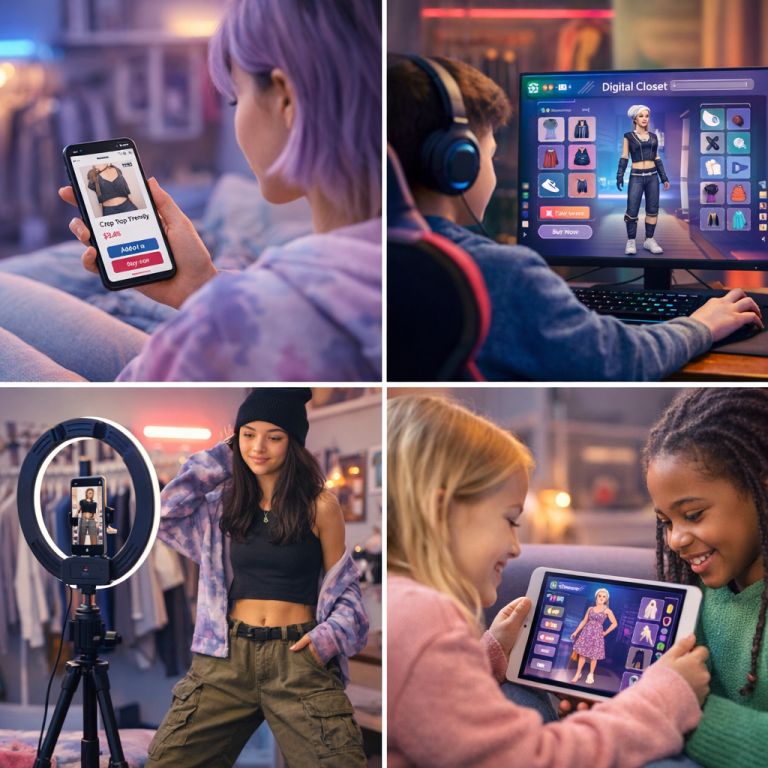
For Gen Z and Gen Alpha, style begins on screens. Their fashion choices emerge from digital habits: scrolling, saving, copying, and sharing. Shopping is woven into this daily screen time—it’s not a separate act.
I’ve watched this happen up close.
Younger cousins, students, and even content creators I know don’t talk about fashion in terms of brands or collections. They talk about moods, energy, and whether something “feels right.”
That alone tells you how different things are now.
They Buy Feelings, Not Clothes
Most older shoppers buy clothes because they need them.
Young people buy clothes because something clicks emotionally.
A hoodie appears in a reel. Someone styles it perfectly. Suddenly, it feels personal. Before they even think about it, the item is already in their cart.
I once watched my niece buy sneakers she hadn’t planned to get. She saw them on TikTok, pictured how they’d look in her mirror selfies, and bought them within minutes. No research. No comparing.
That’s modern fashion behaviour.
It’s fast, instinctive, and deeply emotional.
Social platforms give people small bursts of excitement that make them act quickly, without overthinking.
Style Matters More Than Labels
Brand loyalty is fading.
Gen Z doesn’t dress for logos. They dress for expression.
They mix thrift store finds with online releases. They combine fast fashion with handmade accessories. Sometimes, one outfit comes from five different places.
What matters is whether it fits their personal vibe.
I’ve heard teens say, “This doesn’t feel like me.”
Not “Is this popular?”
That shift matters.
Clothing is now a way to show who you are. Every outfit tells a story. Since everything is online, wearing the same look twice can feel strange.
Fashion is now inseparable from content; the digital world is where it is made and seen.
Everyone Wants Their Own Version of a Trend
Here’s the interesting part: Gen Z follows trends — but they don’t want to look identical.
They want their version.
That’s why remix culture is so popular. DIY styling, thrift flips, micro-aesthetics, and custom outfits all stem from wanting to feel unique while still belonging to a group.
Today, personal style is as unique as a digital fingerprint.
No two lookbooks are the same.
Real People Matter More Than Ads
Traditional ads barely register anymore.
Young shoppers trust creators, friends, and comment sections.
If someone shows how an outfit fits in real life, how it moves, how it feels, and how they put it together, it has more impact than any polished ad.
Buying decisions happen in group chats and reels.
For Gen Alpha, this starts very early. Kids notice trends before they even know about prices.
Fashion discovery is digital first.
Always.
Trends Move Fast, and FOMO Does the Rest
Micro-trends rise and disappear in days.
One week, it’s baggy jeans. The next one is balletcore. Then, suddenly, everyone wants metallic sneakers.
This speed creates pressure.
Limited releases and viral moments make people worry about missing out. So, young shoppers buy fast, share fast, and move on.
But many also feel tired from how quickly everything changes.
Still, the scroll continues.
Sustainability Creates Quiet Tension
Most young people care about the planet.
They talk about climate change, share posts about sustainability, and know the harm fast fashion causes.
Yet they still shop.
That contradiction creates guilt.
Some try thrifting, others resell their clothes, and many support ethical brands when possible.
What they respond to most is honesty.
They don’t want perfect sustainability; they want honesty.
They can spot fake eco-marketing instantly.
Digital Fashion Is Becoming Normal
Virtual clothing is no longer strange to Gen Z.
They already buy game skins and avatar outfits. Online appearance matters.
Digital fashion lets them try new looks without limits. There are no sizing problems, no need for closet space, and no waste.
Identity now exists both online and offline.
Fashion follows both worlds.
A Moment That Stayed With Me
Last year, I attended a small creator meetup.
Most attendees were under twenty.
They didn’t talk about brands. They talked about telling stories with their clothes.
One girl said something simple:
- “I don’t dress for people around me. I dress for the camera.”
That line explained everything.
Today, fashion is about performance, emotion, and being digital.
What Actually Connects With Young Shoppers
If you’re building a fashion brand or marketing to Gen Z and Gen Alpha, here’s what matters most:
- prioritize authenticity,
- build a genuine community,
- let creators have influence,
- make shopping interactive,
- respect mental wellness,
- and have a clear, meaningful purpose.
These are the key takeaways to truly connect.
They don’t want perfection.
They want authenticity.
Final Thoughts
Gen Z and Gen Alpha don’t just buy fashion.
They live it.
They turn it into content.
They turn it into identity.
They turn it into a connection.
Digital-first fashion isn’t a phase.
It’s a fundamental shift in how fashion, identity, and community interact in a digital world.
And the brands that survive won’t be the loudest.
They’ll be the most authentic, understanding the real drivers behind Gen Z and Gen Alpha choices.
About the Author