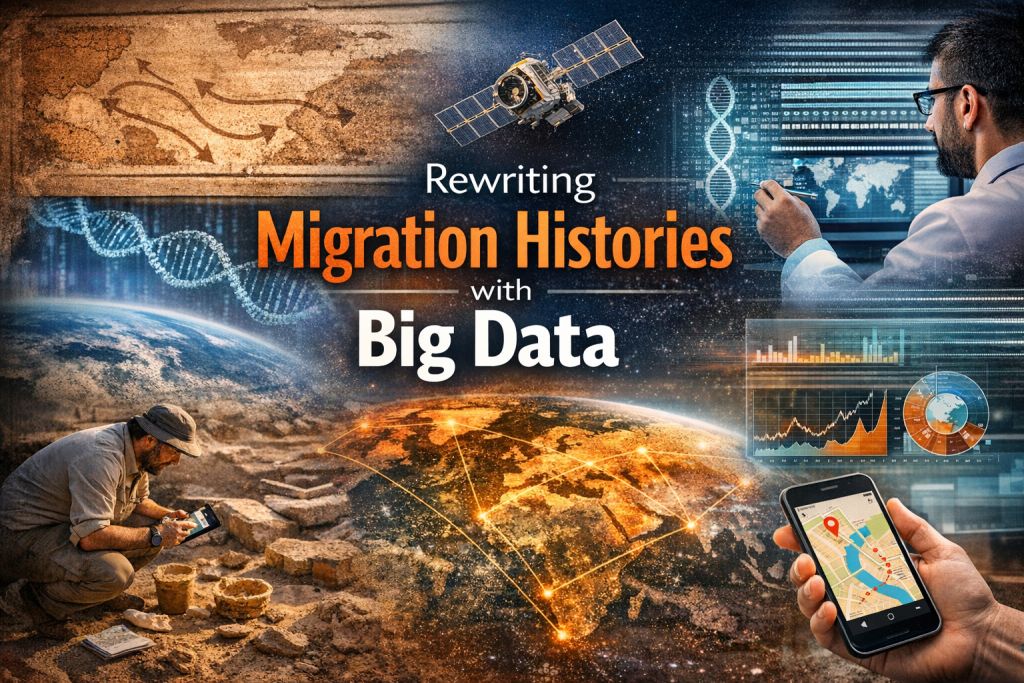
Growing up, I believed migration history was fixed, based on what textbooks, archeological finds, old maps, or colonial records told us. But over the last ten years, Big Data has quietly transformed this field.
It’s surprising that tools like databases, satellite images, and machine learning now help us trace the journeys our ancestors made thousands of years ago. Big Data is filling gaps that historians thought couldn’t be closed. It’s updating timelines, uncovering forgotten routes, and even questioning stories that communities believed for generations.
What interests me most is how technology is making the study of human migration feel fresh and relevant, instead of distant or dull. In projects I’ve watched or taken part in, combining technology and history has changed not only what experts know, but also how entire communities view themselves.
Why Big Data Is Suddenly So Important
Big Data isn’t just about having a lot of information. It means looking at many kinds of data simultaneously, such as old travel records, ancient DNA, weather patterns, social media, digitized manuscripts, satellite images, and more. Together, these sources give us a much fuller and more detailed story than any single source could.
Some of the most important sources today include:
- Large DNA and genomic databases
- Massive digital archives of historical documents
- Remote-sensing images from space agencies
- Climate and geological datasets
- Population and census records
- Social media and mobile phone movement patterns
When researchers look at all these sources together, they often find a more complete and sometimes surprising picture of migration than older theories suggested.
How Big Data Is Rewriting Migration Histories
1. DNA Data Is Revealing Ancestry Links No One Expected
One of the biggest changes comes from genetics. Large DNA databases, collected over many years by research groups, now allow scientists to map out ancient migration routes in new ways.
I once met a geneticist who worked with tribal communities near the Western Ghats. Their team found that a group long thought to be “local” for centuries actually shared a genetic link with a distant coastal population. Oral histories never mentioned long-distance travel, but DNA showed otherwise. This discovery didn’t just add to science; it changed how the community saw its own history.
This type of discovery is happening in many regions, revealing:
- Earlier-than-recorded population mixing
- Unknown migration waves
- Movements driven by climate disasters
- Lost cultural connections
2. Machine Learning Is Making Sense of Mountains of Old Documents
Think about how hard it would be to read thousands of old travel logs or handwritten manuscripts from colonial times. Historians once spent years doing this work. Now, AI can scan, translate, and organize these records in just a few hours.
What this means in real terms:
- Ancient scripts can be decoded
- Migration-related notes can be clustered
- Patterns that humans might miss are highlighted
Now, instead of making guesses, researchers can examine many documents simultaneously and uncover links between regions or communities that would have remained hidden in old archives.
3. Satellites Are Finding Traces of Old Paths and Settlements
This still amazes me. Researchers use satellite images to find settlements that are now hidden by forests, sand, or even city buildings. AI looks at things like soil color, elevation, heat, and other small clues to spot signs of people who lived there long ago.
On a research trip in Rajasthan, a team showed me how they traced old migration routes by examining land patterns and plant life. What they found matched stories about people moving because of droughts centuries ago. Before Big Data, these were only guesses. Now, there’s real proof.
4. Phone and Social Media Data Reveal Modern Migration Patterns
We usually think of migration as something from the past, but Big Data also helps us understand how people move today.
During the Syrian refugee crisis, aid groups used mobile phone data to map routes, track how fast people moved, and find where they settled. This helped them deliver food, shelter, and medical care more efficiently.
Social platforms, when studied ethically and anonymously, also help researchers understand:
- Internal migration in cities
- Crisis-related displacement
- Seasonal labor movement
Ten years ago, having access to this kind of real-time data would have seemed impossible.
5. Environmental Data Connects Climate to Ancient Movement
Climate patterns can help explain why people moved. With Big Data, researchers can now connect:
- Ancient drought cycles
- Flood patterns
- Temperature shifts
- Sea-level changes
with migration timelines.
For example, scientists studying ancient settlements near river basins found that many major events occurred after long droughts. Without climate data, people might have thought these migrations were caused by conflict or politics.
A Personal Moment That Changed My Understanding
A few years ago, at a digital humanities workshop about the Indian subcontinent, I saw a project that combined satellite data, language maps, genetic markers, and historical records. The goal was to learn about the origins of a semi-nomadic group.
The results were surprising. The group’s migration pattern was nothing like what modern books described. They had actually moved in a circular path shaped by the monsoon, which no one had recorded before.
What struck me most was how emotional the community representatives were when they saw the results. The data meant more than just numbers. It helped them reconnect with their identity, pride, and ancestors. That experience stayed with me and changed how I think about Big Data and history.
Why This Matters More Than Ever
Changing migration histories might sound like something only scholars care about, but it actually matters to real people in many ways.
1. Cultural Identity
Communities often use history to define who they are. Updated migration histories help many groups learn about their real roots.
2. Policy and Governance
When governments have accurate information about migration, they can better plan for infrastructure, healthcare, schools, and social services.
3. Climate Preparedness
Climate has always influenced where people move, and it still does today. Big Data helps us predict where people might need to move in the future.
4. Heritage Preservation
By turning records into digital form and studying them, we keep them safe from being lost, damaged, or changed.
The Challenges That Come With Big Data
Of course, this new approach also comes with risks.
- Privacy concerns, especially with genetic data
- Biased datasets, which can distort interpretations
- Dependence on tech giants that own much of the world’s data
- Misinterpretation when data lacks cultural context
No matter how advanced our tools become, understanding migration still requires human judgment and ethical care.
What the Future Might Look Like
If things keep moving at this pace, migration histories will soon be shaped by:
- Predictive models that simulate ancient movement
- AI tools that reconstruct lost languages
- Digital twins of ancient communities
- Enhanced satellite archaeology
- Global ancestry networks with responsible governance
The more we learn, the more we realize that human history has always been closely connected.
Final Thoughts
Big Data isn’t just changing migration histories; it’s also helping to restore them.
It’s uncovering stories that were lost, misunderstood, or never written down.
It shows how resilient and adaptable people have always been, moving not just to survive but also out of curiosity, in search of new opportunities, and to connect with others.
In the end, these discoveries remind us that migration has always been a regular part of human history.
About the Author