Sometimes, fashion changes in ways you don’t notice right away. It’s not the kind of shift that takes over your social media overnight, but a gradual change you see when you look at the bigger picture. That’s what’s happening with Cultural Revival Fashion.
People are tired of clothes that feel meaningless. They want pieces that matter and remind them of their roots. Between this search for meaning and a love for new ideas, a new style has emerged: Neo-Ethnic Fusion. It brings together traditional skills and bold, modern shapes, and the mix just works.
I’ve seen this change firsthand, and it’s made me see clothing differently.
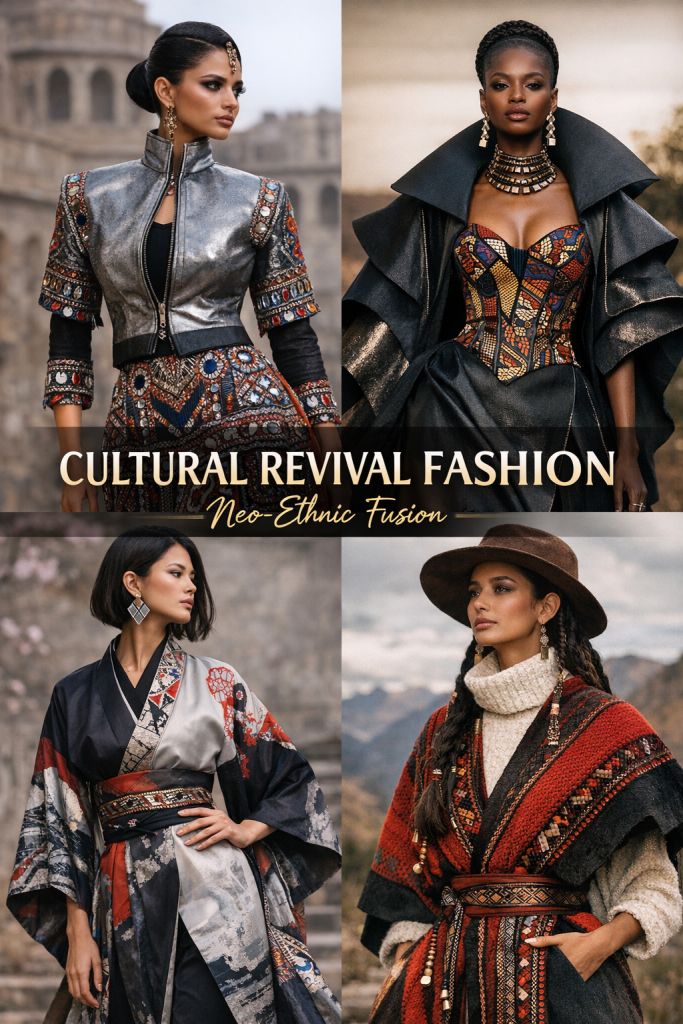
Why This Movement Is Surfacing Now
It’s easy to see why Cultural Revival Fashion is getting noticed now. When so much around us feels quick and throwaway, handmade items start to feel special.
A few reasons stand out:
- We’re craving authenticity
There’s something comforting about knowing a piece of clothing was made by a real person, not a machine.
- Traditional crafts deserve to survive
Weaving, embroidery, and block printing are skills passed down through families, but they were slowly disappearing. It’s great to see them coming back.
- Sustainable fashion isn’t optional anymore
Natural dyes, handwoven fabrics, and slower production are better for the planet and make us feel better about what we wear.
- Culture feels grounding
Wearing cultural elements often feels like carrying a bit of home with you.
At its best, fashion shows how people feel. Right now, many of us want to feel connected again.
Neo-Ethnic Fusion: Tradition With a New Edge
It’s interesting to see how designers are working with cultural crafts today. Instead of copying the past, they’re using it to shape the future.
Neo-Ethnic Fusion is the bridge between:
- ancient techniques, and
- modern, almost futuristic design shapes.
I once went to a small show where a designer combined traditional tribal beadwork with a sharp, structured jacket. It looked like something from a sci-fi movie. The piece felt both familiar and new, grounded and bold. That moment stuck with me. Seeing something like that helps you understand where fashion is going.
How This Shift Helps Both People and the Planet
One reason Cultural Revival Fashion feels so fresh is that it addresses problems we’ve overlooked for years.
✔ It challenges fast fashion
People don’t want throwaway clothing anymore. They want things made with care.
✔ It supports artisan communities
Many rural families rely on crafts for their income. Revival fashion gives them steady work and a sense of pride.
✔ It reduces waste
Handmade clothes usually last longer and are made from natural materials.
✔ It brings identity back into dressing
It feels good to wear something that reflects history or culture.
Fashion feels meaningful again when it’s about more than just trends.
How Different Cultures Are Reinventing Their Heritage
This movement isn’t limited to one country. It’s happening all over the world.
India
Handloom textiles are being turned into jumpsuits, sari-inspired skirts, jackets with traditional embroidery and modern cuts.
Japan
Kimono drapes are influencing streetwear and minimalistic silhouettes.
Africa
Bold prints are appearing in tailored suits, sneakers, and oversized jackets.
South America
Indigenous patterns are showing up in warm alpaca coats and accessories.
Scandinavia
Sámi motifs are blending with clean Nordic design.
Every culture brings its own rhythm to this revival.
A Personal Experience That Shifted My Perspective
A few years ago, I visited a weaving group in Northeast India. The weavers used back-strap looms, which are simple and portable, but the fabrics they made were incredibly detailed. One woman told me they don’t just “make cloth.” Their patterns hold stories, blessings, warnings, and memories.
That experience changed me. I stopped seeing clothes as just objects and started seeing them as small pieces of culture.
That memory still comes back to me when I see handcrafted clothing displayed in glossy boutiques.
Why Younger Generations Love This Trend
It’s easy to think young people only want fast, flashy fashion, but that’s not true. Many are moving toward Cultural Revival Fashion because:
- It feels personal
- It feels responsible
- It feels expressive
- It’s visually striking
- And honestly, it just looks cool
It’s powerful to wear something that brings together both history and new ideas.
Where Neo-Ethnic Fusion Is Heading Next
Designers today are experimenting in ways we didn’t imagine a decade ago:
- Traditional embroidery on high-tech fabrics
Imagine tribal patterns on breathable, temperature-adapting textiles.
- 3D printing meeting ancient motifs
Old stories told through new tools.
- Streetwear inspired by saree drapes and kimono folds
Comfort with cultural depth.
- Metallic hints mixed with heritage fabrics
A blend that feels bold but not overwhelming.
These ideas show that culture doesn’t have to stay stuck in the past. It can grow and change without losing what makes it special.
How You Can Be Part of This Revival
You don’t have to change your whole wardrobe. Even small steps make a difference:
- Choose handmade when possible
- Support artisan-led brands
- Learn the story behind the fabric
- Mix cultural elements with your daily wear
- Share the work of craft communities
Every choice helps preserve a tradition.
Cultural Revival Fashion Is More Than Style
What makes this movement special is the feeling behind it. Cultural clothing reminds us of festivals, ceremonies, grandparents, and childhood memories—the quiet things that shape who we are. When these memories mix with modern fashion, something beautiful happens.
It becomes a statement:
“I respect where I come from, and I’m excited about where I’m going.”
This balance between past and future is what makes Cultural Revival Fashion strong.
The Road Ahead
As our world gets more digital and fast-paced, people start to want something real, something handmade and grounded. Cultural Revival Fashion fills that need. With Neo-Ethnic Fusion leading, the future of fashion could be a place where:
- Innovation and tradition grow together
- Artisans find new opportunities
- Consumers choose meaning over excess
- And culture becomes part of everyday wear
This movement doesn’t demand attention. It’s steady, sincere, and truly human.
That could be why it’s here to stay.
About the Author