Lately, I’ve seen what many farmers, gardeners, and nature lovers have been talking about: the world isn’t buzzing like it used to. Climate change has shifted our seasons, rainfall, and plant growth. One of the most overlooked victims is the fragile network of pollinators that keeps our food system running.
This isn’t just a distant environmental issue. It affects the fruit we eat, the crops farmers depend on, and the ecosystems that provide clean air and healthy soil.
In this blog, I’ll explain how climate change is harming pollinator networks, what this means for farming, and why it matters now more than ever. I’ll also share some personal experiences that showed me how serious this issue is.
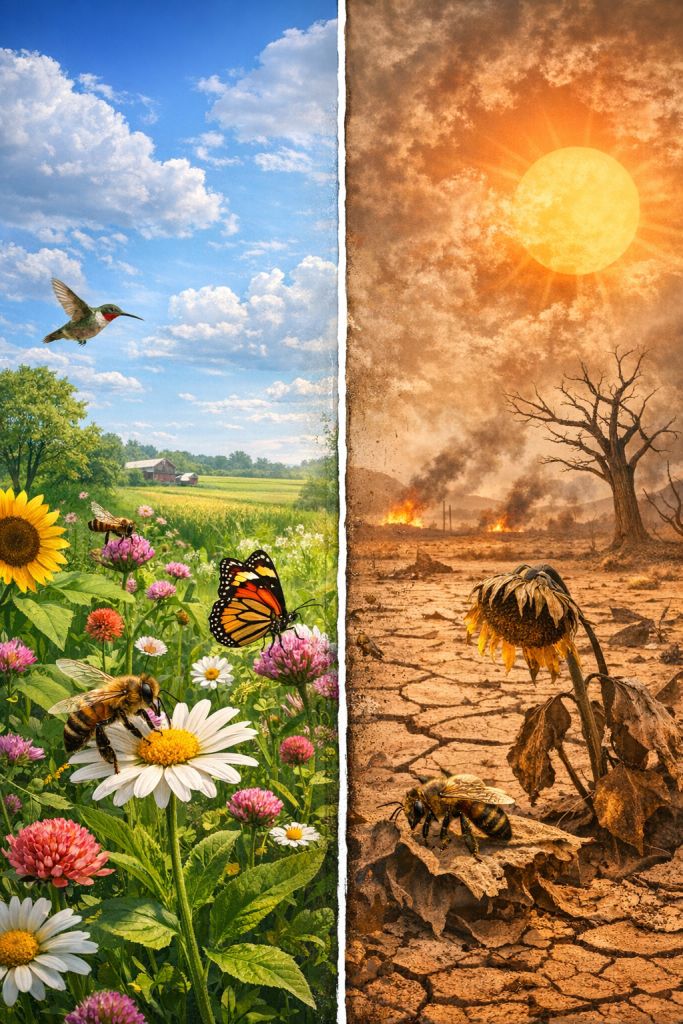
Pollinator Networks: The Hidden System Behind Your Food
Pollinator networks are the natural links between plants and the animals that help pollinate them. These include:
- Bees
- Butterflies
- Moths
- Beetles
- Birds
- Even some small mammals
If these species vanish, much of our plant life would vanish too. The UN FAO says about 75% of global food crops depend on pollinators in some way. That’s a huge number when you think about it.
Every apple, watermelon, mustard seed, almond, or tomato you eat is part of this network. Now, that network is under more pressure than ever.
How Climate Change Disrupts Pollinators and Plants
Climate change affects pollinators in many ways. It weakens the system in different areas, and when several problems happen at once, the network can collapse faster than we expect.
1. Heat Waves Mess With Pollinator Behavior
Most pollinators, especially bees, are sensitive to temperature. Even a small rise changes how far they fly, how long they look for food, and how often they leave their hives.
I still remember a conversation with a mustard farmer in Haryana last year. We were walking through his field early in the season, and he said, “There used to be a soft humming sound every morning. Now, on hotter days, the silence feels strange.” And he was right—I could barely spot any bees around.
These small changes add up over time. Fewer bees mean less pollination, leading to lower crop yields.
2. Plants and Pollinators Are Falling Out of Sync
One of the most worrying effects of climate change is that flowers and pollinators no longer appear at the same time.
As temperatures shift, many plants bloom earlier or later than before. But pollinators still follow their usual cycles, causing what scientists call a phenological mismatch.
During a trek in Uttarakhand in 2022, I saw rhododendrons blooming much earlier than usual. The locals told me this shift had started only in the last decade. The flowers looked beautiful, but almost no bees visited them. They dried up faster and produced fewer seeds that year.
Nature relies on timing. When that timing is off, the whole system suffers.
3. Extreme Weather Events Destroy Habitats
Storms, droughts, sudden rainfall, and wildfires, all made worse by climate change, directly destroy the habitats pollinators need:
- Nesting grounds
- Host plants
- Shelter
- Food sources
In 2021, after record rains in parts of Maharashtra, several small beekeepers I spoke with said their hives were destroyed. Many lost half their colonies in just a few weeks. When a hive collapses, it can take years to recover.
4. Irregular Rainfall Reduces Nectar and Pollen
It’s not just about flowers blooming at the wrong time. Even when they do bloom, unstable weather often means they produce:
- Less nectar
- Less pollen
- Weaker flowers
Pollinators, especially bees, rely on good nectar. When nectar is scarce, colonies weaken and their pollination ability declines.
The Decline of Pollinators and Its Direct Impact on Farming
The effects of climate change are most evident on farms. Fewer pollinators hurt agriculture in ways many people don’t notice.
1. Lower Yields Become Common
Crops such as:
- Apples
- Almonds
- Mustard
- Tomatoes
- Pumpkins
- Sunflowers
All need strong pollination. Many farmers in India and around the world have already seen smaller harvests during hotter years.
2. Poor Quality Fruits and Vegetables
Without enough pollination, fruits can end up:
- Misshapen
- Small
- Scarce
A study in Nature Communications found that not enough pollination is already lowering global crop output by several percentage points. That might not sound like much, but worldwide, it’s a big deal.
3. Farmers Spend More to Rent Beehives
In places where bee numbers have dropped, farmers now rent hives during the flowering season. Costs rise each year because fewer healthy colonies are available.
For small farmers, this can become a financial burden they simply can’t carry.
4. Food Security Comes Under Threat
If pollinator networks continue to weaken, many healthy foods could become expensive or hard to find. This isn’t just a distant problem. It could affect markets everywhere.
A Personal Moment That Changed the Way I Saw This Issue
One memory that stays with me is from a visit to a small organic farm run by an elderly couple. The woman pointed to a field of marigolds and said quietly:
“In my younger days, you couldn’t stand here without hearing bees. Now it feels like the flowers are waiting for them.”
There was a deep silence in that field. It felt unnatural and, honestly, a bit heartbreaking. That quiet made everything I’d read about pollinator decline feel real.
How We Can Help Restore Pollinator Networks
The good news is that we’re not helpless. There are practical steps, big and small, that can help pollinators recover.
1. Grow More Native Plants
Native flowers support local pollinators better than imported plants. They bloom at the right time and give the right nutrition.
2. Reduce or Replace Chemical Pesticides
Strong pesticides harm or confuse bees. Farmers can:
- Use organic pest control
- Spray chemicals only when bees are less active
- Shift to integrated farming practices
These methods help both crops and pollinators thrive.
3. Make Farms Pollinator-Friendly
Simple steps like:
- Planting flower borders
- Keeping patches of wild vegetation
- Growing multiple crops (not just monocultures)
- Avoiding pesticide use during peak flowering
can help boost pollination naturally.
4. Protect Natural Landscapes
Forests, grasslands, and small wetlands are vital homes for pollinators. When we protect or restore these places, pollinators can thrive on their own.
5. Support Strong Climate Action
In the end, if climate change keeps getting worse, pollinators will always struggle to recover. Supporting strong climate policies is one of the best ways to help.
Final Thoughts: The Balance of Nature Is Shifting, But We Still Have Time
The decline in pollinator networks isn’t just an environmental story. It’s a human story as well.
It’s about farmers losing crops, ecosystems losing diversity, and children growing up in a world with fewer butterflies and less natural sound. But it’s not too late. Pollinators can recover if we give them a chance. Even small actions, like planting a few flowers, avoiding pesticides, or protecting a patch of land, can help restore what we’ve lost.
If our generation chooses to act, we can still protect the natural balance that has supported people for thousands of years.
About the Author