Introduction: Why Crafting Is More Than a Hobby
In recent years, crafting has shifted from a simple leisure activity to a science-supported method for improving cognitive performance, emotional balance, and long-term brain health. Activities such as knitting, woodworking, pottery, embroidery, resin art, and DIY home décor now serve as valuable wellness practices.
Research in psychology, neuroscience, and longevity science confirms that crafting strengthens cognitive function, improves memory, reduces stress, and enhances creativity.
Through personal experience with painting, pottery, and digital crafts, as well as observing others, I have seen crafting positively influence emotional states by reducing anxiety, fostering innovation, and promoting mindful energy.
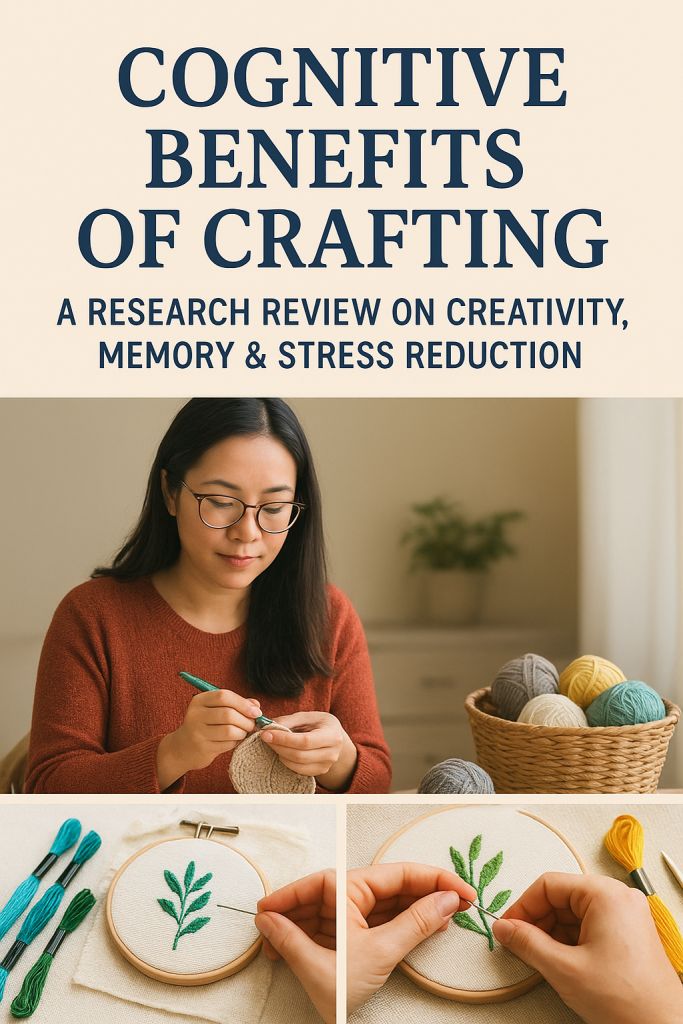
This article combines scientific research, practical observations, and expert insights to explain how crafting affects brain function, mental health, and cognitive resilience.
1. The Neuroscience of Crafting: How Your Brain Changes When You Create
Crafting is not only relaxing; it also stimulates neurological activity.
According to neuroimaging studies, crafting engages multiple brain regions simultaneously:
- Prefrontal Cortex
Planning patterns, selecting colors, measuring materials, and solving problems enhance executive function.
- Parietal Lobes
Precise movements during crafting improve hand-eye coordination and spatial reasoning.
- Hippocampus
Learning new crafting skills stimulates memory circuits and supports the growth of new brain cells.
- Reward System
Completing a craft activates dopamine pathways, resulting in a sense of accomplishment and increased motivation.
A 2014 study on knitting published in The British Journal of Occupational Therapy found that over 81% of participants felt happier and more relaxed after crafting. MRI results from similar studies indicate that crafting produces effects comparable to meditation by activating the brain’s relaxation networks.
A Real-Life Insight
During a creative workshop for seniors, I observed that participants with mild memory lapses became more attentive and communicative when engaged in hands-on activities. One woman spent nearly 30 minutes repeating a simple beading pattern. During this time, her anxiety decreased, her posture improved, and she began sharing childhood stories.
This experience reinforced an important insight that reconnects us with parts of the mind that everyday stress disconnects us from.
2. Crafting and Neuroplasticity: Rewiring the Brain for Better Memory and Cognitive Longevity
Neuroplasticity—the brain’s ability to reorganize and grow—is central to cognitive longevity.
Crafting supports neuroplasticity through the following mechanisms:
- Learning new techniques, such as mastering a stitch or experimenting with resin art, challenges the brain with novel experiences.
- Repeating fine motor movements strengthens neural pathways and enhances procedural memory.
Encouraging multisensory engagement
Crafting engages multiple senses, including touch, sight, texture, color, and sometimes sound, which deepens sensory-motor integration.
A study from Mayo Clinic’s Healthy Aging and Cognitive Health Initiative found that older adults who participated in arts and crafts had a 40–73% lower risk of cognitive impairment.
Crafting as Longevity Medicine
Brain longevity experts emphasize activities that enhance:
- motor coordination
- creativity
- problem-solving
- emotional regulation
Crafting fulfills all these criteria, making it one of the most accessible and enjoyable longevity habits.
3. Crafting as Stress Reduction: The Psychology of Flow & Calm
Crafting can induce a psychological state known as flow, a term introduced by positive psychologist Mihaly Csikszentmihalyi.
Flow occurs when you are fully immersed in an activity, resulting in:
- Time feels like it slows down
- Stress fades
- Self-judgment decreases
- Awareness becomes calm and present
This state offers several direct benefits:
- Lower cortisol levels
Mindful crafting lowers cortisol levels, which helps reduce anxiety and tension.
- Decreased rumination
Hands-on activities help interrupt overthinking and negative thought patterns.
- Enhanced emotional resilience
Completing a craft provides small successes that build confidence and self-efficacy.
A 2018 study found that weaving and stitching led to measurable decreases in heart rate and blood pressure, demonstrating immediate relaxation effects.
Personal Observation
During a stressful period at work, I began painting miniature landscapes in the evenings. The structured strokes, calming colors, and slow pace helped me relax after demanding days. This practice became a digital detox, not for productivity, but to regain a sense of personal grounding.
Crafting is not only calming; it is also restorative.
4. Creativity Boost: How Crafting Expands Imagination & Problem-Solving Skills
Crafting stimulates divergent thinking, which is the ability to generate multiple ideas and solutions.
How crafting enhances creativity:
- Encourages experimentation
Experimenting with new patterns, colors, or materials encourages innovative thinking.
- Strengthens pattern recognition
Identifying structures in art enhances pattern recognition, which can improve decision-making and strategic planning in other areas.
- Builds tolerance for mistakes
Mistakes made during crafting can lead to creative breakthroughs and support a growth mindset.
- Enhances visual-spatial intelligence
Crafting enhances the brain’s ability to perceive and process visual information.
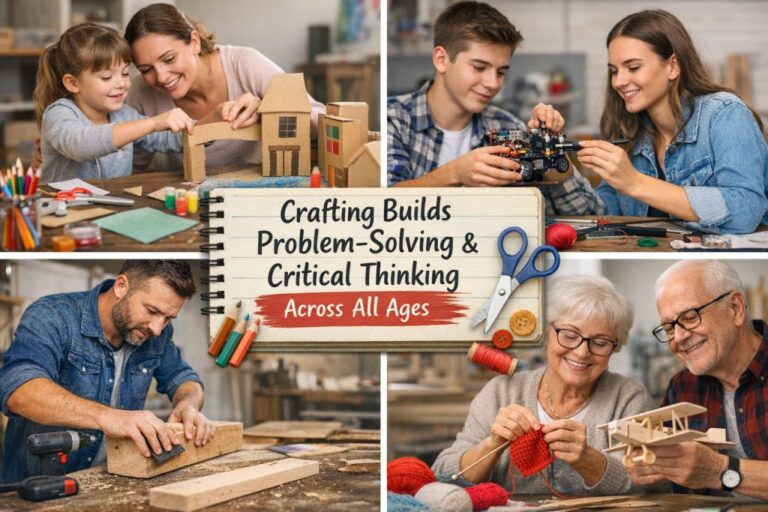
For those in creative fields, crafting is an effective tool for overcoming creative blocks. For others, it increases mental flexibility, which research shows is important for emotional regulation and cognitive resilience.
Crafting & Mental Health: A Therapeutic Tool Backed by Research
Craft therapy is recognized in clinical psychology and occupational therapy for its benefits in:
- anxiety management
- depression reduction
- trauma recovery
- grief processing
- ADHD focus training
Why crafting works in therapy:
- Hands-on tasks regulate the nervous system
The rhythmic motions of knitting or drawing can have soothing effects similar to deep breathing.
- It’s a safe emotional outlet.
Crafts provide a means of expression without the need for words.
- Crafting builds community
Group crafting sessions help reduce loneliness, which is a significant factor affecting mental health and life expectancy.
Research published in Art Therapy: The American Art Therapy Association Journal showed that art-making for just 45 minutes significantly lower down cortisol levels, regardless of skill level.
Crafting makes mental health support both accessible and enjoyable.
6. How Crafting Supports Long-Term Brain Health & Longevity
Longevity science has shown that three key pillars determine brain aging:
- Cognitive stimulation
- Stress management
- Social connection
Crafting supports all three pillars of brain health.
Crafting is a longevity habit because it:
- keeps neural circuits active
- provides daily mindfulness
- encourages lifelong learning
- reduces dementia risk
- supports emotional well-being
- creates purposeful engagement
In Blue Zones, which are regions with the longest-living populations, daily routines often include hands-on, creative tasks such as weaving, gardening, and woodworking. These activities help maintain independence, identity, and mental sharpness into old age.
7. Choosing the Right Craft for Brain & Mental Wellness
Different crafts activate different cognitive and emotional benefits.
Best crafts for memory:
- knitting
- crochet
- embroidery
- origami
Best crafts for stress reduction:
- watercolor painting
- pottery
- candle making
- mandala art
Best crafts for creativity:
- mixed-media art
- resin design
- DIY décor
- clay modeling
Best crafts for seniors:
- beading
- simple woodwork
- paper crafting
- weaving
Regardless of the craft, consistency is essential. Dedicating just 20 to 30 minutes a day can significantly improve cognitive and emotional well-being.
8. Final Thoughts: Crafting as a Path to a Sharper, Happier, Longer Life
Crafting is more than a pastime; it serves as brain training, stress relief, mindfulness practice, creativity enhancement, community building, and longevity support.
In a world filled with screens, notifications, and constant pressure for productivity, crafting offers a meaningful alternative:
- A return to intentional living.
- A reconnection with the hands.
- A revival of creativity.
- A rebuilding of the mind.
The latest research proves that crafting can:
- strengthen memory
- encourage neural growth
- reduce anxiety
- increase happiness
- support long-term cognitive health
Whether you are a beginner or an expert, each stitch, brush stroke, and handcrafted detail contributes to your mental wellness and longevity.
By engaging in crafting, you are not only creating something beautiful but also building a stronger brain and a calmer life.
About the Author