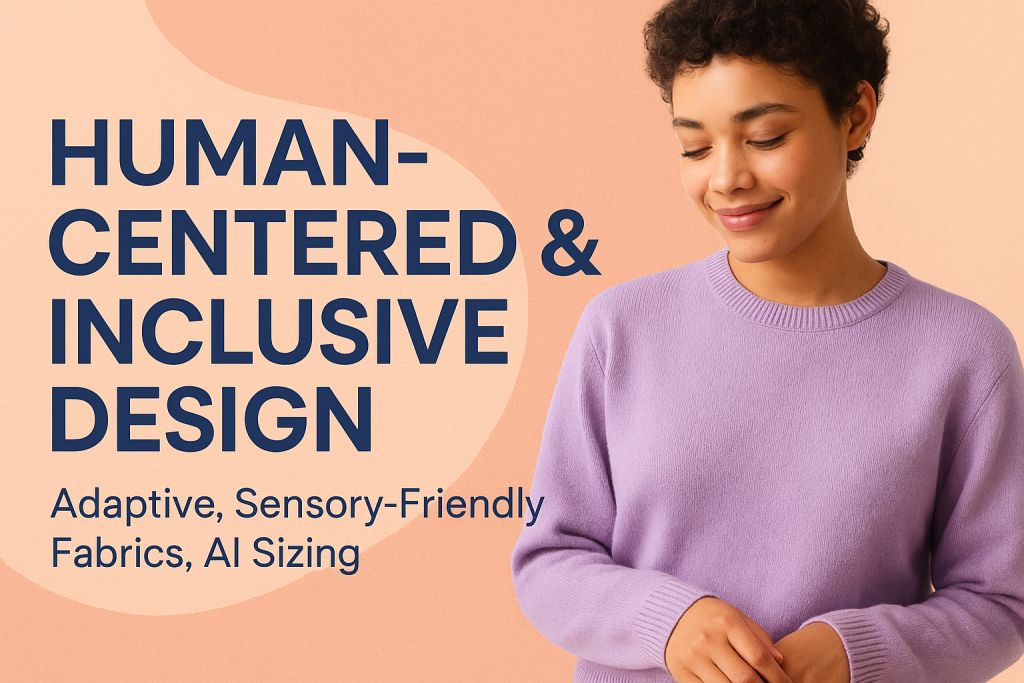
Human-Centered & Inclusive Design: Building a Future Where Everyone Belongs
Human-Centered & Inclusive Design is driving a movement to create spaces, products, and experiences where everyone belongs. Progress is powered by empathy, sparking an urgent question:
“How can we design a world where everyone—every body, every ability, every identity—feels seen, respected, and supported?”
Adaptive clothing for neurodivergent individuals, AI-powered sizing systems, and sensory-friendly textiles are shaping the future of fashion and product design through compassion, technology, and real human experiences.
This blog explores the most significant changes in inclusive design and explains their importance.
Why Human-Centered & Inclusive Design Matters More Than Ever
Inclusive design is a mindset focused on making products accessible, comfortable, and meaningful for diverse physical, neurological, sensory, and cultural needs—not just a creative process.
Today, consumers seek brands that understand them as individuals, not merely as data points.
For many, including neurodivergent individuals, plus-sized users, and those with sensory sensitivities, standard products still do not meet their needs.
The Emotional Side of Inclusion
Last year, I observed a mother in a clothing store struggling to find a shirt her autistic son would wear. Every tag bothered him, the seams felt “too sharp,” and the fabric was “too loud.” After 45 minutes, she left empty-handed, carrying a frustrated and overwhelmed child.
This experience left a lasting impression on me.
- The issue extended beyond clothing.
- It was fundamentally about dignity.
This experience raised an important question:
Why should something as essential as clothing present such a challenge for so many?
This is where inclusive design can be truly transformative.
1. Adaptive Clothing for Neurodivergent Individuals: Comfort, Function & Aesthetics
Neurodivergent individuals, such as those with autism, ADHD, sensory processing challenges, and other neurological differences, often experience the world differently. Clothing may feel restrictive, irritating, or distracting.
Common Challenges Neurodivergent Users Face
- Harsh seams or scratchy tags
- Unpredictable fabric textures
- Loud prints or colors causing sensory overload
- Difficult fasteners (buttons, zippers)
- Clothing that doesn’t feel “safe” or “consistent.”
Adaptive Clothing: A Revolution in Fashion
Adaptive clothing aims to reduce sensory stress and enhance comfort, while also supporting style and self-expression.
Key Features of Adaptive Clothing
- Tag-free labels to prevent irritation
- Flat, soft seams to minimize friction
- Weighted elements to provide calming pressure
- Magnetic or Velcro closures for easy wearing
- Breathable, hypoallergenic fabrics
- Seamless socks, compression shirts, stretchy waistbands
The most effective adaptive clothing is indistinguishable from fashionable, mainstream styles.
Style Without Compromise
Today’s adaptive wear stands out for its focus on aesthetics.
People seek both comfort and style in their clothing.
One young designer I spoke with said something profound:
“Adaptive fashion should not look medical—it should look modern.”
I once visited a design exhibition where a student showcased a jacket created for autistic teenagers. It had:
- Color-calming palettes
- Hidden sensory fidget elements
- A soft interior fabric
- Detachable weighted panels
A boy who tried it on said quietly, “It feels like the jacket understands me.”
That statement encapsulates the core purpose of human-centered design.
2. Research on Size Fluidity: AI-Based Dynamic Sizing Systems for Body Diversity
Traditional sizing systems, such as S, M, L, and XL, were developed decades ago using limited body data. Today, these systems fail millions whose bodies do not fit outdated size charts.
The Problem with Fixed Sizes
- Two people with the same weight can have completely different shapes.
- A size that fits the waist may not fit the shoulders or hips.
- Online shopping leads to high return rates due to fit issues.
- Plus-size individuals often face limited or poorly designed options.
Clothing needs to adapt to people, reflecting their bodies and preferences for true inclusivity.
AI-Based Dynamic Sizing: The Future of Fit
Modern fashion tech companies now use AI, 3D body scanning, and predictive algorithms to develop dynamic sizing systems tailored to each user’s unique proportions.
How AI Dynamic Sizing Works
1. User inputs body data
(height, weight, body shape indicators, photos)
2. AI analyzes thousands of body patterns
3. A personalized size recommendation is created
4. The garment pattern auto-adjusts
(e.g., shoulder width, torso length, hip shape)
This results in:
- Better fit
- Greater comfort
- Reduced returns and waste
- Increased body confidence
My Observational Insight
I once spoke with a plus-size customer who said:
“I don’t want special clothing. I want clothing made for humans like me.”
That sentence captures the core of size inclusivity.
AI is finally giving the fashion world a boost. AI is enabling the fashion industry to design for real bodies, rather than idealized or outdated templates.
Well-fitting clothing does more than flatter the body; it enhances mental well-being, self-worth, and identity expression.
3. Designing Sensory-Friendly Fabrics for People with Autism or Sensory Disorders
What many consider “just fabric” can cause significant discomfort for individuals with sensory sensitivities.
Why Sensory-Friendly Fabrics Matter
People with sensory processing disorders may experience:
- Pain from rough or textured fabrics
- Anxiety from unpredictable materials
- Overheating from non-breathable textiles
- Distress from certain colors or patterns
To develop sensory-friendly fabrics, designers must prioritize tactile comfort, consistency, softness, and temperature regulation.
Features of Sensory-Friendly Fabrics
- Ultra-soft fibers (modal, bamboo, brushed cotton)
- Consistent textures without sudden transitions
- Cooling and moisture-wicking materials
- Neutral or calming colors
- Compression fabrics for grounding and comfort
I once encountered a young adult with autism who said that wearing typical denim jeans felt like “sandpaper fire.” But when he tried a sensory-friendly denim alternative, he smiled and said, “This feels like cloud denim.”
This experience reinforced that design can make the world more accommodating.
4. The Emotional Impact of Inclusive Design: Real Stories, Real Change
Human-centered design addresses not only physical challenges but also emotional needs.
A Personal Reflection
Years ago, when I volunteered at an inclusive fashion workshop, a girl with sensory sensitivities created her first custom top. It had:
- No tags
- Soft lavender fabric
- A fidget-friendly zipper pull
- A comforting inner lining
When she wore it, her mother cried.
Not because it was beautiful (though it was),
but because, for the first time, her daughter said,
“I feel comfortable. I feel like me.”
Experiences like these demonstrate that design is ultimately about people, not just products.
5. How Brands Can Embrace Human-Centered & Inclusive Design
1. Listen to real users
Involving neurodivergent individuals, plus-size wearers, and people with sensory sensitivities in testing ensures authenticity.
2. Avoid medicalized aesthetics
Inclusivity should look stylish—not clinical.
3. Use AI and data ethically
To improve sizing accuracy without invading privacy.
4. Reduce stigma through marketing
Show real people in all forms—body types, abilities, and sensory needs.
5. Prioritize comfort as a design pillar
Not an afterthought.
Conclusion: The Future Is Inclusive, Comfortable, and Human
Human-centered and inclusive design is a social responsibility: adaptive clothing, AI-powered sizing, and sensory-friendly fabrics help everyone feel understood. Don’t design for the “average user”; design for the real user.
Design becomes a language of empathy.
A promise of belonging.
A bridge between comfort and identity.
And the most beautiful part?
When we design for the margins, we often improve life for everyone.
About the Author