New homes are going up fast these days, showing just how busy the construction industry is. But there’s a major issue that often gets overlooked: construction waste. Things like broken tiles, leftover concrete, torn packaging, and rusted rods usually end up in landfills.
A recent World Bank study found that construction and demolition waste makes up nearly a third of all solid waste worldwide. This didn’t surprise me. I saw it firsthand at a housing project in Pune, where workers cut tiles on-site, and almost a whole box was chipped or cracked before use. All those tiles were thrown out behind the building.
That experience stuck with me. It showed just how common waste is in construction, even when much of it could be avoided.
This is why zero-waste construction matters more now. It’s not just a trendy term. It’s a new mindset: What if we built homes without wasting anything? What if we could take a house apart and reuse its parts instead of tearing it down?
In this article, I’ll explain the main ideas behind zero-waste construction and share what inspires me most, such as end-of-life design, material passports, and homes designed to be taken apart.
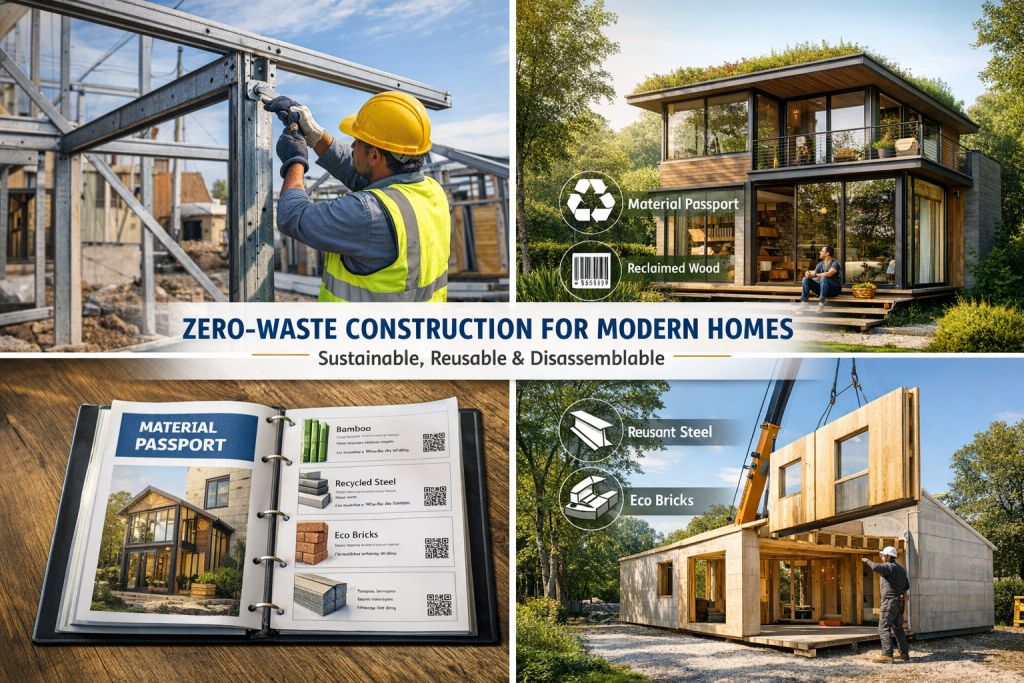
What Zero-Waste Construction Really Means
At its core, zero-waste construction means building so that materials don’t end up as trash.
This includes:
- Using materials that can be reused
- Planning every step so waste is avoided
- Tracking what goes into the building
- Designing homes that can be taken apart piece by piece
Instead of thinking of a house as just a solid block of concrete, zero-waste systems see it as a collection of valuable materials that can be reused.
Why Zero-Waste Building Matters Now More Than Ever
1. The Environmental Reality
Construction uses a huge amount of resources. Every bit of wasted cement or steel increases a project’s carbon footprint. Reusing materials helps protect forests, mines, and rivers, and keeps waste out of landfills.
2. Real Savings Over Time
Many people believe green buildings are more expensive. But with careful planning, you can save money by using fewer materials, making fewer trips to dispose of waste, and spending less on demolition later.
The Ellen MacArthur Foundation reported that circular construction can cut material costs by almost 30% over a building’s lifetime. That’s a big saving.
3. Homes Designed to Last
A house built with zero-waste ideas stays useful for years. It can change to fit its residents’ needs. You can expand it, shrink it, or even move it without tearing everything down.
End-of-Life Design: Planning for a Home’s Last Day
Most homes today are built just to go up quickly. Hardly anyone thinks about what will happen when the home reaches the end of its life.
End-of-life (EoL) design changes that way of thinking.
It asks:
- How will this house be taken apart?
- Which materials can be reused?
- Can each component be removed without damaging it?
This means choosing materials or building methods that make it easy to take things apart later. For example:
- Interlocking bricks that don’t require mortar
- Bolted steel frames instead of welded ones
- Wooden panels that can be unscrewed
- Floors that clip together instead of using glue
I once watched an architect in Bengaluru show a 3D model of a modular villa. Every corner, joint, and panel could be taken apart one by one. He said, “We don’t build houses anymore. We build systems.” That line stayed with me because it really sums up what zero-waste design is about.
Material Passports: A Smarter Way to Track Building Components
This is one of the most interesting ideas in sustainable construction.
A material passport is basically a digital profile for every material in a building. It includes:
- What the material is
- Where it came from
- How long does it last
- Whether it can be recycled
- How to handle it during dismantling
Simply put, it’s like a “medical record” for your house, but it tracks materials instead of health.
Material passports help builders make informed choices and prevent recyclable materials from being mixed with waste. European countries have already begun adopting them for larger projects. The European Commission’s Circular Economy reports highlight digital tracking as one of the strongest tools for reducing future construction waste.
This system makes everything clearer. It also gives old buildings new value, since the materials inside can still be reused.
Homes That Can Be Completely Disassembled
This part of zero-waste construction is especially interesting.
Imagine a home that can be:
- Taken apart in sections
- Moved to another location
- Reassembled without losing strength
- Reused in new buildings years later
This isn’t just an idea for the future. It’s already happening in many places around the world.
Modular and Prefabricated Homes
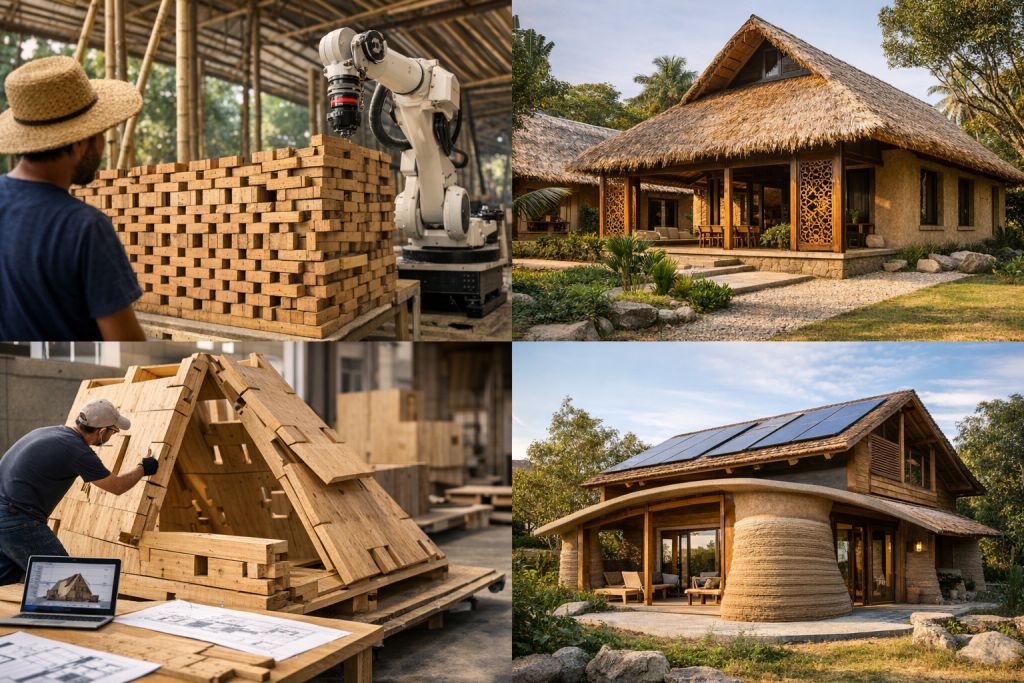
Modular homes are built in a factory as separate units, almost like Lego pieces. These pieces are then assembled at the building site. If needed, they can be unbolted and moved.
During a trip to Kerala, I visited a home that stood on a quiet plot beside a plantation. The owner casually mentioned, “If I ever decide to shift, this whole house can go with me.” He pointed at the walls and beams, explaining how everything could be detached without breaking anything.
That conversation changed how I thought about what makes a home permanent. A house doesn’t have to stay on the same piece of land forever.
Design for Disassembly (DfD)
This idea is about building with future reuse in mind. It focuses on:
- Screws over adhesives
- Modular connections
- Clearly labeled parts
- Easy-to-access joints
Some DfD houses today can be reused at rates of 90% or more, so hardly anything becomes waste.
Materials That Support Zero-Waste Building
Here are some materials that make zero-waste building easier and more sustainable:
- Bamboo — fast-growing and strong
- Recycled steel — endlessly reusable
- Interlocking soil bricks — reusable without breaking
- Rammed earth — low waste, durable
- Reclaimed timber — full of character
- Hempcrete — carbon-negative and lightweight
- Bio-based composites — for flooring and insulation
Builders use these materials not just for sustainability, but also because they look good and work well.
A Real Encounter That Deepened My Understanding
On a project in Auroville, I visited a zero-waste home built from compressed earth blocks and recycled materials. The architect showed me every feature, from the roof panels to the staircase and frames, all designed to come apart with simple tools.
What surprised me most was how normal the home looked. If no one told you it was built to be taken apart, you’d never guess. It felt warm, beautiful, and lived-in.
When the owner said, “Nothing in this house is destined for a landfill,” I really understood what true sustainability looks like in real life.
Challenges and How People Are Solving Them
Zero-waste construction has its challenges, but none are insurmountable.
1. More planning is required upfront
Digital tools like Building Information Modelling (BIM) help simplify this.
2. Skilled labour shortage
Training and micro-courses are becoming more common.
3. Higher upfront cost for certain materials
But over time, the money saved usually covers the higher initial costs.
4. Low awareness
More case studies, government support, and public discussion are helping spread the word.
How You Can Start Building Zero-Waste Homes Today
You don’t need a high-tech design to follow these ideas. You can start with:
- Choosing modular options
- Working with local materials
- Reducing unnecessary decorative elements
- Using mechanical joints instead of adhesives
- Keeping a simple material register for future renovations
- Reusing what you can, repairing what you have
Even small changes can make a big difference.
Final Thoughts: Zero-waste homes aren’t just the future—they’re already here.
The shift to zero-waste construction is already happening. It’s practical, sensible, and overdue. The idea that a home can be taken apart like a well-designed machine and reused leads to a cleaner, smarter future.
After seeing real examples and meeting people living in these homes, I believe this approach will soon become the norm. It reduces waste, saves money, and protects the environment without giving up comfort.
If we build thoughtfully today, we’ll leave a much better world for the next generation.