Water is one of those things we rarely think about — until it becomes a problem.
For most of my life, water in a house meant turning a tap and expecting it to work. But over time, I noticed small issues: rising water bills, inconsistent supply during certain months, and a neighbor dealing with serious damage from a pipe that had been leaking quietly for weeks.
It made me realise something simple: our homes have become smarter in almost every area except one of the most important, water.
Smart water management homes directly tackle this overlooked area. Their purpose is clear: to actively manage water smarter at home.
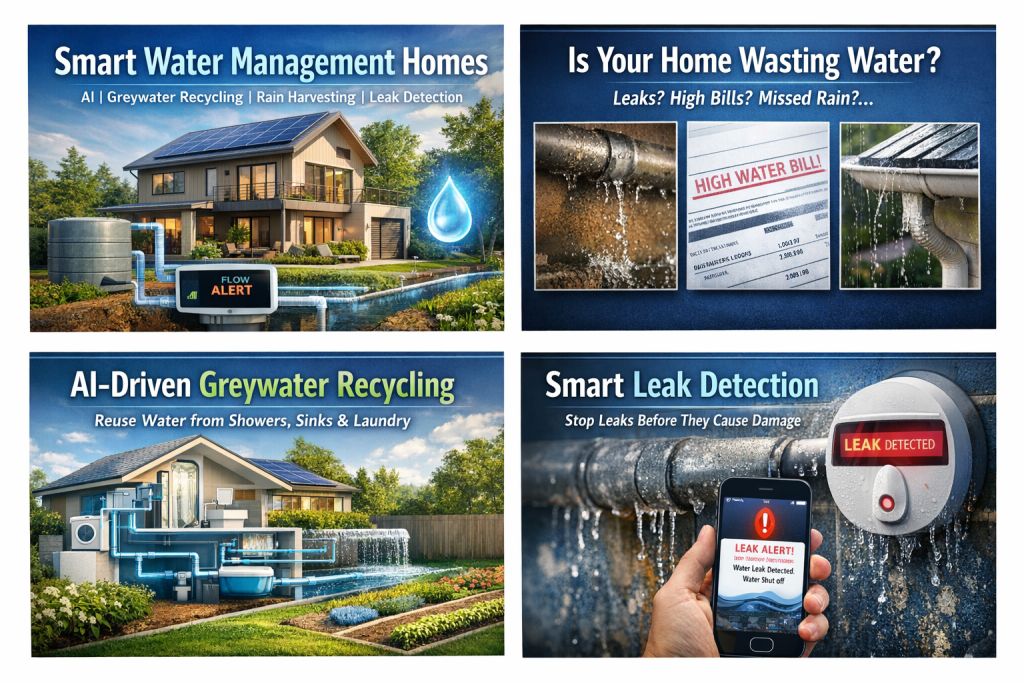
The Invisible Waste Happening in Most Homes
If a pipe bursts, you notice. If your basement floods, you definitely notice. But most water waste isn’t dramatic.
It’s an irrigation system running too long. It’s a slow leak inside a wall.
It’s perfectly usable shower water going right down the drain.
None of it feels urgent in the moment. Over time, it adds up financially and environmentally.
Water is becoming more unpredictable. Some cities face shortages. Others deal with heavy rains followed by long dry spells. Costs are rising. Infrastructure is ageing.
The old way of managing water, waiting until something breaks, doesn’t make sense anymore.
So, What Exactly Is a Smart Water-Management Home?
At its simplest, it’s a home that pays attention to how water is used.
Instead of blindly consuming and discarding, it monitors, recycles, predicts, and adjusts. Technology works in the background, making small improvements that add up to a big impact.
This can include:
- Real-time tracking of water usage
- Leak detection systems
- AI-driven greywater recycling
- Smart rainwater harvesting
- Automated irrigation controls
None of these systems is flashy. Most homeowners forget they are there. That is the point.
Good technology doesn’t interrupt life. It improves it.
AI-Driven Greywater Recycling: Giving Water a Second Life
Here’s something that surprised me when I first learned about it: a large portion of the water we use daily doesn’t actually need to be “new” water.
Think about showers, bathroom sinks, and laundry. The water used there — called greywater — isn’t suitable for drinking, but it’s not heavily contaminated either.
In a traditional setup, that water goes straight into the sewage system.
In a smart water home, it can be collected, filtered, and reused.
AI-driven greywater recycling systems make this process efficient. They monitor usage patterns, adjust treatment levels, and automatically redirect recycled water for non-drinking purposes, such as flushing toilets or watering gardens.
I remember visiting a sustainable housing project where this system was installed. What stood out was not the technology itself, but how normal everything felt. No inconvenience. No strange odors. No complicated controls. Just a quiet system doing its job.
That experience shifted my thinking. Water doesn’t have to be single-use.
Smart Rainwater Harvesting: A Simple Idea, Done Better
Rainwater harvesting has been around for centuries. What’s changed is how precisely we can now manage it.
Modern smart rainwater systems use sensors to detect rainfall and automatically channel water into storage tanks. They monitor tank levels digitally. Some even use weather forecasts to decide when to use stored water and when to conserve it.
No more guessing if your tank is full. You just check an app.
In regions with seasonal rain, this makes a difference. One strong rainfall can support weeks of garden irrigation or outdoor cleaning if stored properly.
It just makes sense—rainwater shouldn’t go to waste when it can help elsewhere.
Leak Detection and Prediction: Quiet but Powerful
If there’s one feature that feels like true peace of mind, it’s smart leak detection.
Water damage is expensive and stressful. Often, by the time you see it, the problem has been there for a while.
Smart systems continuously monitor water flow and pressure. If something unusual happens, like water running at odd hours or sudden pressure drops, you get an alert immediately.
Some systems can even automatically shut off the main water supply.
That kind of protection changes how you feel about leaving the house for long trips. You are not left wondering, “What if something goes wrong while I am away?”
You know you’ll be notified.
After watching a neighbour deal with warped flooring and mould because of a hidden leak, I became convinced this is one of the smartest upgrades a homeowner can make.
The Real Impact Over Time
The benefits of smart water management are concrete and directly improve daily living.
Lower water bills naturally result from reduced waste.
Structural damage is avoided.
Gardens stay green without overusing the municipal supply.
Homes become more appealing to buyers who value sustainability.
But beyond money, there is something else: awareness.
When you can see how much water your household uses in real time, you start making small changes: shorter showers, smarter irrigation schedules, quick action when something looks off.
Technology encourages better habits without forcing them.
Is It Worth the Investment?
That’s a fair question.
Smart water systems require upfront spending. They don’t need to be installed all at once.
A practical starting point might be:
- Install leak detection sensors first.
- Add a water usage monitor.
- Explore rain harvesting if your home layout allows.
- Consider greywater recycling during a renovation.
Over time, these upgrades tend to pay for themselves through savings and damage prevention.
Most of all, smart water upgrades prepare your home for future water challenges, so you stay ready.
Looking Ahead
Water management is quietly becoming one of the most important parts of sustainable living.
In the coming years, homes may automatically adjust water use during drought alerts. Neighbourhoods may connect to shared smart water grids. Predictive systems may warn homeowners about plumbing wear long before failure.
The direction is clear: homes are becoming proactive instead of reactive.
A Final Thought
I used to think of plumbing as something hidden from view. Now, I see water differently.
Now I see water differently.
Water management is about preparing for the future. It’s not a luxury—it’s an essential responsibility for every home.
Take the next step—invest in smart water management in your home. Start with the system that best fits your needs, knowing that even small improvements make a difference. Join others embracing efficiency and readiness for a sustainable future.
Smart water management helps homes meet future demands. That kind of readiness is essential as resources grow scarce.