Emotion-Focused Insights into the Heart of Meaningful Connection
As fast shopping and mass-produced goods dominate the market, the renewed interest in handmade gifts reflects a deeper psychological trend rooted in human connection and emotion. Handmade creations offer emotional value that store-bought gifts often lack. This blog examines how handmade gifts strengthen relationships, drawing on research, expert insights, and real-world examples to show how DIY creativity deepens emotional bonds.
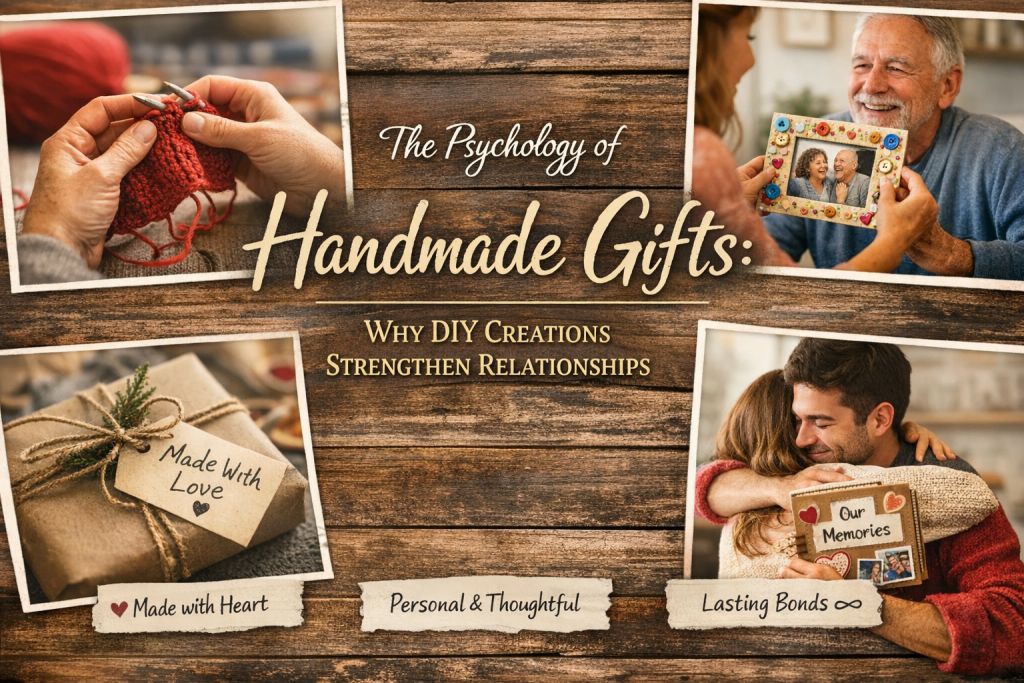
Why Handmade Gifts Are More Than Just Tokens
At face value, a gift is just an object — a scarf, a card, a jar of cookies. But psychology tells us that gifts are far more than that: they’re silent messages of care, recognition, and emotional presence. According to behavioral psychologists, receiving a thoughtful gift — especially one made by hand — activates brain areas linked to self-relevance and social bonding. In one study, participants perceived personalized gifts as significantly more emotionally valuable than identical generic items, even when monetary value was the same.
This emotional value is rooted in several psychological principles:
- Effort Heuristic and Emotional Investment
When someone gives a handmade item—whether baked, knitted, painted, or designed—the true gift is the time, thought, and energy invested. Psychological research refers to this as the effort heuristic: people value outcomes more when greater effort is involved.
This shifts a gift from a material item to a symbol of emotional effort, which resonates strongly in human relationships.
- “I Thought of You” — A Deeper Message Than Words
While store-bought gifts can show care, handmade gifts often demonstrate greater attention to detail. Selecting materials that reflect the recipient’s personality or creating something that tells a shared story communicates:
- I see you.
- I know what you love.
- I value our connection enough to invest myself in it.
This message supports the idea that gift-giving strengthens emotional bonds by making people feel understood, appreciated, and valued, which are essential for intimacy and trust.
Emotion-Focused Insights: How Handmade Gifts Build Connection
1. They Create Emotional Resonance
Psychologists note that personalized gifts, especially handmade ones, connect directly with emotions because they reflect relational depth rather than monetary value. Recipients receive not only an object but also a story, a part of the giver’s life, and an emotional narrative.
This is important because humans are driven by emotion in social interactions. People rarely remember every expensive gift, but they do remember how those gifts made them feel.
2. They Reinforce Identity and Uniqueness
Each handmade item is unique. In a marketplace filled with identical products, uniqueness signals personal relevance. Gifts tailored to an individual’s personality fulfill a psychological need for identity affirmation—“you matter as an individual.”
3. They Activate the Reward System in the Brain
Research shows that giving activates the brain’s reward pathways, the same areas involved in positive social interactions. Meaningful gifts increase dopamine and oxytocin, chemicals linked to pleasure and bonding. This effect is supported by biochemistry.
As a result, giving handmade gifts not only feels rewarding but also biologically strengthens social connections.
4. They Encourage Shared Memory Formation
A handmade gift often becomes a keepsake that, even years later, evokes joy and memories in ways generic items may not. This lasting emotional impact creates shared psychological ties, strengthening relationships over time.
Real-Life Experiences: Handmade Gifts That Mattered
Consider the following example that illustrates the impact of handmade giving:
A friend once gave a hand-crafted friendship bracelet woven with the colors of a favorite team. During a difficult period, the bracelet became a symbol of support and presence. Decades later, it is still worn, not for fashion, but as a reminder of that caring gesture.
Such experiences are common. Online forums feature many stories of handmade gifts—despite imperfections—creating a deeper emotional impact than expensive store-bought items. For example, one individual described receiving a handmade card with a pop-up Daily Planet logo and the message “You are stronger than you think!” during a difficult illness, calling it one of the most meaningful gifts ever received.
These examples highlight that it is not perfection or price that makes a gift memorable, but the emotional narrative behind it.
Emotionally Intelligent Gift Giving: Solving Common Problems
Problem: I Want My Gift to Be Appreciated — But I’m Not Crafty
Solution: Focus on intent rather than technical skill. A simple handmade card with heartfelt words can be more meaningful than a complex but impersonal item. Adding a brief note explaining your motivation provides context and emotional depth.
Problem: I’m Afraid My Gift Will Look Amateurish
Solution: Do not focus on perfection. Research shows recipients value sincerity over flawless execution. Small imperfections in handmade items often add to their charm and story.
Problem: My Friend Prefers Practical Gifts
Solution: Combine practicality with personalization. For example, decorate a reusable mug with meaningful motifs or add favorite quotes to a handmade planner. This approach demonstrates both thoughtfulness and utility.
Why Handmade Gifts Are Trending in a Digital Age
In an age of online shopping and digital communication, handmade gifts fulfill a psychological need for authenticity. A study on consumer preferences found that people increasingly favor products labeled “handmade” because they evoke positive emotions and a sense of human connection, a phenomenon known as the “handmade effect.”
This trend is not solely about aesthetics; it addresses a deeper human need to feel known and valued in a world that often feels transactional.
Conclusion: The Heartbeat Behind Handmade Gifts
Handmade gifts are more than creative projects; they are powerful tools for emotional connection. They combine psychology, intention, and human experience to strengthen relationships and create lasting impressions. When you give a handmade gift, you offer your time, thought, and emotional presence.
In a time of speed and convenience, handmade gifts remind us of something enduring:
Relationships are built with intention, emotion, and shared meaning — not just material things.
Sometimes, a card with imperfect handwriting and genuine emotion is more meaningful than the most expensive gift available.