Fashion has always reflected culture, and now it is evolving into a digital space. “Phygital” (physical plus digital) and metaverse fashion are no longer experimental; they are strategic tools for growth, sustainability, and customer loyalty. This guide outlines current trends, their significance, and how brands can leverage digital twin garments, AR-based shopping experiences, and metaverse fashion houses to address real business challenges.
Phygital and Metaverse Fashion: Quick Overview
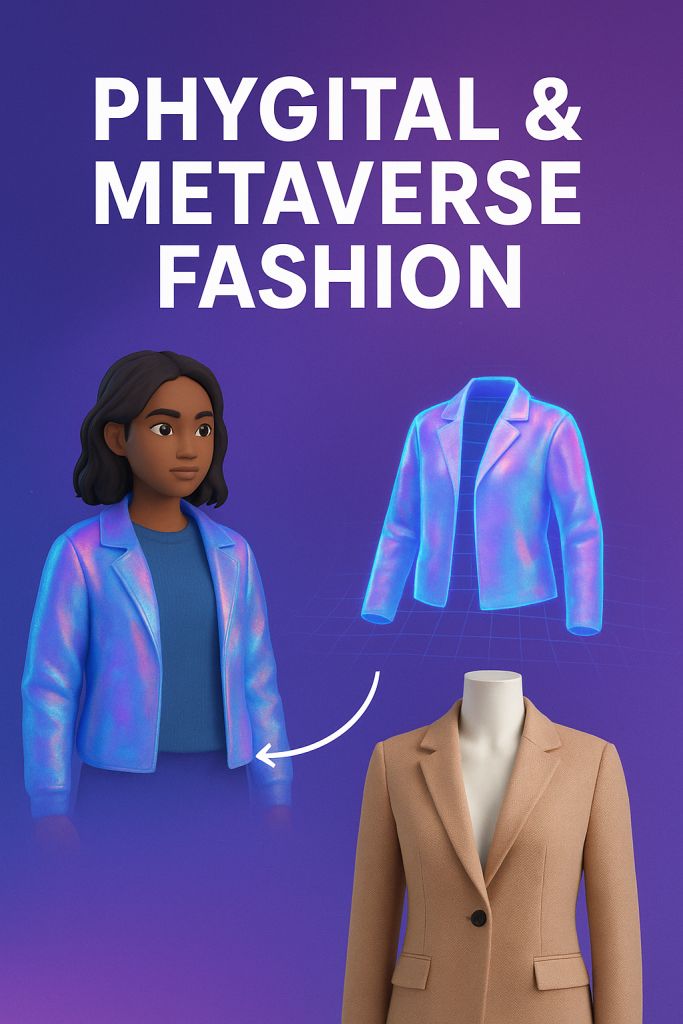
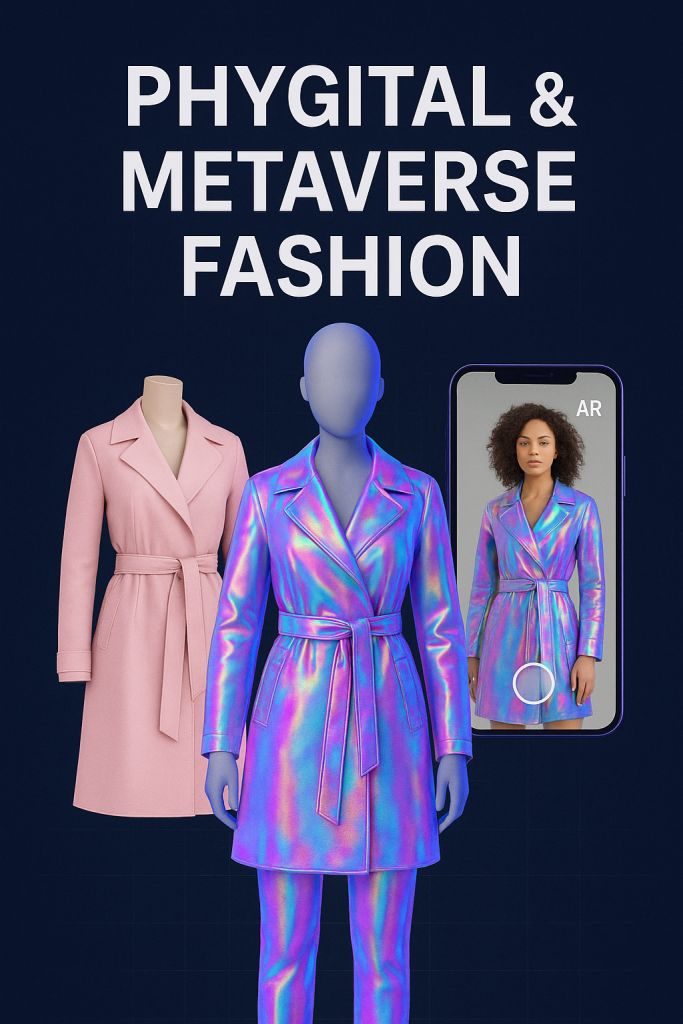
Phygital fashion combines physical garments with digital counterparts, such as a limited-edition jacket paired with an NFT for your avatar or an in-store AR mirror that overlays virtual styles. The metaverse expands this concept into shared virtual spaces where consumers dress avatars, attend virtual runway shows, and interact with brands in new ways. Both luxury and digital-native brands are adopting these trends.
Why this matters now (business problems these trends solve)
1. Engagement & revenue diversification. Digital items create new low-friction revenue streams (digital-only drops, NFT utilities, gamified releases).
2. Sustainability & inventory risk. Digital-first collections reduce overproduction and returns by offering virtual-only ways to “wear” fashion.
3. Traceability & transparency. Digital twin garments tied to blockchain or trusted data systems allow buyers to verify origin, materials, and lifecycle — addressing rising consumer demand for transparency.
Digital Twin Garments: Their Role in Supply Chain Transparency
A digital twin garment is a high-fidelity digital replica of a physical garment that includes metadata such as materials, factory batch, quality control checks, shipping history, and repair instructions. This information can be updated in real time from the supply chain.
Real value for brands and consumers
- Provenance & anti-counterfeit: pairing a garment with a signed digital twin (or blockchain record) makes provenance verifiable, helping curb counterfeits and supporting resale markets.
- Quality feedback loop: sensors and factory data feed into the twin, enabling predictive quality control and faster corrective actions. Research shows digital twins can improve operational efficiency and forecasting.
- Circularity & resale: twins can store repair histories and ownership changes, making it easier to manage buy-back and rental programs — critical for circular-economy models.
Implementation checklist for brands
- Standardise a minimal metadata schema (material, origin, date, batch, care).
- Integrate IoT/QC feeds at production points to update twins in real time.
- Choose an interoperability layer (open standards, or a trusted blockchain partner) so resale platforms and consumers can read the data.
- Avoid making the digital twin a marketing-only token without verifiable data. Transparency depends on establishing technical links to the physical product.
User Experience in AR-Based Fashion Shopping Environments
AR bridges the gap between browsing and immersive shopping. When implemented effectively, AR reduces returns, increases conversions, and builds customer confidence. Poorly executed AR can feel gimmicky and frustrate users.
What users expect from AR in 2025
- Realistic fit and fabric simulation, not just surface overlays.
- Fast, low-friction experiences (no mandatory app installs).
Clear size, fit, and movement cues are essential. Animated models, body scanning, and contextual lighting support these needs. Research shows AR reduces uncertainty and can lower return rates when executed properly.
Design principles for great AR shopping
1. Accuracy over flash: prioritise fit and proportion over fancy filters.
2. Progressive disclosure: show quick try-on first, then deeper material/fabric detail for engaged users.
3. Human-centred defaults: allow users to toggle body measurements, preferred models, or even accessibility settings.
4. Privacy-first data handling: Body scans are sensitive data. Keep processing on-device where possible and be transparent about data retention.
Quick win for retailers: Deploy an AR try-on for top SKUs and measure return rates, session length, and add-to-cart rates. Iterate quickly based on results. Several retailers and academic studies report measurable increases in conversions when AR is optimized for user experience.
Metaverse Fashion Houses: Branding Strategies & Virtual Consumer Psychology
Metaverse fashion houses serve as identity platforms, not just digital storefronts. Successful brands combine traditional branding with game design, community incentives, and an understanding of virtual self-expression.
Branding strategies that work
- Story-led drops: limited digital drops tied to narratives (events, collaborations, virtual experiences) spark scarcity and fandom.
- Community ownership: enable members to co-create (DAO mechanics, design voting) to deepen loyalty.
Phygital exclusivity: Bundle physical and digital utilities, such as VIP access to in-person events and personalised avatar wearables. This combined approach strengthens brand loyalty across channels.
Virtual consumer psychology — what motivates buying
- Identity & status signalling: avatars are social currency. Consumers buy virtual fashion to express identity, belonging, or status in digital communities.
- Play & experimentation: people take more risks virtually; brands can surface bolder creativity digitally than they might in physical catalogues.
Utility-driven ownership: ownership that unlocks experiences (access to virtual shows, in-world privileges) increases perceived value beyond aesthetics.
Measuring success
Track engagement metrics (wear-rate, reuse, social shares), not just immediate revenue. A highly engaged digital community often translates into stronger lifetime value across channels.
Practical roadmap for brands (6-12 months)
1. Pilot: launch a single phygital SKU with an associated digital twin and AR try-on. Measure adoption, returns, and engagement.
2. Integrate supply chain data: connect factory QC and material data into the twin — even a small subset of metadata is a win.
3. Design UX: prioritise low-friction AR try-on and clear privacy notices. Test on real customers and iterate.
4. Launch storytelling drops: use metaverse events to debut digital pieces and tie them to physical benefits (repairs, VIP access).
Final note on credibility & lived perspective
While I do not yet have a personal wardrobe on the blockchain, industry reports and case studies indicate a clear trajectory: digital twins and AR are practical technologies that reduce waste, increase transparency, and enable new commerce models. Vogue, industry research, and academic studies all highlight measurable benefits in engagement, sustainability, and supply chain resiliency when brands approach phygital and metaverse initiatives as strategic programs rather than marketing stunts.