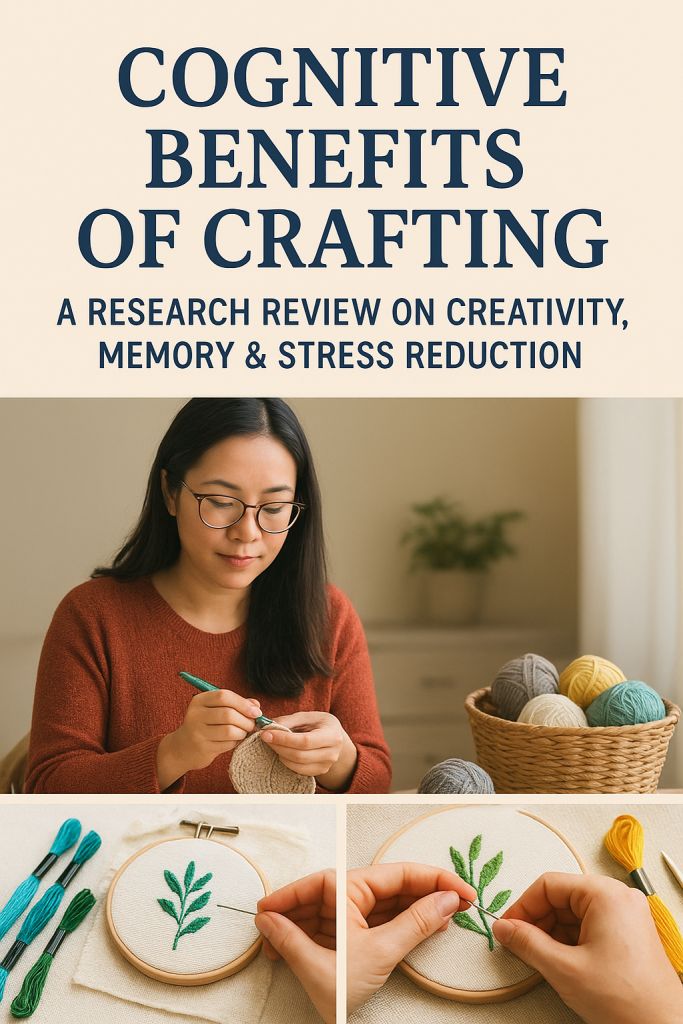
There’s something quietly powerful about making things with your hands.
These days, most learning happens on screens, but crafting brings us back to something truly human—touching, building, fixing, and figuring things out as we go.
I noticed this one weekend while visiting my niece. She was trying to build a small town from cardboard boxes. At first, it was chaos—tape everywhere, crooked houses, and bridges that kept falling apart. Then she stopped, looked at her project for a moment, and said:
“If I move this road, the cars won’t crash.”
No one told her to do that.
She figured it out herself.
That moment stayed with me. It showed that crafting builds thinking skills, not just objects.
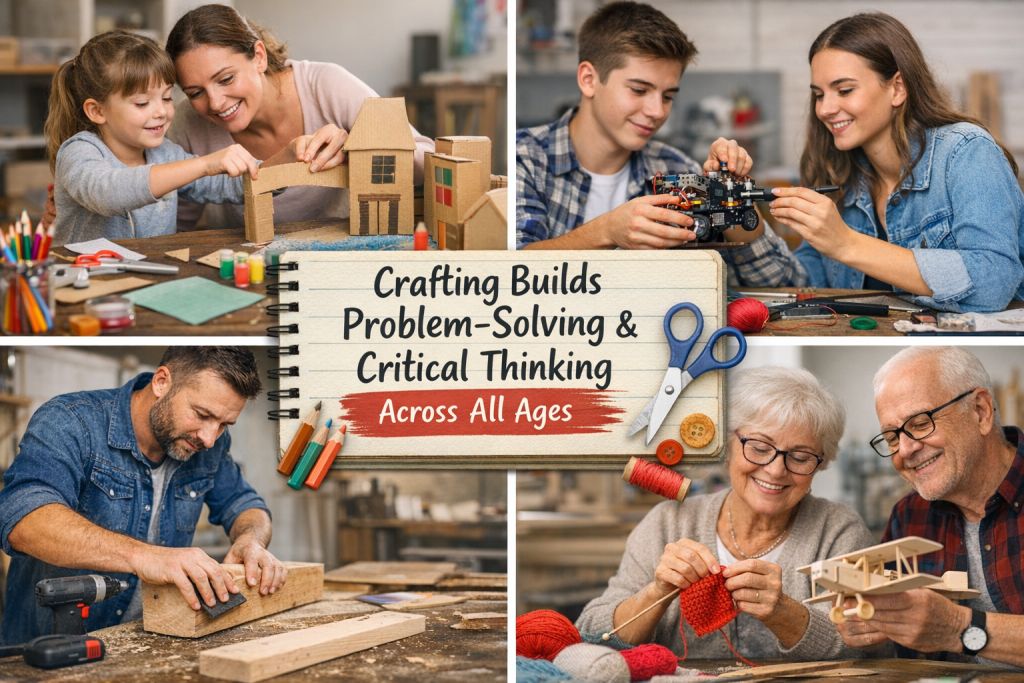
Crafting Teaches Us How to Think, Not What to Think
Every craft project starts with a simple idea and soon becomes a series of choices.
- What should I make?
- Which tools do I need?
- Why didn’t this work?
- What can I change?
These questions form the foundation of problem-solving and critical thinking.
Crafting feels real, unlike textbook exercises. You spot mistakes right away and feel progress in your hands. That helps learning stick.
Psychologists call this “learning by doing.” Most people just call it common sense.
Children Learn Faster When Their Hands Are Busy
For young kids, crafting looks like play. But while they play, real learning is happening.
When children cut paper, mould clay, or stack blocks, they develop skills like:
- focus and patience
- spatial awareness
- cause-and-effect thinking
- decision-making skills
I once watched a seven-year-old try to build a bridge from popsicle sticks. It fell apart three times. Instead of giving up, she quietly added small triangles underneath for support.
She didn’t know the word “engineering.”
But that’s exactly what she was doing.
Crafting shows children that failure isn’t the end. It’s part of the process.
That lesson alone is priceless.
Teenagers Turn Creativity Into Strategy
As kids get older, crafting gets more complex, involving robotics kits, fashion design, woodworking, or digital art.
At this stage, young people start learning:
- planning ahead
- managing time
- testing ideas
- adapting when things go wrong
Many schools now use maker projects in science and math classes because students understand ideas better when they build things themselves.
I’ve seen teenagers who struggle with traditional learning become excited while designing models or building prototypes. Their confidence grows because they can see what they can create.
Crafting gives them control over their learning, and that makes a big difference.
Adults Rediscover Their Thinking Skills Through Making
Most adults come back to crafting to relax. But something interesting happens along the way.
You start to think in new ways.
Whether you’re fixing furniture, painting, knitting, or trying DIY home projects, crafting makes you slow down and solve problems as they come up.
I experienced this myself while restoring an old wooden shelf. The measurements didn’t match, the screws wouldn’t go in, and the paint bubbled.
It would’ve been easier to quit.
Instead, I researched, adjusted, tried again, and finally finished.
The shelf wasn’t perfect, but the experience showed me how powerful persistence can be.
Crafting helps your mind stay calm under pressure and look for solutions. These same skills appear at work, in relationships, and in daily life.
Seniors Stay Sharp Through Creative Work
For older adults, crafting does something special. It keeps both hands and minds active.
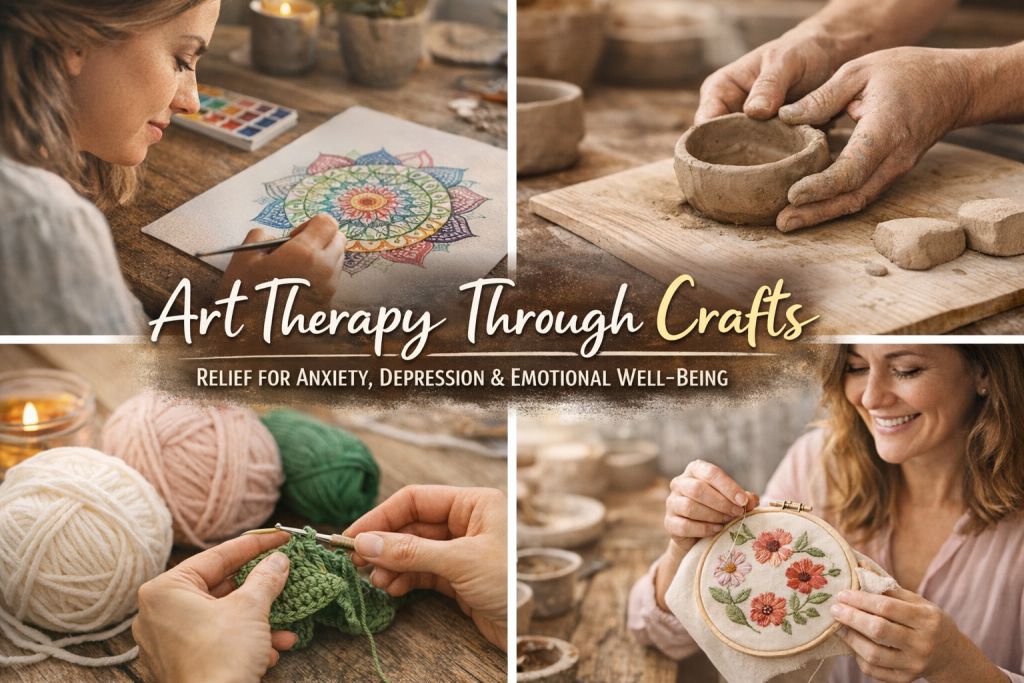
Activities like knitting, painting, or simple woodworking help with things like:
- memory
- coordination
- emotional balance
- mental flexibility
Many seniors say crafting gives their days structure and meaning. It also helps reduce feelings of loneliness.
Creative hobbies aren’t just enjoyable. They also protect your mind. Studies show they can slow cognitive decline and improve overall well-being.
Making things gives people a sense of purpose at every stage of life.
Why Crafting Will Always Be Evergreen Educational Content
Trends change. Technology evolves. Apps come and go.
Crafting stays.
Humans have learned through making for thousands of years—from pottery and weaving to modern design labs.
That’s why crafting is timeless educational content. It doesn’t depend on updates or algorithms. A piece of paper, some thread, or a block of wood can teach lessons that last forever.
Crafting works because it brings together creativity and logic, emotion and action, and imagination and structure.
No screen can replace that.
Simple Ways to Bring Crafting Into Daily Life
You don’t need special tools or expensive supplies.
Here are some ways anyone can start:
For Parents
Let kids explore freely. Don’t rush to fix mistakes. Ask questions like, “What do you think will happen next?”
For Teachers
Include crafting in regular lessons. Use group projects. Focus on learning instead of perfection.
For Adults
Try a creative activity each month. Join online maker groups. Use DIY projects to refresh your mind.
The goal isn’t to make masterpieces.
It’s to help people become problem-solvers.
Final Thoughts
Crafting doesn’t just make art or objects; it makes people.
It produces problem solvers at every age.
Every crooked cut teaches patience. Every failed design builds resilience. Every finished project boosts confidence.
In a world that moves faster every day, crafting teaches us to slow down, reflect, and find better answers.
So pick up that paintbrush. Try that DIY idea. Help a child build something messy and wonderful.
You’re not just creating.
You’re shaping minds.