With all the fast food, busy days, and new diet fads, it’s easy to forget something simple: food is information. What you eat affects your cells, hormones, gut, and even your mood. This idea, called food intelligence, is at the heart of holistic nutrition, which views the body as a whole system rather than a sum of calories and nutrients.
In recent years, holistic nutrition has grown because people have started asking deeper questions:
- Why am I always tired?
- Why am I gaining weight even when I eat less?
- Why does my anxiety get worse after certain meals?
Traditional nutrition can answer some of these questions, but holistic nutrition takes a broader view and helps explain them all.
In this blog, I’ll share what I’ve learned from real-life experiences, expert research, and some lessons I learned the hard way. If you’ve ever wanted a guide for your body, this could be the next best thing.
What Is Holistic Nutrition? (Simple Definition)
Holistic nutrition means seeing food as more than just fuel. It helps your body heal, supports your mind, and brings balance to your whole lifestyle.
It considers:
- What you eat
- How you eat
- When you eat
- How you feel during and after meals
- Your digestion and gut health
- Your relationship with food
- Your sleep, stress, movement, and emotions
Simply put, holistic nutrition treats food as part of your life, not something separate from it.
Why “Food Intelligence” Matters Today
Most people know what’s considered “healthy.”
But they don’t always know what’s healthy for them.
Food intelligence is about understanding:
- how your body reacts to foods
- Which foods help you heal
- Which foods harm you
- Which foods give you long-lasting energy
- Which foods weaken your gut, mood, or immunity
A nutritionist once told me something that changed how I see every meal:
- “Your body speaks to you. You just need to learn the language.”
At the time, I was dealing with fatigue, bloating, and brain fog. I thought I was eating “healthy,” but I wasn’t listening to how specific foods affected me.
That was when food intelligence finally made sense to me.
The Holistic Nutrition Approach: Healing From Inside Out
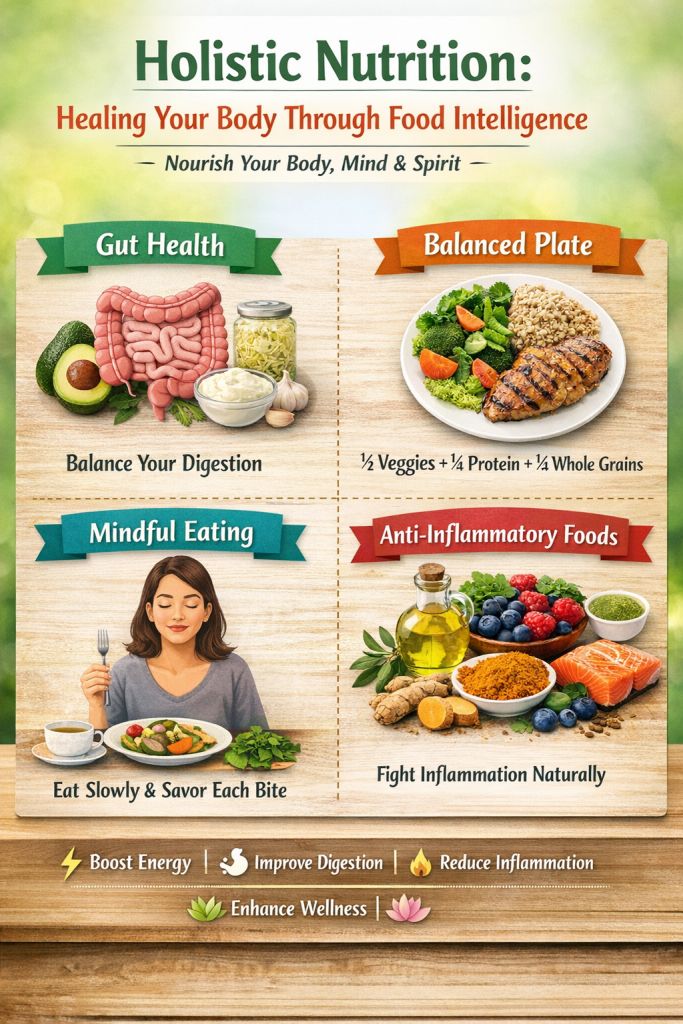
1. Start With the Gut: Your Internal Garden
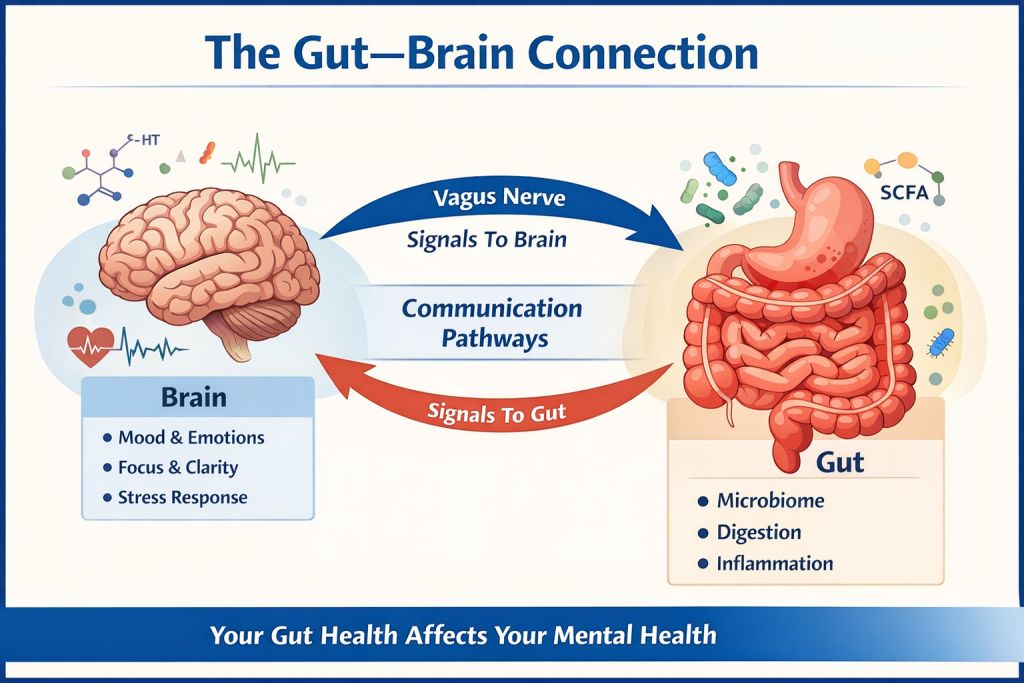
Researchers from Harvard Health and the American Gut Project have shown that gut bacteria influence everything from immunity to mood and weight management.
I only truly understood this after going through a stressful year myself.
Even though I was eating okay, I felt constantly bloated, irritated, and tired.
Later, I realized that stress had weakened my digestion, and my body wasn’t absorbing nutrients as well.
Holistic Tips for Gut Healing
- Eat more fiber from whole foods.
- Add fermented food (yogurt, kimchi, kefir, kanji)
- Reduce ultra-processed foods
- Slow down while eating
- Drink water between meals, not during
- Add herbs like ginger, mint, turmeric, and fennel
Within weeks, I felt lighter and sharper.
2. Balance Your Plate With the Whole-Body Formula
Most holistic nutritionists don’t believe in strict meal rules.
Instead, they focus on balanced nourishment.
Here’s a simple formula:
- ½ plate vegetables + ¼ plate protein + ¼ plate whole grains + healthy fats
This approach:
- balances blood sugar
- supports weight control
- fuels long-lasting energy
- reduces cravings
- keeps digestion smooth
I’ve used this formula for years, and it has never failed me.
3. Mindful Eating: The Habit That Changes Everything
Mindful eating might sound simple, but it’s actually one of the most powerful tools in holistic nutrition.
I once observed an elderly woman at a small community kitchen. She ate slowly, savored every bite, and smiled as she ate. When someone praised her calmness, she replied:
- “Food is medicine. Why rush medicine?”
Those words stuck with me.
Mindful Eating Practices
- Eat without screens
- Take smaller bites
- Chew more than usual
- Stop when 80% full
- Notice flavors, smells, textures
People often report reduced stress and better digestion just from this one shift.
4. Choose Foods Based on Your Body’s Signals
Food intelligence means noticing patterns.
Common examples:
- If milk causes gas → try lactose-free or plant-based milk
- If bread makes you sluggish → explore gluten sensitivity
- If sugar spikes your mood → cut down and replace with fruit
- If spicy food causes acidity → reduce heat and eat cooling foods
You don’t need expensive or complicated tests to get started.
You need awareness.
5. Anti-Inflammatory Eating: Your Body’s Natural Defense
Chronic inflammation is linked to arthritis, heart issues, obesity, diabetes, and even depression (research from Mayo Clinic and Cleveland Clinic supports this).
Holistic nutrition uses anti-inflammatory foods to help your body repair itself naturally.
Foods That Calm Inflammation
- Turmeric and black pepper
- Green leafy vegetables
- Berries
- Nuts and seeds
- Olive oil
- Fatty fish
- Ginger
- Garlic
Foods That Trigger Inflammation
- Refined oils
- Deep-fried foods
- Excess sugar
- Packaged snacks
- Processed meats
6. Emotional Eating: Understanding the Connection Between Feelings and Food
One of the most important parts of holistic nutrition is knowing when you eat because you’re hungry and when you eat because you’re feeling upset or hurt.
Many people eat when they are stressed, sad, or bored.
I once coached a friend who always craved chocolate at night.
After weeks of reflection, she admitted:
- “It’s not the chocolate. It’s the loneliness.”
Food intelligence helped her understand the emotional root.
Once she addressed it, the cravings faded naturally.
7. Holistic Nutrition for Weight Loss: The Gentle Approach
Forget strict dieting.
Holistic nutrition uses slow, steady, long-lasting methods.
Simple Weight-Loss Practices
- Eat more whole foods.
- Keep your gut healthy.
- Sleep 7–8 hours
- Reduce sugar
- Move your body daily
- Stay hydrated
- Manage stress
Weight becomes a result, not a punishment or a struggle.
8. Holistic Shopping: How to Build a Smart Grocery List
Food intelligence starts at the store.
Choose These More Often
- Fresh produce
- Whole grains
- Lean proteins
- Nuts & seeds
- Healthy oils
- Fresh herbs
- Organic when possible
Avoid These Often
- Frozen ready meals
- Packaged snacks
- Sugary drinks
- Foods with long ingredient lists
Here’s a simple rule to follow:
- If your great-grandparents wouldn’t recognize it as food, try to limit it.
Real-Life Story: How Holistic Nutrition Changed Someone Completely
A few years ago, I met a man in his late 40s who looked tired, stressed, and much older than his age.
He ate irregular meals, skipped breakfast, drank 6–8 cups of tea daily, and had persistent acid reflux.
He wasn’t overweight, but he felt unhealthy from the inside.
We made three small changes:
- A balanced breakfast
- A simple fiber-rich lunch
- A soothing drink: warm water with ginger and lemon every morning
Within a month:
- His acidity reduced
- He slept better
- His face looked fresher
- He felt calmer
He later told me:
- “I didn’t change my life. I just changed how I feed it.”
That’s the difference holistic nutrition can make.
Common Myths About Holistic Nutrition, Debunked
❌ Myth 1: It’s too complicated
✔️ Truth: It’s actually simpler than dieting.
❌ Myth 2: It requires expensive foods
✔️ Truth: Many healing foods are everyday items like turmeric, coriander, lentils, fruits, and vegetables.
❌ Myth 3: It’s unscientific
✔️ Truth: Research strongly supports gut health, anti-inflammatory diets, and mindful eating.
❌ Myth 4: It works slowly
✔️ Truth: It works steadily and sustainably, without harming your metabolism.
Holistic Nutrition Food List (Beginners Guide)
Foods to Eat More Often
- Fruits
- Leafy greens
- Whole grains
- Lentils & beans
- Herbs & spices
- Nuts & seeds
- Eggs, fish, lean meat
- Fermented foods
Foods to Limit
- White sugar
- Refined flour
- Processed snacks
- Excess caffeine
- Deep-fried items
- Packaged meals
Holistic Nutrition for Different Goals
⭐ For Energy
- Bananas
- Nuts
- Oats
- Eggs
⭐ For Immunity
- Citrus fruits
- Turmeric
- Ginger
- Green vegetables
⭐ For Skin Health
- Berries
- Avocado
- Flax seeds
- Coconut water
⭐ For Stress Relief
- Herbal teas
- Dark chocolate
- Pumpkin seeds
- Warm soups
Final Thoughts: Your Body Is Smarter Than You Think
Holistic nutrition isn’t just another diet.
It’s a relationship you build with your body, your mind, and your food.
When you eat with intelligence:
- Your gut heals
- Your mind calms
- Your energy rises
- Your skin glows
- Your sleep improves
- Your cravings reduce
- Your confidence grows
Food is not just fuel.
Food is information.
Food is healing.
Food is power.
Your body already knows what it needs.
Holistic nutrition simply teaches you how to listen to your body.