For centuries, voting has been central to democratic systems, from ancient Athens to today’s digital societies. However, elections worldwide still face challenges such as tampering, fraud, low voter turnout, accessibility barriers, and public distrust.
As societies become more digital, a critical question arises:
- Can blockchain enable secure, transparent, and decentralized voting?
The answer, as emerging global experiments suggest, is a strong yes—but with careful planning, robust frameworks, and high-level security standards.
In light of these challenges and opportunities, it is crucial to examine how blockchain-based voting can address enduring issues and shape the evolution of modern democracy.
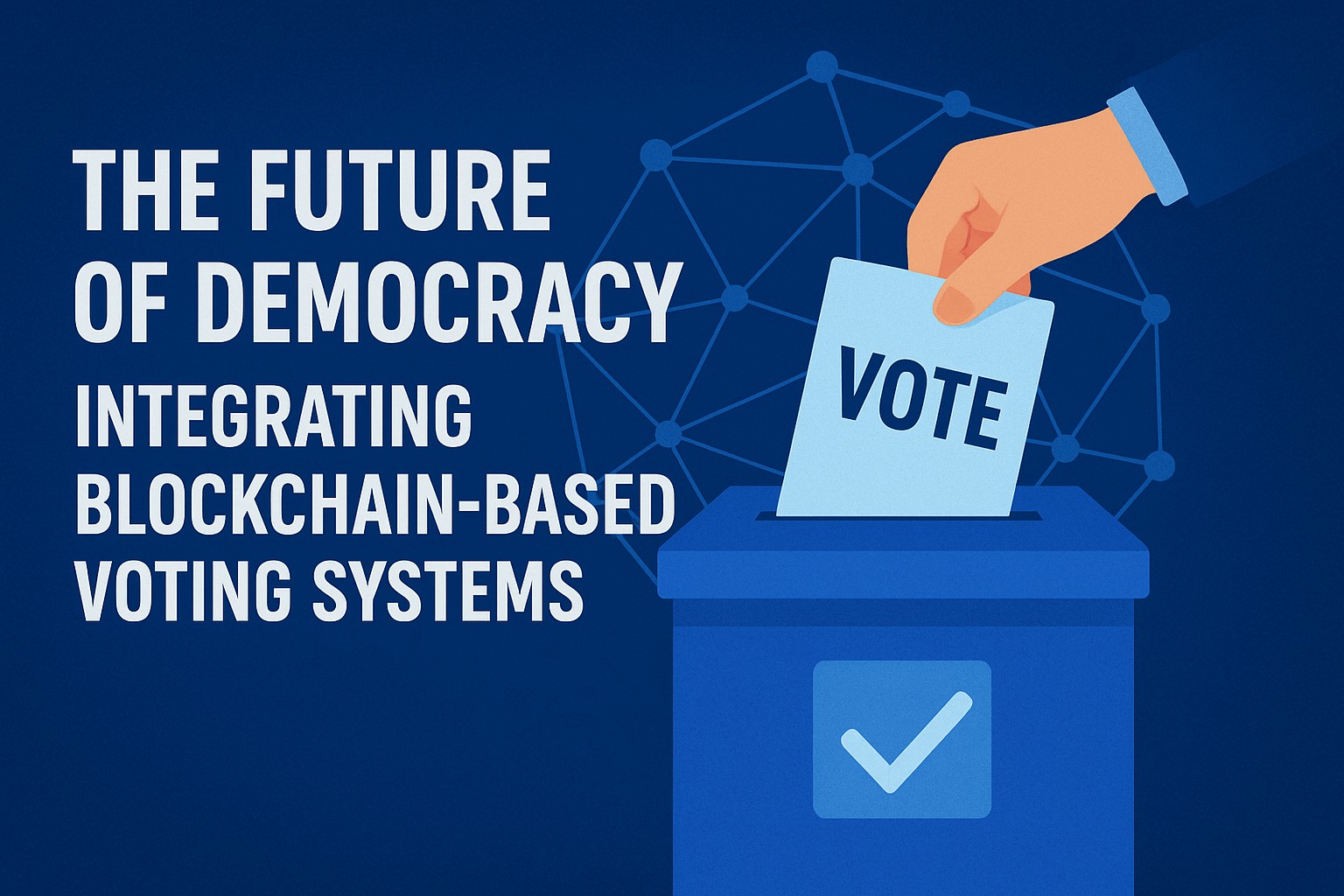
Why Democracy Needs a Technological Upgrade
Modern democracies face several issues that repeatedly undermine the voting process:
1. Low Voter Turnout
Factors such as busy lifestyles, inaccessible polling centers, unpredictable weather, and long queues deter many from participating—especially in large, diverse nations.
2. Election Fraud & Tampering
Even advanced electoral systems face allegations of manipulation, hacked electronic voting machines, or data breaches.
3. Lack of Transparency
After ballots are cast, voters often remain in the dark regarding what happens next. When systems lack transparency, trust in fairness and authenticity diminishes.
4. High Costs
Running national elections is an expensive undertaking. Security personnel, equipment, transportation, and significant manpower all contribute to the high cost.
These challenges prompt a fundamental question:
- If digital technology is trusted for banking, identity verification, and financial systems, why not use it to improve elections?
- To address these persistent challenges, blockchain-based voting emerges as a promising solution worthy of further exploration.
Understanding Blockchain-Based Voting Systems
A blockchain-based voting system uses decentralized ledger technology to securely, immutably, and transparently store votes.
Each vote is a cryptographically signed transaction, recorded in blocks that cannot be altered, deleted, or manipulated.
Key Features
- Decentralization: Eliminates single points of failure
- Immutability: Votes can’t be changed once recorded
- Transparency: Vote counts are verifiable by anyone
- Security: Cryptographic signatures prevent tampering
- Accessibility: Enables voting from personal devices, reducing in-person barriers
This transformation in voting processes highlights the innovative advantages blockchain brings to electoral systems, setting the stage for a closer look at its role in building trust.
How Blockchain Strengthens Trust in Elections
Trust is the foundation of democracy.
Across the globe, trust in electoral institutions has not only declined; it continues on a steady downward trajectory.
Blockchain Rebuilds Trust Through:
1. Transparent Vote Verification
Vote counts are verifiable in real time, preserving voter anonymity.
This eliminates doubts about secret manipulations behind closed doors.
2. Immutable Records
Once recorded, a blockchain vote cannot be altered.
This prevents post-election tampering.
3. Secure Digital Identities
Cryptographic identity verification ensures only eligible citizens vote, and only once.
4. Public Auditability
Independent bodies and citizens can audit blockchain election results directly.
These built-in characteristics of blockchain mark a departure from traditional trust models, introducing the next critical area—election security.
Enhancing Election Security with Blockchain
Security is often the primary concern regarding digital voting.
Blockchain offers multiple layers of protection:
1. Distributed Ledger Architecture
Distributed network storage protects against single-server compromise and vote manipulation.
2. Encryption & Cryptography
Blockchain encrypts every transaction, making unauthorized access extremely difficult.
3. Zero-Knowledge Proofs
By using zero-knowledge proofs, voters confirm they cast a valid vote without revealing their identity or candidate of choice.
4. End-to-End Verifiability
From submission to final tally, voters can track their vote, confirming it has not been lost or altered.
5. Protection Against Insider Threats
Unlike traditional voting machines or centralized databases, blockchain prevents officials or operators from tampering with the results.
With these robust protections in place, the next consideration is whether blockchain voting is feasible in real-world settings.
Assessing the Feasibility of Decentralized Voting
While the advantages are promising, implementing blockchain-based voting requires overcoming clear practical obstacles. The feasibility of these systems depends on ensuring the right technology, laws, accessibility, and public support.
1. Technological Infrastructure
Countries must have dependable internet, secure devices, and broad digital literacy to support blockchain voting.
Globally, smartphone adoption and digital services are on the rise.
2. Legal Frameworks
Election regulations must adapt to authorize blockchain audits, electronic ballots, and secure verification processes.
3. Government Adoption
Political commitment is vital. Some governments fear digital voting could affect established power balances, making adoption dependent on willingness to embrace change.
4. Ensuring Accessibility
Systems must be accessible for all citizens, including seniors, those in remote areas, and people with disabilities, so no one is excluded from voting.
5. Preventing Coercion
Remote voting can raise risks of coercion or vote selling. Developers must incorporate safeguards, such as revoting options and robust privacy protections.
6. Cost of Implementation
While initial system development may be expensive, blockchain technology could ultimately reduce ongoing election costs.
These ongoing experiments underscore that while obstacles remain, the path toward decentralized voting is becoming increasingly tangible, prompting a review of pioneering real-world examples.
Real-World Experiments in Blockchain Voting
Countries like Estonia, Switzerland, Brazil, India, and the United States have already conducted small-scale pilots.
Estonia
Estonia, a pioneer in digital governance, conducted secure digital elections before blockchain became widespread. Today, the country is exploring decentralized layers to enhance election security.
United States
In 2018 and 2020, West Virginia tested blockchain-based voting for overseas military personnel.
India
Several Indian states have piloted blockchain voting prototypes for migrant workers.
The collective learning from each of these pilots informs broader efforts to refine and scale blockchain-based democratic innovations.
A Personal Observation: When Blockchain Became the Missing Piece
Several years ago, during a university election, I witnessed an event that changed my perspective on digital voting.
Votes were cast through an online portal, but the system experienced technical issues.
Some students claimed their votes were not recorded, while others suspected the system had been tampered with.
Disputes arose, and transparency was lacking.
Though this election affected only a small group, the resulting disputes proved significant.
That experience made it clear to me that:
- Digital voting without verifiable transparency is as fragile as manual voting and may be even less trustworthy.
Later, when I learned about blockchain’s immutable verification, it seemed like the missing piece of the puzzle.
If that university election had used blockchain, each vote would have been recorded transparently, securely, and permanently, resolving all disputes immediately.
Reflecting on this experience, I became convinced that integrating blockchain technology is not merely advantageous but essential to advancing democratic participation.
The Future: How Blockchain Will Transform Democratic Participation
1. Voting from Anywhere
Whether traveling, ill, working, or living abroad, voting will be accessible with just a few clicks.
2. Increased Voter Turnout
Increased convenience could raise participation to record levels.
3. Instant, Accurate Results
Counting will take minutes, not days—results can be accessed in real time, with no lengthy waiting periods.
4. Better Engagement Among Youth
Digital-native generations will feel more connected to democratic processes.
5. Reduced Election Costs
Paper ballots, transportation of electronic voting machines, and extensive staffing will no longer be required.
6. A More Trustworthy Democratic System
Transparency and security will strengthen trust between governments and citizens.
In summary, blockchain voting is poised to be more than just a digital upgrade, holding the potential to reshape and revitalize democratic systems.
Conclusion: Are We Ready for Blockchain Democracy?
The future of democracy is undeniably digital.
Blockchain stands at the forefront of this transformation, offering trust, security, transparency, and accessibility beyond what traditional systems can provide.
While challenges remain, the world is closer than ever to embracing decentralized voting as a mainstream election technology.
With thoughtful implementation, strong security standards, and inclusive policies, blockchain voting could become the cornerstone of next-generation democratic integrity.
As nations explore the possibilities, one thing is clear:
- The integration of blockchain-based voting systems may not only protect democracy but also strengthen it for generations to come.