January 26 has always felt different to me.
Even now, I wake up early. The house is quiet. I make tea and turn on the TV. There it is: the Republic Day Parade.
I’ve watched it since I was a child. Back then, I only cared about the fighter planes and marching bands. As I got older, I started to notice other things: the quiet moments between drumbeats, the focus on the soldiers’ faces, and the small details in every float.
That’s when I realised the parade is more than a show. It’s built from thousands of quiet efforts coming together.
Before you watch the parade next time, keep an eye out for what these details reveal about India’s spirit.
It Exists Because India Chose Its Own Rules
Republic Day marks January 26, 1950, the day India began living under its own Constitution.
That moment changed everything. Now, laws are written by Indians, for Indians. The parade honours that decision.
Every step on Kartavya Path carries that memory.
That Road Has Seen More Than Cameras
Kartavya Path used to be Rajpath.
Once, I walked by during rehearsals. It was freezing. Soldiers were already lined up before sunrise, repeating their formations. There were no spectators and no applause.
Just discipline.
That road has seen hard work long before the celebration begins.
Months of Practice for a Few Hours
People assume the parade comes together quickly.
It doesn’t.
Rehearsals start around July. Military units, dancers, and school children all practice every day. By January, they have repeated the same routines hundreds of times.
Rain, fog, or cold winter mornings never stop the schedule.
That’s the kind of commitment most viewers never notice.
It’s Also a Cultural Map of India
The floats are my favourite part.
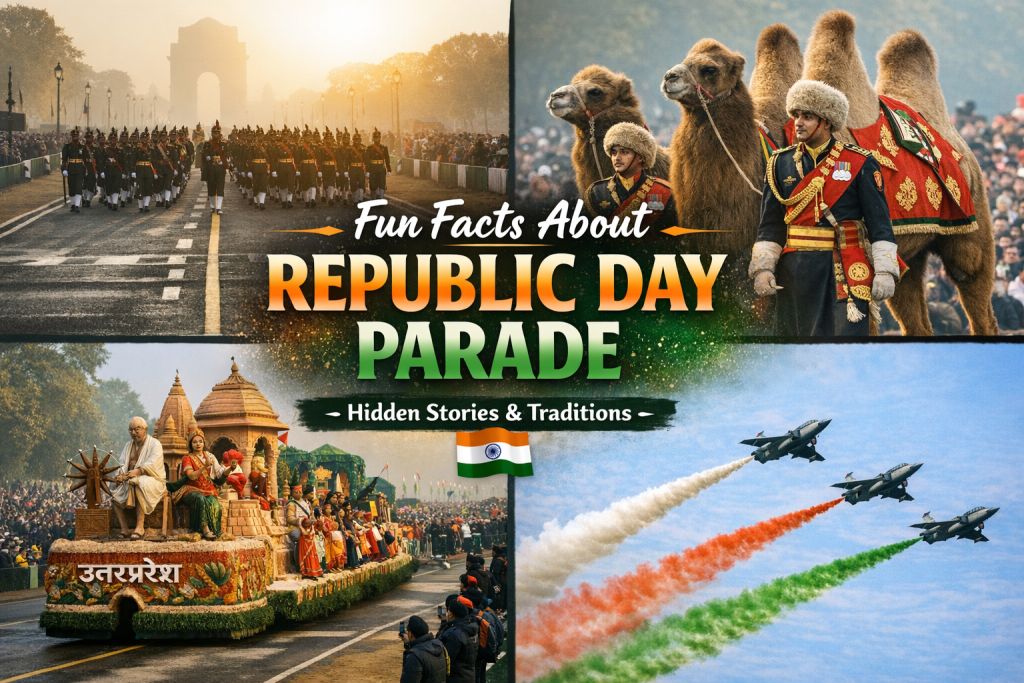
Each state shares its story—temples, folk dances, freedom fighters, and modern achievements. Watching them feels like travelling across India in slow motion.
Sometimes I pause the screen just to look more closely at the tiny handmade details.
Every design holds so much care.
Those Camels Weren’t Just Cute
One year, rare double-humped camels from Ladakh joined the parade.
They are connected to ancient trade routes and high-altitude deserts. Watching them walk beside soldiers felt meaningful, as if India was recognising even its quietest corners.
Not every powerful moment during the parade is loud.
The Gun Salute Runs on Precision
When the President arrives, the 21-gun salute begins.
But only seven guns are used, firing in perfect time with the National Anthem. The last shot ends as the anthem finishes.
It’s engineering mixed with tradition.
Pilots Practise What Looks Effortless
The flypast always steals the show.
But behind it are weeks of planning—speed, height, distance. Every aircraft practices again and again to get it right.
Even now, when jets roar overhead, that same childhood excitement returns.
Women Are Quietly Changing History
Watching all-women contingents march feels different.
It doesn’t feel symbolic. It feels natural, which is what makes it powerful.
For young girls watching at home, that image can change how they see their future.
Progress often arrives quietly, without announcements.
Every Year Has a Message
Each parade follows a theme, such as unity, innovation, heritage, or self-reliance.
If you pay attention, you can see India’s priorities reflected in the floats and performances.
It’s as if you can read the country’s mood through the colours and movement.
Republic Day Isn’t Just in Delhi
Yes, Delhi hosts the main event.
But Republic Day is also celebrated in schools, neighbourhoods, villages, and small community grounds. Kids forget the lyrics. Flags tilt to the side. Someone’s microphone stops working.
And yet everyone smiles.
I once saw children perform with mismatched shoes and crooked badges. Nobody minded. The pride was real.
Beating Retreat Ends It Gently
On January 29, military bands perform during Beating Retreat.
It’s quiet, emotional, and graceful.
The celebrations fade, leaving behind something hard to describe. Maybe it’s gratitude.
Why This Parade Matters
It’s not about strength.
It’s about remembering sacrifice.
It’s about moving forward together.
It’s about carrying values forward.
Every drumbeat carries history.
Final Thought
Behind every uniform, float, and aircraft are people who believe in the country.
So next time you watch the Republic Day Parade, don’t just look at the spectacle.
See the effort.
See the unity.
Recognise that each step forward at the Republic Day Parade reflects both individual contribution and national progress—this is what matters most.