Why We Need to Pay Attention Before It’s Too Late
A few years ago, most people saw medical technology only in hospitals or clinics. Now, it’s everywhere. Smartwatches track our sleep, fitness bands count our steps, and some people rely on implants like pacemakers or insulin pumps. These tools are definitely helpful. Still, my experience with digital systems has shown me something worrying:
- As our bodies get more connected, we also face more cyber risks.
This isn’t about wild stories or science fiction, like hackers taking over pacemakers. It’s about small design flaws that often get missed until there’s a problem.
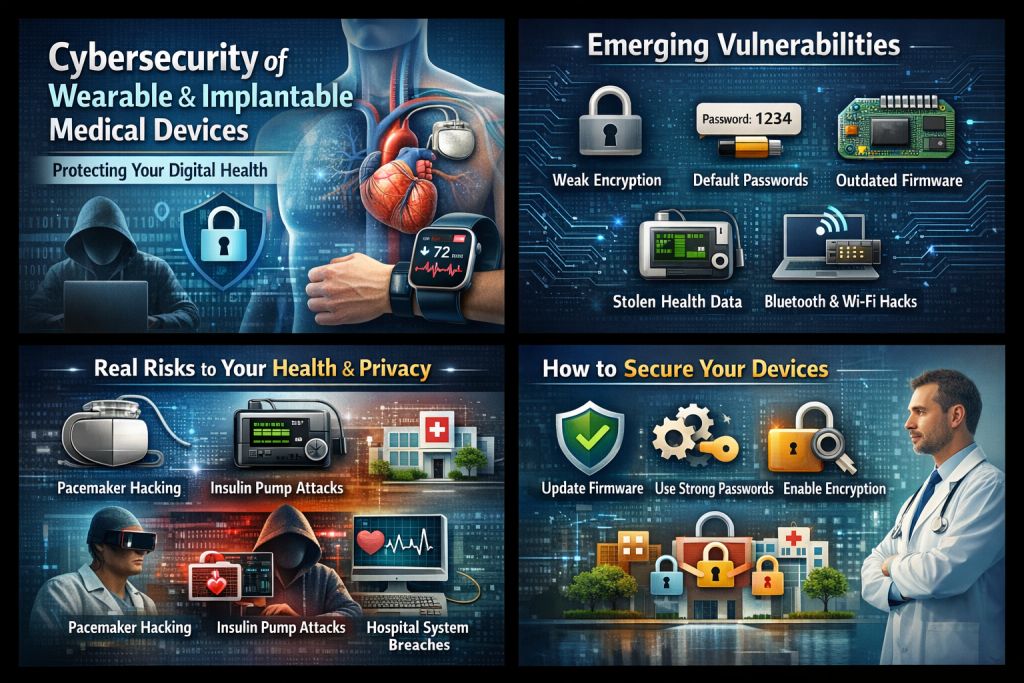
Why Cybersecurity Matters More Than People Think
Most people think of cybersecurity as protecting their bank apps and social media accounts. Few think about protecting their heart monitor or glucose sensor. But these devices collect data you can’t just reset or replace if it gets leaked.
Personal Health Data Never Disappears
Once private medical details fall into the wrong hands, it’s hard to get them back. This information can show your body’s details, habits, and daily routine, basically creating a map of your life.
Some Devices Control Vital Functions
A pacemaker isn’t just sitting inside your body; it controls your heartbeat. An insulin pump manages your blood sugar. If someone messes with the signals these devices send or receive, the results could be serious.
Connected Hospitals Are a Bigger Target
Wearables and implants don’t work on their own. They connect to apps, cloud services, and hospital systems. Just one weak device can give criminals a way into a bigger network, and this has already happened in real life.
Where the Weak Spots Are
Over the past few years, I’ve read many cases and research papers on this topic, and the same problems keep coming up.
Unencrypted Data
Some devices still send sensitive data out in the open, almost like a postcard, so anyone nearby can read it. It sounds surprising, but it’s true.
Default Passwords That Never Get Changed
Many devices come with passwords like “admin” or “0000.”
You might think people would change these passwords, but many don’t, especially if the hospital set up the device and handed it over already working.
Old Firmware That Never Gets Updated
Medical devices are often used for years. If a manufacturer stops supporting an older model, any known flaws stay open for attackers.
Insecure Bluetooth and WiFi Connections
Wireless connections make devices convenient, but they also give attackers ways in, especially when security settings are weak or outdated.
No Universal Security Standard
Every company seems to have its own rules. Some focus on security, while others prioritize adding features, improving speed, or keeping costs low.
A Real Moment That Changed How I See This Issue
A few years ago, I helped with a tech review at a hospital. They used wearable heart monitors to track patients recovering at home, which seemed normal. But during testing, the team found a problem:
The monitors were sending patient information over the network with zero encryption.
Anyone on the same WiFi, even someone in the waiting room, could have picked up live heart rhythm data and patient details. The worst part was that this had been happening for months, and no one noticed until that day.
The room got quiet and tense. We worked with the manufacturer to fix the problem, but the experience stuck with me. It showed that even well-designed medical tools can be at risk if security is ignored.
Realistic Risks People Don’t Think About
When people hear about medical cybersecurity, they often imagine dramatic situations. In reality, everyday risks are much more common and sometimes even more dangerous.
- A hacker intercepting blood sugar readings
- Someone is draining a device’s battery remotely
- A cybercriminal is altering data just enough to confuse doctors
- Attackers using a wearable to get into a hospital network
- A malicious app is collecting health metrics without permission
These risks might seem small, but even minor changes in medical data can lead to serious errors.
How Patients, Hospitals, and Companies Can Protect Themselves
Cybersecurity is everyone’s responsibility. Anyone involved with medical technology has a role to play.
For Patients
- Keep your device software updated
- Change any default passwords
- Only use official apps
- Lock your phone properly
For Healthcare Providers
- Separate medical devices from the main hospital network
- Run periodic security checks
- Train staff so they don’t fall for phishing traps
- Choose vendors with strong security records
For Device Manufacturers
- Build security into the design from day one
- Remove hardcoded passwords
- Offer reliable, long-term firmware updates
- Use strong, modern encryption
If these steps became standard, most known threats could be stopped quickly.
Looking Forward: What Might Improve Over Time
Researchers are now testing ways to use machine learning to spot strange behavior in devices. For example, if a pacemaker suddenly gets odd commands, the system can step in automatically.
Regulators now require clearer cybersecurity plans before a device can be sold. This change is overdue, but it’s a good step forward.
Final Thoughts
Wearable and implantable medical devices are improving healthcare. They make life easier, safer, and sometimes even possible. But these benefits also bring new responsibilities.
Cybersecurity isn’t something we can ignore or delay. These devices are close to our bodies, sometimes even inside them, so their safety deserves the same care as any medical treatment.
As digital health grows, staying alert and informed is one of the best ways to protect our data and our health.