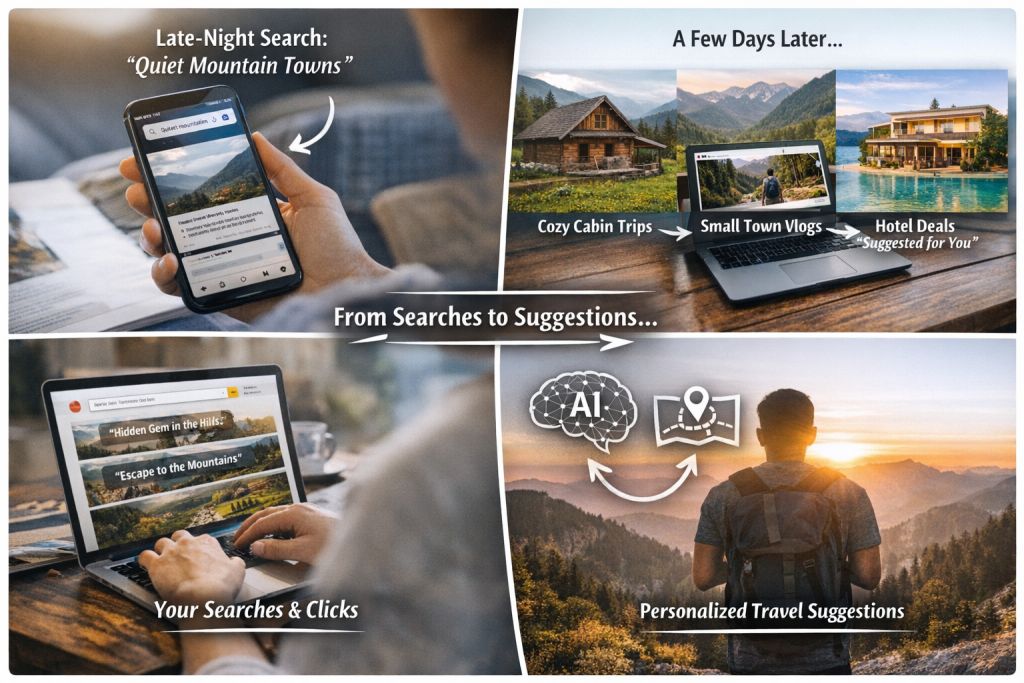
Travel planning used to take time and could be frustrating, but it also felt rewarding. You would talk to people, ask questions, and trust their experience. Now, everything is different. With a few taps, you can get a full travel plan in seconds. AI organizes flights, hotels, sightseeing, and even food suggestions for you.
And yet, human travel agents are still here.
That alone says something.
Travelers aren’t just looking for speed. They want to know what feels safer, smarter, and more reliable.
I’ve planned trips both ways. Some went smoothly, and others taught me lessons I didn’t expect. This comparison isn’t about hype. It’s about what really happens when plans meet real travel.
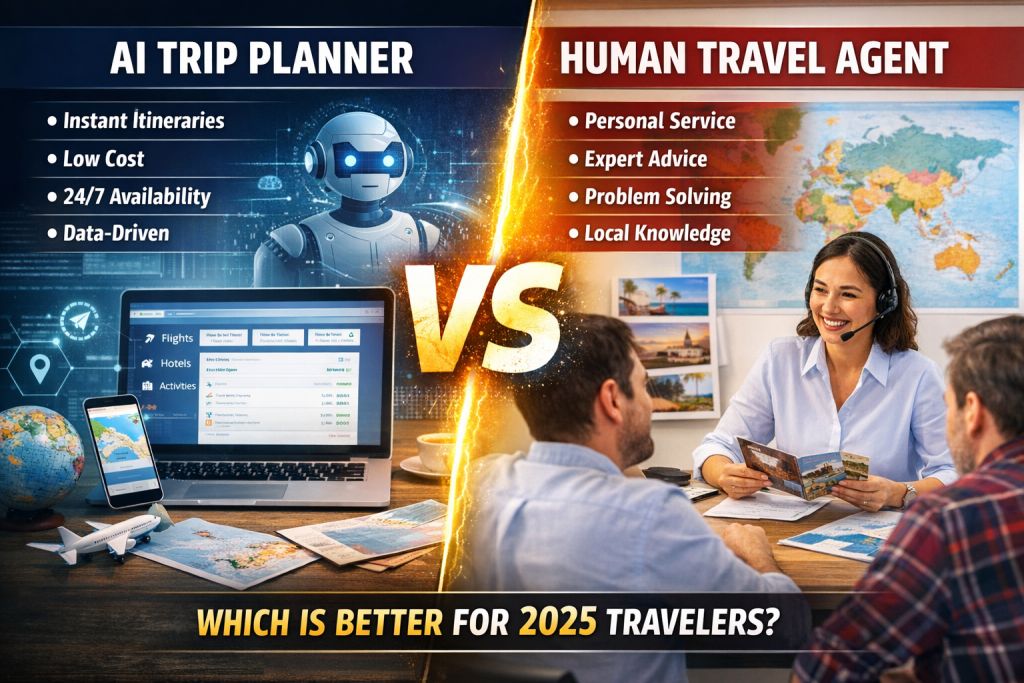
Why AI Travel Tools Took Off So Quickly
AI trip planners became popular for a simple reason: they solve a common problem.
Planning takes time.
AI tools fix that problem by doing in minutes what used to take hours. You enter your destination, dates, and budget, and the rest shows up almost instantly.
For busy people, this feels like freedom.
I remember planning a short trip while dealing with work deadlines. I didn’t need perfection; I just wanted it finished. An AI planner quickly gave me a plan. It wasn’t special, but it worked. That felt like a win.
AI works best with data like prices, reviews, maps, and schedules. It connects information faster than any person can.
But speed is only one part of travel.
What AI Trip Planners Are Actually Good At
To be fair, AI trip planners are very good at certain things.
They:
- Compare thousands of flight and hotel options quickly
- Suggest popular attractions with high ratings
- Adjust plans instantly when budgets or dates change
- Work anytime, day or night
For simple trips, this is more than enough.
If you’re traveling alone, moving between cities, or planning a short trip, AI tools can handle most of it easily. There’s no waiting, no pressure, and no small talk. You just get answers.
For many travelers, especially younger people, this feels natural. It aligns with how they already make decisions.
Where AI Starts to Feel Limited
- Problems with AI appear when travel gets more complicated.
- AI doesn’t know why a trip matters.
- It doesn’t understand emotional weight.
- It doesn’t sense hesitation.
- It doesn’t notice when a plan feels too rushed.
Once, an AI tool suggested a packed schedule for a family trip. On paper, it seemed efficient, but in reality, it would have been exhausting. Anyone who has traveled with kids or older parents knows this right away.
AI looks at schedules. Humans notice how much energy people have.
That difference is more important than most people realize.
The Quiet Strength of Human Travel Agents
Human travel agents may not be the fastest, but their judgment sets them apart.
A good agent listens first and asks questions you won’t see on any form.
- Why are you traveling?
- What worries you?
- What would ruin this trip for you?
These answers help make better decisions.
I once worked with an agent who told me not to book a hotel I had already picked online. The reviews were great, and the photos looked nice, but she had heard many complaints from past clients about safety and noise. That information never appeared on booking sites.
That advice saved me from a bad experience.
When Things Go Wrong, Humans Matter More
Every experienced traveler knows this truth: no trip is perfect.
Flights get delayed. Weather changes plans. Hotels overbook rooms. Entry rules change without warning.
AI tools can suggest other options, but they can’t speak up for you.
A human agent can:
- Call airlines directly
- Argue for refunds or rebookings
- Handle problems while you’re already stressed
You might not realize how important human support is until you need it. When you do, it’s priceless.
When you’re at an airport counter, an app might not help much. Having someone who knows what to say can really help.
The Cost Question Most People Get Wrong
AI planners are cheap. Often free.
Human agents usually charge a fee, and that can make people think twice.
But cost isn’t the same as value.
One mistake—like missing a visa rule, choosing a bad hotel location, or booking something non-refundable—can wipe out any savings quickly.
Human agents help lower your risk. That’s what you’re really paying for.
For complicated trips, that protection is often more important than saving a bit of money at the start.
Travel Isn’t Just Logic. It’s Emotion.
This part rarely gets discussed.
Travel planning can be stressful, and sometimes it’s even overwhelming. This is especially true for first-time travelers or people going on special trips like honeymoons, family reunions, or long-awaited holidays.
AI gives answers.
Humans give reassurance.
Sometimes, people don’t want a list of options. They just want one strong recommendation.
That’s when having a human experience really counts.
Why More Travelers Are Using Both
The smartest travelers don’t pick just one side.
They combine both tools.
They use AI to research, compare, and explore options. Then they ask a human agent to refine, confirm, and protect their plans.
Even travel agents now use AI in the background. It saves time, reduces mistakes, and lets them focus on what only people can do—use good judgment.
AI isn’t replacing agents. It’s just changing how they work.
Is AI Replacing Travel Agents? No. It’s Changing Their Role
Worrying that AI will replace travel agents misses the real point.
Travel is becoming more complex, not less. Rules change. Expectations rise. Travelers want smoother experiences.
That creates demand for expertise, not automation alone.
Agents are shifting from routine bookings to more advisory roles. There’s less clicking and more thoughtful planning.
This change isn’t a threat. It’s just how things are evolving.
So, Which One Should You Use?
Here’s the honest answer: there isn’t one clear winner.
AI trip planners work best when:
- The trip is simple
- Budget matters more than comfort
- You enjoy planning alone
- Flexibility is high
Human travel agents work best when:
- The trip is complex or meaningful
- You want backup when things fail
- Experience matters more than speed
- Peace of mind is important
Using both works best when:
- You want efficiency without risk
- You want control with support
- You want fewer surprises
Final Thought
Travel planning isn’t about picking technology or people.
It’s about knowing when each is helpful.
AI trip planners are fast and powerful. Human travel agents are thoughtful and dependable. Both have their own strengths and limits.
The best trips happen when you find the right balance.
When travel really matters, experience still matters, and no algorithm can replace that.